

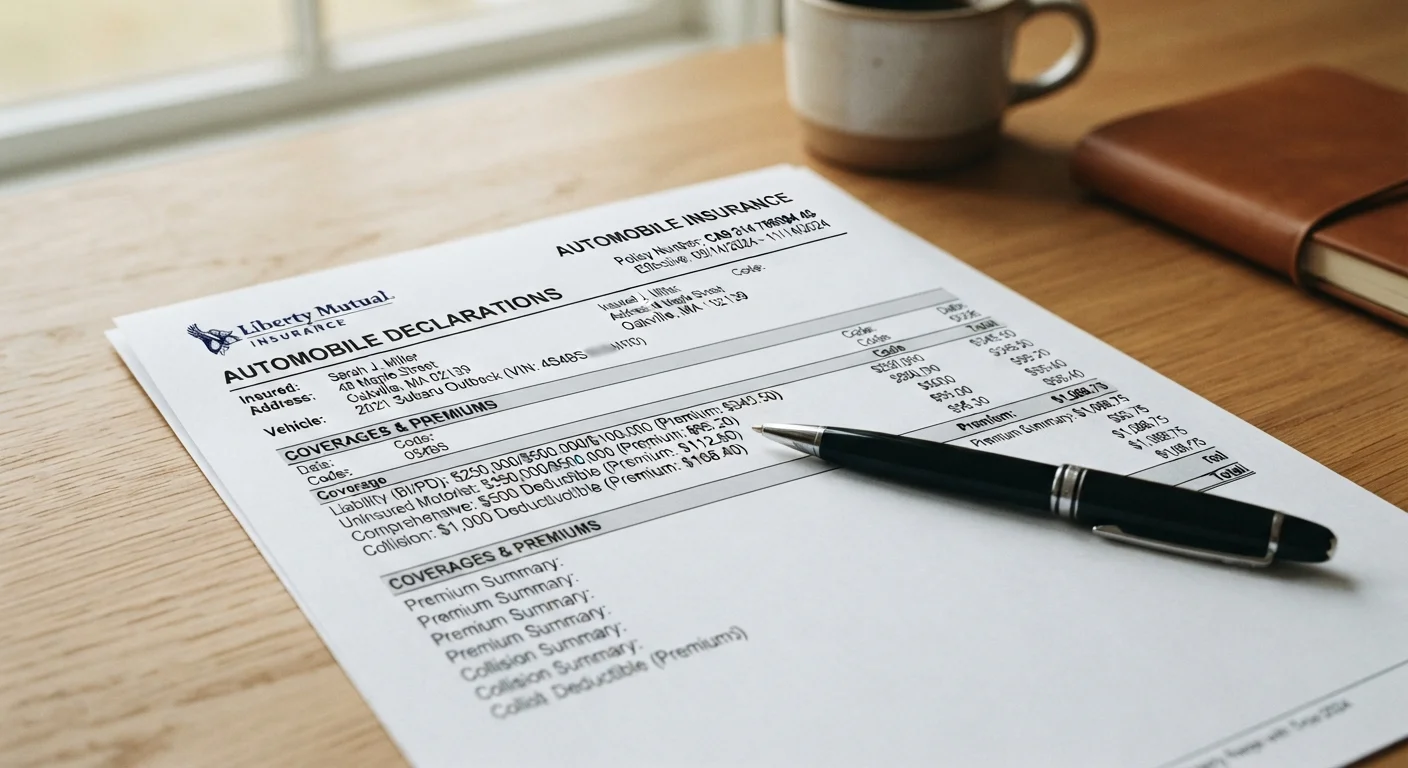
What Is a Declarations Page?
The declarations page - often called the "dec page" - is the summary sheet at the front of your auto insurance policy. Think of it as the cover page that spells out exactly who is covered, what vehicles are covered, and how much protection you have. Everything is compressed into one or two pages, which is why it can feel dense.
Insurers are required to provide this document when you purchase or renew a policy. It's also the page a lender will ask for when you finance or lease a vehicle, and the first thing a claims adjuster references after an accident. If you've never read yours carefully, now is a good time to start. For a broader foundation, see this start-to-finish primer on auto insurance.
| Also called | Dec page, policy summary |
| Typical length | 1-2 pages |
| When you receive it | At purchase and each renewal |
| Standard policy terms | 6 or 12 months |
| Required by lenders | Yes, to verify collision and comprehensive coverage |
The Key Numbers and What They Mean
Most dec pages follow a predictable layout. Here are the fields you'll encounter and what each one actually tells you.
Policy Number
Your unique identifier with the insurer. Keep it handy - you'll need it if you file a claim or call customer service.
Policy Period
The start and end dates of your coverage. Standard terms are six or twelve months. Coverage does not automatically continue after the end date unless you renew.
Named Insured
The person (or people) listed as the primary policyholder. Additional drivers in your household may be listed as "additional insureds" or appear separately in the driver schedule.
Vehicle Information
Year, make, model, and VIN (Vehicle Identification Number) for each covered car. If you buy a new vehicle and forget to add it, it likely isn't covered - or only covered temporarily under your state's grace period rules, which vary.
Coverage Types and Limits
This is the heart of the dec page. Each coverage type is listed alongside its limits, typically written as split numbers - for example, 100/300/100. In that format, the first number is the per-person bodily injury limit (in thousands), the second is the per-accident bodily injury limit, and the third is the property damage limit. A single number like $300,000 indicates a combined single limit instead. To understand what each coverage type actually protects, see our coverage types guide.
Deductible
The amount you pay out of pocket before your insurer pays on a collision or comprehensive claim. A $500 deductible means you cover the first $500 of a covered repair; the insurer covers the rest up to your limit. Deductibles do not apply to liability coverage.
Premium
What you owe for the policy period, often broken into installments. The dec page may show both a total premium and a per-vehicle or per-coverage breakdown. Endorsements (add-ons like roadside assistance or rental reimbursement) are usually itemized here too.
Split limit
A way of expressing liability coverage as three separate numbers - per-person injury, per-accident injury, and property damage. Written as, for example, 50/100/50 (in thousands of dollars).
Combined single limit
A single dollar amount that can be applied to any combination of bodily injury and property damage in a covered accident, rather than separate caps for each category.
Deductible
The portion of a covered claim you pay before insurance kicks in. Applies to collision and comprehensive coverages, not liability.
Lienholder / Loss payee
A lender or leasing company listed on your policy that has a financial interest in the vehicle. Claim payments for physical damage may be issued jointly with this party.
Endorsement
An optional add-on to a standard policy that extends or modifies coverage - such as rental reimbursement or roadside assistance - usually listed on the dec page with a separate premium.
Named insured
The primary policyholder(s) listed on the declarations page who have full rights under the policy, including the ability to make changes or cancel coverage.
Common Mistakes When Reading a Dec Page
Even careful readers miss things. Watch out for these:
- Confusing limits with deductibles. Your limit is the maximum your insurer will pay; your deductible is what comes out of your pocket first. They work in opposite directions.
- Assuming all drivers are covered. Household members who aren't listed may be excluded - check the driver schedule carefully.
- Ignoring the exclusions reference. The dec page summarizes coverage; the full policy document contains exclusions. A coverage that appears on your dec page may still have conditions that limit when it pays.
- Overlooking lender requirements. If your car is financed, your lender is usually listed as a lienholder or loss payee. If that information is wrong, a claim payout could be delayed.
For a complete glossary of terms you'll encounter across quotes and claim forms, see our auto insurance jargon reference. And once you've read your dec page, use these questions to ask before signing to make sure the coverage actually fits your situation.
Your Dec Page Is a Summary, Not the Full Policy
The declarations page gives you the key numbers, but it doesn't contain exclusions, conditions, or the fine print that can affect whether a claim is paid. Always keep a copy of your complete policy document and review it when something changes - a new driver, a new car, or a move to a different state. Your coverage needs can shift over time; see how to keep your policy current as your life changes.
This article is for general informational purposes only and does not constitute personalized insurance, financial, or legal advice. Coverage terms, limits, and requirements vary by insurer, state, and individual circumstance. Always read your actual policy documents and consult a licensed insurance agent or adviser for guidance specific to your needs.
The content on this site is for informational purposes only and is not a substitute for professional advice. Always consult a qualified professional for guidance specific to your situation.