

APR and Loan Length: Why Both Numbers Matter
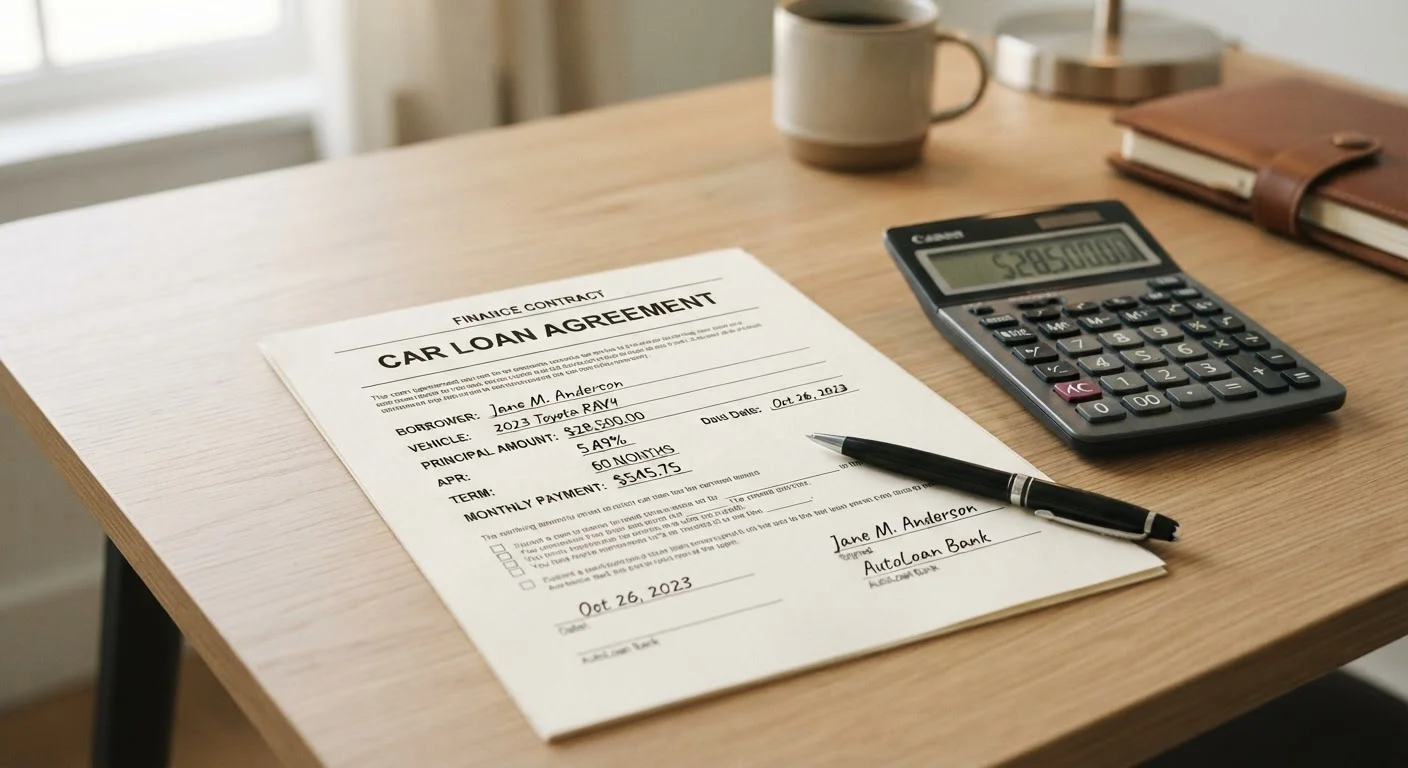
When you finance a vehicle, two numbers shape what you'll actually pay: the APR (annual percentage rate) and the loan term (how many months you have to repay). Most buyers focus on the monthly payment - but that number is just the result of those two variables working together. Optimizing for a low monthly payment alone can lead to paying significantly more overall.
| Most common auto loan terms | 48, 60, and 72 months (Consumer Financial Protection Bureau) |
| Average new car loan APR (well-qualified borrowers) | Varies widely by credit tier and lender (Rates change frequently; check current offers with lenders directly) |
| Longer loans reduce monthly payment but... | Increase total interest paid |
| Typical auto loan amortization | Front-loaded interest (more interest paid early) |
| Loan term impact on depreciation risk | Loans over 60 months increase risk of going "underwater" (Edmunds long-term ownership cost research) |
APR determines how much interest accrues each month on your remaining balance. The loan term determines how many months that interest has to accumulate. A low APR on a long loan can still cost more in total interest than a slightly higher APR on a shorter loan. The interaction between these two figures is what determines your real cost of financing.
See how your credit profile shapes the APR a lender offers by reviewing what your credit score does to your auto loan.
How Loan Term Affects Total Cost
Stretching a loan from 48 months to 72 months lowers your monthly payment, but you're paying interest for 24 additional months. Because auto loans use amortization - front-loading interest in the early payments - a longer term means more of your early payments go toward interest rather than reducing what you owe.
There's also a practical risk with longer terms: negative equity, sometimes called being "underwater." Cars depreciate fastest in their first few years. If your loan balance drops more slowly than the vehicle's value, you could owe more than the car is worth - which becomes a serious problem if you need to sell or the car is totaled. Loan terms beyond 60 months carry a higher likelihood of this situation.
APR vs. Interest Rate: Not the Same Thing
A lender might advertise an interest rate, but the APR is the more complete number - it folds in fees like loan origination charges. Always ask for and compare APRs across lenders, not just the stated interest rate. This gives you an apples-to-apples comparison of what borrowing will actually cost you.
If you're weighing whether to finance at all versus lease, the leasing vs. financing comparison covers the key trade-offs side by side.
Comparing Loan Offers the Right Way
When you receive multiple loan offers, don't compare them by monthly payment alone. Instead, look at the total cost of financing - the principal plus all interest you'll pay by the time the loan is paid off. Most lenders are required to disclose this figure in the loan agreement.
A useful approach is to model a few scenarios before you shop:
- Keep the loan amount fixed and vary the term (48, 60, 72 months) to see how total interest changes.
- Then vary the APR (for example, 5% vs. 7%) at a fixed term to isolate the rate's impact.
- Compare total cost - not monthly payment - across each scenario.
Whether you get your loan through a dealership or arrange it independently also affects what rates you can access. The dealer financing vs. outside financing guide explains how each path works and what it typically means for cost.
This article is for general informational purposes only and does not constitute financial or legal advice. Loan terms, rates, and offers vary by lender, credit profile, and market conditions. Consult a licensed financial professional for guidance specific to your situation.
The content on this site is for informational purposes only and is not a substitute for professional advice. Always consult a qualified professional for guidance specific to your situation.