

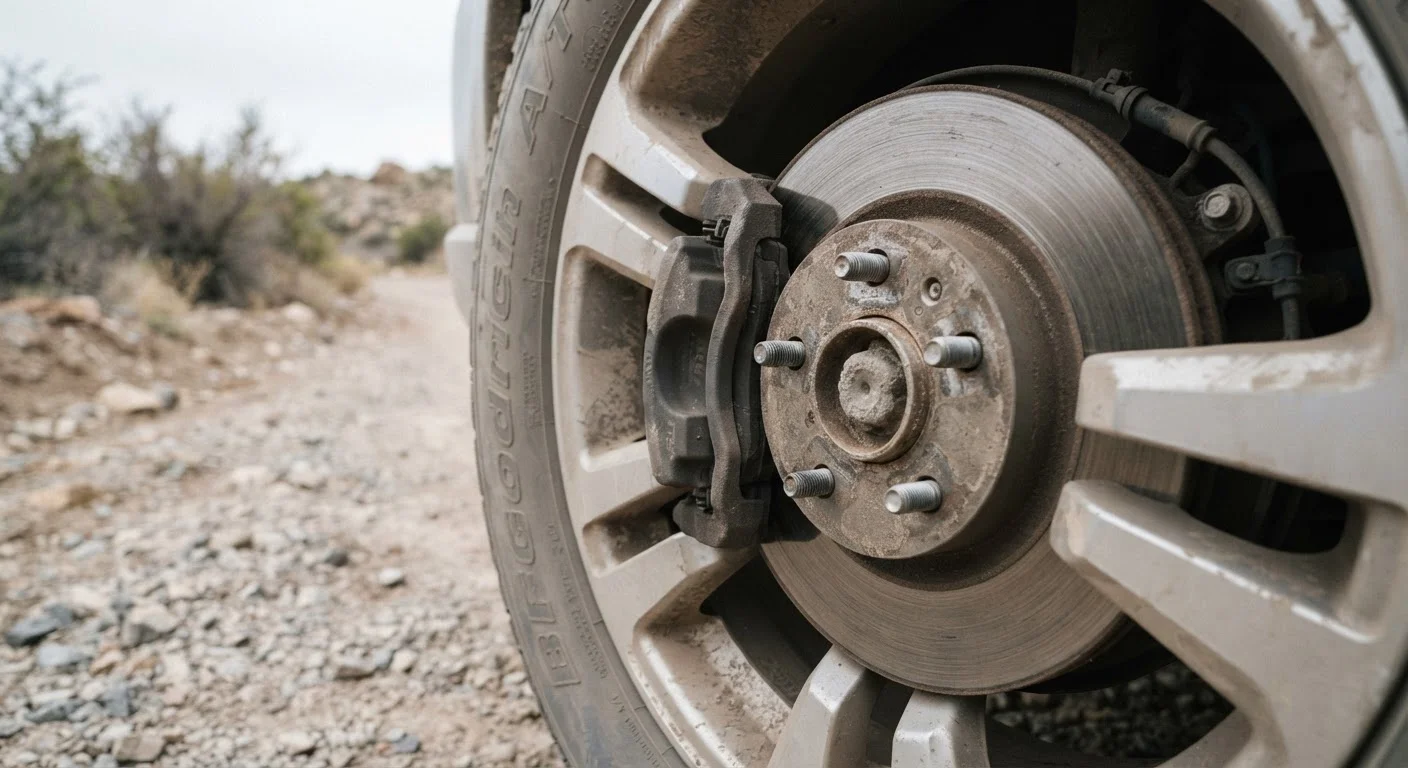
The Most Common Reasons Brakes Squeal
Brake squeal has several common sources, and most of them are easy to understand once you know what's happening inside the wheel.
Wear Indicator Tabs
Most modern brake pads include a small metal tab called a wear indicator. When the pad wears down to a certain thickness, this tab contacts the rotor and produces a deliberate, high-pitched squeal. That's your car telling you the pads need replacing - typically within the next few thousand miles.
Surface Rust on Rotors
Brake rotors are made of iron, which rusts quickly when exposed to moisture. After rain, overnight dew, or a car wash, a thin layer of rust can form on the rotor surface. When you apply the brakes, the pads scrape it off - sometimes noisily. This kind of squeal usually clears up within a mile or two and isn't a cause for concern.
Dust, Glazing, or Debris
Brake dust buildup, glazed rotors from overheating, or a small piece of road debris caught between the pad and rotor can all cause squealing. These situations vary in severity - debris can sometimes clear on its own, while glazing may require professional attention.
Low-Quality or Mismatched Pad Material
Certain brake pad compounds are noisier than others. Semi-metallic pads, for example, are durable but can be louder than ceramic alternatives. If pads weren't matched properly to the rotor type during a prior repair, squeal can result.
Quick Self-Check Before Calling a Shop
If your brakes squeal only in the morning and stop after a few applications, you can monitor the situation for a day or two. But if the squeal is present every time you brake, appears when you're not braking, or comes with any other change in how the car handles, schedule an inspection rather than waiting.
When Squealing Becomes a Serious Warning
Not all brake noise is equal. Here's how to tell when a sound crosses from a nuisance into a safety concern.
The Squeal Is Constant or Getting Worse
If the noise doesn't go away after a couple of days of normal driving - or if it's getting louder - that's a clear signal to get the brakes inspected. Worn pads left too long can damage rotors, turning a relatively straightforward repair into a more expensive one.
You Hear Grinding Instead of Squealing
A grinding or scraping sound usually means the pad material has worn away completely and metal is contacting metal. This compromises stopping power and can damage rotors quickly. Don't wait to have this checked.
The Car Pulls to One Side When Braking
If the vehicle drifts left or right when you press the brake pedal, that points to uneven braking - possibly a stuck caliper or uneven pad wear. This is a handling and safety issue, not just a noise complaint.
The Brake Pedal Feels Different
A soft, spongy, or pulsating pedal alongside squealing is a more serious combination. It can indicate air in the brake lines, a failing caliper, or rotor warping. Any change in pedal feel warrants prompt attention from a qualified mechanic.
~$150-$300
Typical brake pad replacement cost per axle
General industry estimates; costs vary by vehicle type, region, and shop labor rates.
25%
Of drivers delay brake repairs due to cost concerns
Delay often leads to rotor damage, making the overall repair more expensive.
What to Do If Your Brakes Are Squealing
Your response should match the severity of what you're hearing and feeling.
- Note when and how it happens. Does it squeal only in the morning? Only when braking hard? Constantly? The pattern helps a mechanic diagnose the problem faster.
- Check your brake pad thickness if you can see through the wheel spokes. A pad thinner than about a quarter-inch is due for replacement. If you're not comfortable assessing this yourself, that's completely fine - a mechanic can do it during a routine inspection.
- Don't wait too long. Brakes are a safety system. A squeal caused by worn pads that's ignored long enough can progress to grinding and rotor damage, significantly raising repair costs.
- Get a professional inspection. A qualified mechanic can measure pad thickness, inspect rotors for wear and warping, and check calipers and hardware - giving you an accurate picture of what actually needs to be done.
Brake Inspections Are Often Free
Many auto repair shops offer complimentary brake inspections. This can be a low-cost way to get a professional assessment without committing to a repair. Ask what the inspection covers and whether it includes a written estimate before authorizing any work.
This article is for general informational purposes only. Always consult a qualified mechanic for diagnosis and repair of your specific vehicle's brake system.
Frequently Asked Questions
It depends on the cause. Light squealing in the morning that goes away after a few stops is generally harmless. Persistent squeal, especially when combined with longer stopping distances or a grinding sound, is not safe to ignore and should be inspected promptly.
Overnight moisture creates a thin layer of surface rust on brake rotors. When you first drive and apply the brakes, the pads scrape that rust off - producing a brief squeal. This typically disappears within the first mile and is not a sign of damage.
Costs vary widely depending on the cause. Replacing brake pads typically ranges from roughly $100 to $300 per axle, while rotor replacement adds more. A mechanic inspection can confirm exactly what's needed before you commit to repairs.
Yes. Newly installed brake pads sometimes squeal during a break-in period as the pad material seats against the rotor surface. This usually resolves within the first few hundred miles of normal driving.
Squealing is typically a high-pitched sound caused by vibration or a wear indicator. Grinding is a harsher, lower sound that usually signals metal-on-metal contact - meaning the pad material is gone. Grinding is more urgent and should be addressed immediately.
The content on this site is for informational purposes only and is not a substitute for professional advice. Always consult a qualified professional for guidance specific to your situation.