

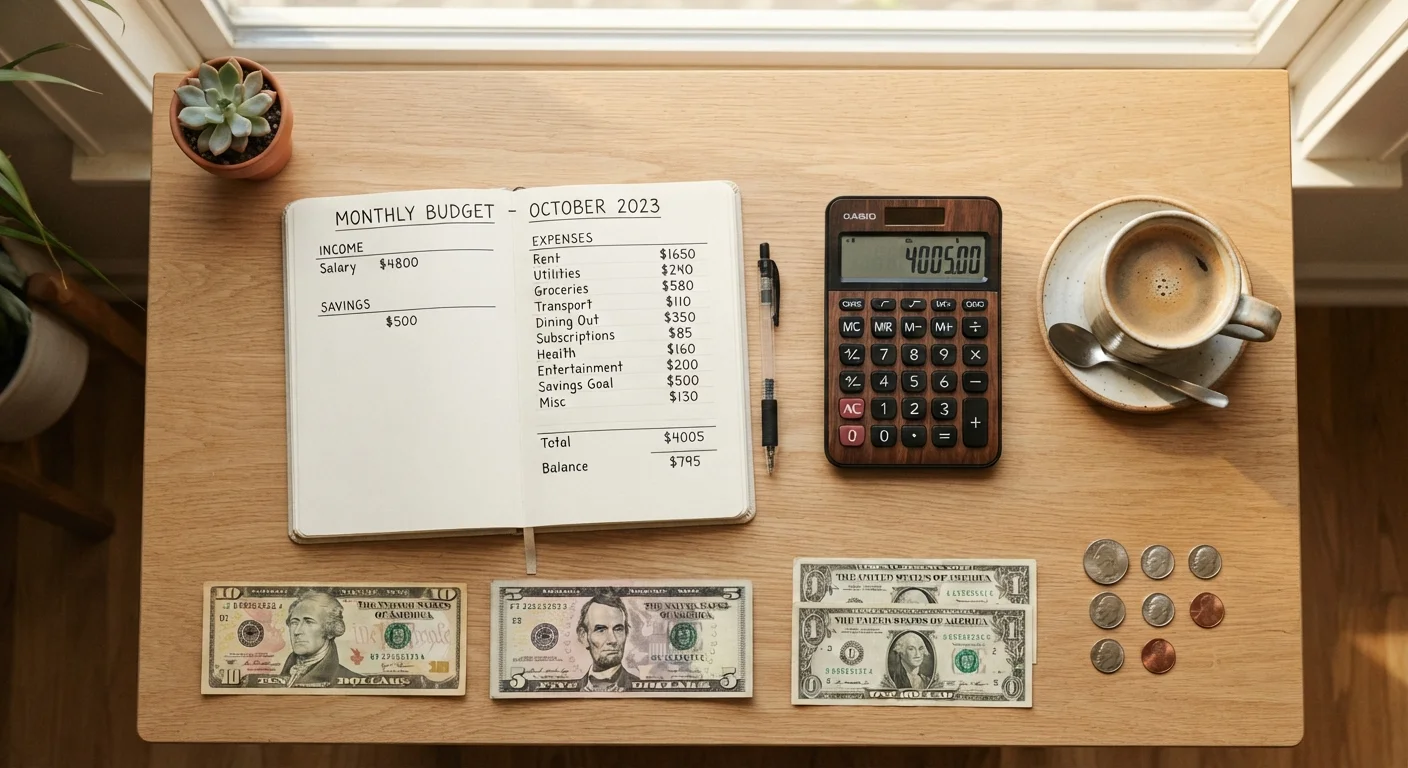
Why Budgeting Matters More Than Earning More
Many people assume their money problems will disappear with a raise. In practice, spending tends to expand along with income - a pattern sometimes called lifestyle creep. Budgeting breaks that cycle by giving every dollar a job before it gets spent.
A budget isn't a punishment or a rigid cage. Think of it as a plan that lets you decide in advance what matters most to you, so your money ends up there instead of drifting into forgettable purchases. Before you dive into the numbers, it helps to understand the language. Our budgeting glossary covers terms like net income, fixed expenses, and discretionary spending - the building blocks you'll use throughout this guide.
~33%
Americans with a written budget
Surveys consistently find that fewer than one in three Americans maintains a formal, written household budget.
$5,000+
Median household credit card debt
Federal Reserve data shows many U.S. households carry ongoing credit card balances, often tied to a lack of cash-flow planning.
3-6 months
Recommended emergency fund size
Financial educators broadly recommend keeping three to six months of essential expenses in liquid savings.
Start With What You Actually Bring Home
Your budget starts with one number: your take-home pay. That's the amount deposited into your account after taxes, health insurance premiums, and any other payroll deductions. Using your gross salary - the number on your offer letter - will throw off every calculation that follows.
Once you know your monthly take-home, list every expense you can think of. Separate them into two buckets:
- Fixed expenses - amounts that stay the same each month: rent or mortgage, car payment, insurance premiums, loan minimums.
- Variable expenses - amounts that shift month to month: groceries, gas, dining out, entertainment, clothing.
Pull three months of bank and credit card statements to catch expenses you'd otherwise forget - an annual subscription, a quarterly insurance bill, or a gym membership you barely use. Irregular expenses are the most common reason first budgets fail.
When listing your expenses, add a 'miscellaneous' line of 5-10% of your take-home pay. No matter how thorough you are, unexpected small costs will appear - this buffer keeps your budget realistic.
First-time budgeters routinely underestimate irregular and forgotten expenses, which causes early budget failures and discourages them from continuing.
Review your variable spending from the same month last year, not just last month. Seasonal patterns - holiday spending, back-to-school costs, summer travel - are easy to miss in a single month's snapshot.
Year-over-year comparison reveals cyclical spending that month-to-month comparisons miss entirely, helping you plan ahead rather than scramble.
Pick a Budgeting Method That Fits Your Life
There's no universally correct way to budget. The right method is the one you'll stick with. Here are three widely used approaches:
The 50/30/20 Rule
Allocate 50% of take-home pay to needs (housing, food, utilities, transportation), 30% to wants (dining out, hobbies, subscriptions), and 20% to savings and debt repayment. It's simple and flexible, making it a strong starting point for first-time budgeters.
Zero-Based Budgeting
Assign every dollar of income to a specific category - expenses, savings, or debt - until you reach zero unallocated dollars. It requires more time upfront but gives you total visibility into where money goes.
Envelope Method (or Its Digital Version)
Set a spending limit for each category and stop spending in that category when the money runs out. Originally done with literal cash envelopes, many apps now replicate this digitally. It works especially well for reining in variable spending like dining and shopping.
For guidance on spending intentionally across specific categories - groceries, transportation, entertainment - see our article on smarter everyday spending.
Start Simple, Then Refine
If you've never tracked spending before, start with the 50/30/20 rule for your first two or three months. It's forgiving enough that imperfect categorization won't break it. Once you have a realistic picture of where your money goes, you can switch to a more detailed method if you want finer control.
Build an Emergency Fund Before Anything Else
An emergency fund is money set aside specifically for unplanned expenses - a medical bill, a car repair, a sudden job loss. Without one, even a small surprise can derail a budget and push you toward high-interest debt.
A common guideline is three to six months of essential living expenses. If your income is irregular or you work in a volatile industry, leaning toward six months provides a larger buffer. Start small if that goal feels overwhelming: even $500 set aside covers many common emergencies.
An Emergency Fund Is Not Optional
Skipping an emergency fund to pay down debt faster or invest sooner is a common mistake. Without a cash buffer, one unexpected expense forces you back into debt - erasing the progress you were trying to protect. Build at least a small emergency fund before aggressively pursuing any other financial goal.
Keep your emergency fund in a separate account from your everyday checking. Separation reduces the temptation to dip into it for non-emergencies. For broader guidance on building savings habits, explore our Saving & Credit hub.
Adjusting Your Budget When Life Changes
A budget you built two years ago may not reflect your life today. Major life events - a new job, a move to a different city, a growing family, or retirement - change your income and expenses significantly. Your budget needs to keep up.
When something big changes, treat it as a full budget reset: revisit your take-home pay, re-list your fixed and variable expenses, and set new savings targets that reflect your current priorities. Smaller changes - a rent increase, a new streaming subscription - warrant a quick adjustment rather than a full overhaul.
Use our monthly budget audit checklist to review your numbers at the end of each month. Regular check-ins catch drift early, before it compounds into a more serious shortfall.
Don't Ignore Budget Drift
Small overages in variable categories - an extra dinner out, an impulse online purchase - feel harmless in the moment but add up fast. A $50 monthly overage in dining becomes $600 by year's end. Catching these patterns early through regular reviews is far easier than correcting a large shortfall later.
Habits That Keep a Budget Working Long-Term
Building a budget once isn't enough. The people who stay on track share a handful of repeatable habits that make budgeting feel less like discipline and more like routine.
- Schedule a weekly money check-in. Even five minutes reviewing your spending against your plan is enough to catch problems early.
- Automate savings transfers. Move money to savings on payday so it's gone before you're tempted to spend it.
- Give yourself spending room. Budgets with zero flexibility collapse quickly. Allow for some discretionary spending without guilt.
- Track cash purchases. Cash spending often goes unrecorded. Jot it down the same day or it disappears from your awareness.
For a deeper look at the specific behaviors that separate consistent budgeters from those who quit, see our article on habits that keep budgeters on track. You can also find practical tips on avoiding common spending traps in our Smart Spending hub.
“A budget is telling your money where to go instead of wondering where it went.”
— Dave Ramsey, Personal finance author and radio host
This article is for general informational and educational purposes only and does not constitute personalized financial advice. For guidance specific to your situation, consider consulting a licensed financial professional.
The content on this site is for informational purposes only and is not a substitute for professional advice. Always consult a qualified professional for guidance specific to your situation.