

Why Fitness Jargon Matters for Beginners
Walking into a gym or opening a workout app for the first time can feel like reading a foreign language. Terms like progressive overload, AMRAP, or RPE appear constantly in fitness content-and without a clear definition, they can be quietly discouraging. Understanding these words removes a real barrier to getting started.
This reference explains the core terminology you will encounter in beginner and intermediate workout programs. Use it as a lookup guide as you build your routine. For a broader starting point, see our guide to getting active after a long break, which walks through safe first steps.
This Article Is General Information
The content here is educational and intended to explain common fitness terms for general audiences. It is not medical advice and does not replace the guidance of a qualified healthcare provider or certified fitness professional. If you have an existing health condition or injury, consult your doctor before beginning a new exercise routine.
Core Workout Structure Terms
Every written workout program uses a handful of structural terms to describe how exercises are organized. Knowing these makes any program far easier to follow.
Rep (Repetition)
One complete movement of an exercise from start to finish. For example, one full squat-down and back up-counts as one rep.
Set
A group of consecutive reps performed without rest. If a workout calls for 3 sets of 10 reps, you do 10 reps, rest, then repeat twice more.
Progressive Overload
Gradually increasing the demand placed on your body over time-by adding weight, more reps, or less rest-so your muscles and fitness continue to improve.
HIIT
High-Intensity Interval Training. A workout structure alternating short bursts of intense effort with brief rest periods. It is often used to raise cardiovascular fitness efficiently.
Compound Exercise
A movement that works multiple muscle groups at once, such as a squat or push-up. These are generally considered time-efficient for building overall strength.
Isolation Exercise
A movement targeting a single muscle group, such as a bicep curl. These are often used to address specific muscles after compound work.
Rest Interval
The recovery time taken between sets or exercises. Rest intervals can range from 30 seconds to several minutes depending on the goal of the workout.
RPE (Rate of Perceived Exertion)
A self-reported scale (usually 1-10) describing how hard an exercise feels. It helps exercisers gauge intensity without specialized equipment.
Warm-Up
Light activity done before the main workout to gradually raise heart rate and prepare muscles and joints for more intense movement.
Cool-Down
Low-intensity movement and stretching performed after exercise to help return the body gradually to a resting state and support recovery.
Cardiovascular Training
Exercise that raises heart rate and challenges the heart and lungs over a sustained period, such as walking, cycling, or swimming. Also called aerobic exercise.
Muscle Hypertrophy
The process by which muscle fibers grow larger in response to resistance training. It is the main mechanism behind visible strength gains over weeks of consistent training.
Programs also commonly use supersets-performing two exercises back-to-back with little or no rest between them-and circuits, which string multiple exercises together before any rest is taken. Both approaches can increase workout efficiency.
Another term worth knowing is AMRAP (As Many Reps As Possible), a timed format where you complete as many reps or rounds as you can within a set window. It is common in group fitness and app-based programs.
| Recommended weekly aerobic activity (adults) | 150-300 minutes of moderate intensity (U.S. Department of Health and Human Services, Physical Activity Guidelines for Americans) |
| Muscle-strengthening activity recommendation | 2 or more days per week (U.S. Department of Health and Human Services, Physical Activity Guidelines for Americans) |
| Typical beginner rest between sets | 60-90 seconds (General guidance from exercise science literature) |
| Common HIIT work-to-rest ratio | 1:2 (e.g., 20 sec effort, 40 sec rest) (Widely cited in sports conditioning research) |
| Number of major muscle groups | 7 (chest, back, shoulders, arms, core, glutes, legs) (Standard anatomical groupings used in exercise programming) |
Key Principles Behind Effective Training
Beyond structure, effective exercise programming is guided by a few foundational principles. Understanding them helps you follow a plan with more intention-and avoid common beginner mistakes.
Progressive overload is arguably the most important. Without gradually increasing challenge over time, the body has little reason to adapt. This does not always mean adding weight; it can mean doing one extra rep, shortening rest time, or improving movement quality.
Specificity means your training should reflect your goals. If cardiovascular endurance is the aim, most training should be aerobic. If strength is the goal, resistance training should dominate. Programs that try to do everything at once often make slower progress in any single area.
Recovery is where adaptation actually happens. Muscle repair, strength gains, and endurance improvements occur during rest-not during the workout itself. Adequate sleep and rest days are not optional extras; they are part of the program.
28%
U.S. adults who meet aerobic and strength guidelines
According to the CDC's National Center for Health Statistics, fewer than one-third of American adults meet both weekly physical activity recommendations.
80%
Adults who do not meet strength-training guidelines
CDC data indicates approximately 80% of U.S. adults do not perform muscle-strengthening activity on two or more days per week.
For a broader look at how these principles apply across fitness levels, our head-to-toe physical activity guide covers the full picture.
Getting Ready to Apply What You've Learned
With the terminology in place, the next step is putting a plan together thoughtfully. Consider starting with compound exercises-movements like squats, push-ups, and rows-since they build a broad strength foundation efficiently. Add isolation work as your base develops.
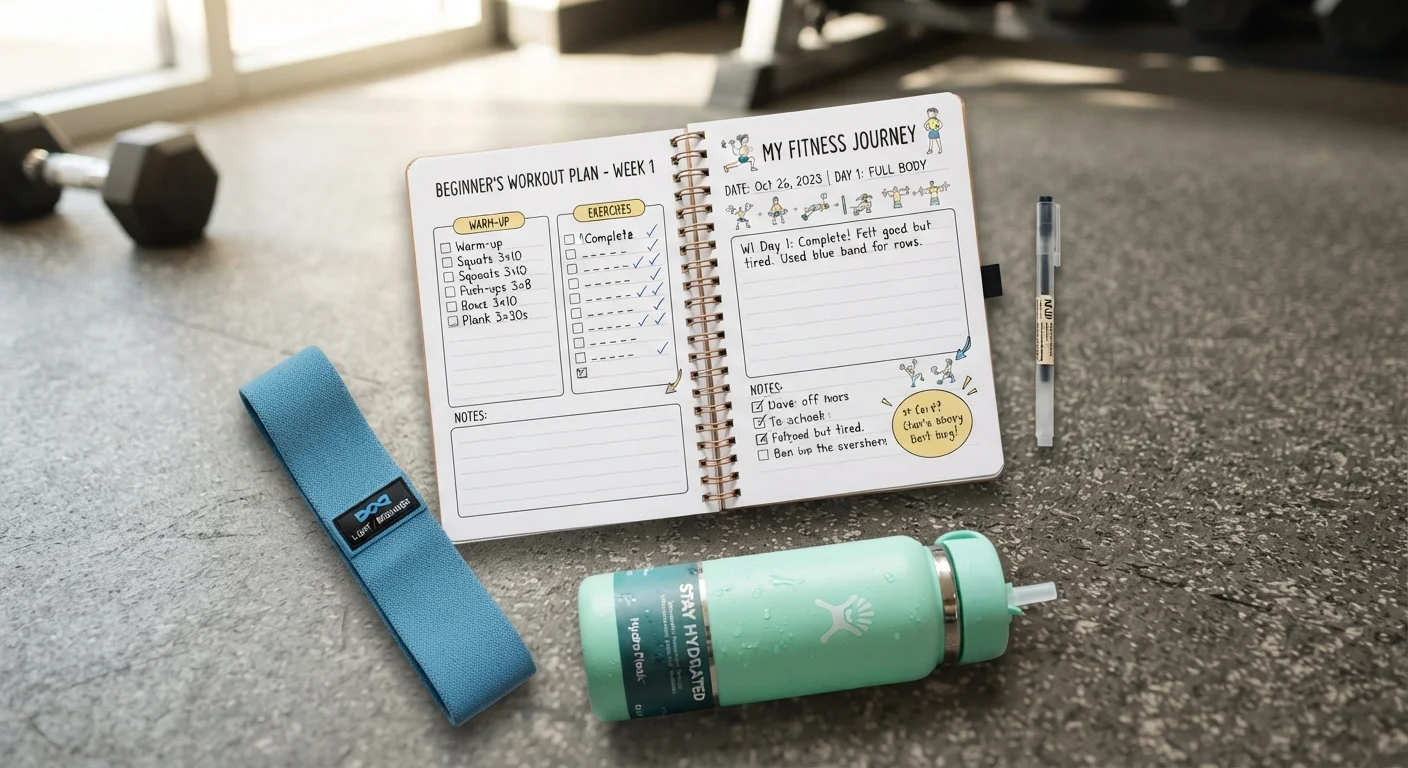
Track your sessions simply: note the exercise, sets, reps, and how the workout felt on an RPE scale. This record becomes the data you use to apply progressive overload from week to week.
Before committing to a full routine, it also helps to go through a short readiness check. Our practical readiness checklist helps you set up your schedule, space, and expectations before the first session.
This article is for general informational purposes only and does not constitute medical or fitness advice. Consult a qualified healthcare professional or certified fitness professional before beginning any new exercise program, especially if you have an existing health condition.
The content on this site is for informational purposes only and is not a substitute for professional advice. Always consult a qualified professional for guidance specific to your situation.