

Why Sitting All Day Is a Distinct Problem
Most Americans spend the majority of their waking hours sitting - at desks, in cars, and on couches. Public health research has identified prolonged, uninterrupted sitting as a risk factor for cardiovascular disease, poor blood sugar regulation, and musculoskeletal discomfort, separate from whether a person meets general exercise guidelines. In other words, someone who goes to the gym every morning but sits for nine unbroken hours afterward still faces elevated health risks from that sedentary time.
This distinction is important: exercise and reducing sedentary behavior are related but not interchangeable goals. Movement snacks address the latter directly by introducing regular interruptions to extended sitting. Getting active after years of inactivity can feel daunting, but movement snacks lower the barrier significantly because they require no gear, no gym, and minimal time.
6-8 hrs
Average daily sitting time for U.S. adults
Estimates from national physical activity and health surveys consistently place average adult sitting time well above six hours per day, excluding sleep.
~30%
Lower cardiovascular risk linked to reducing sitting time
Research published in peer-reviewed journals suggests that consistently breaking up sedentary time is associated with measurably lower cardiovascular risk markers, independent of total exercise volume.
2-5 min
Walk duration shown to blunt blood sugar spikes after meals
Multiple controlled studies, including those reviewed in sports medicine journals, have found that even very short postmeal walks meaningfully improve blood glucose response.
What the Research Actually Shows
The scientific case for accumulated short bouts of activity has grown substantially. A frequently cited body of work in exercise physiology supports the accumulation hypothesis - the idea that the body responds to total physical activity dose rather than requiring it in one uninterrupted block. Studies have found that several short walks spread across a day can produce comparable improvements in blood pressure and blood sugar control to one longer walk of the same total duration.
Particularly compelling is research on postmeal activity. Brief walks of even two to five minutes after eating have been associated with more stable blood sugar responses compared to sitting. This has practical implications for people managing blood sugar levels, though anyone with diabetes or a metabolic condition should discuss exercise strategies with their healthcare provider rather than relying on general guidance.
“The science is clear that some movement is better than none, and that even small amounts of physical activity can have meaningful health benefits - particularly for people who have been largely sedentary.”
— Office of Disease Prevention and Health Promotion, U.S. Department of Health & Human Services - Physical Activity Guidelines for Americans
For a broader look at how different movement types compare, see our article on walking vs. running and how each fits different lifestyles and bodies.
Practical Ways to Add Movement Snacks to Your Day
The most effective movement snack is one you'll actually do. Here are practical, low-barrier options that fit a standard workday:
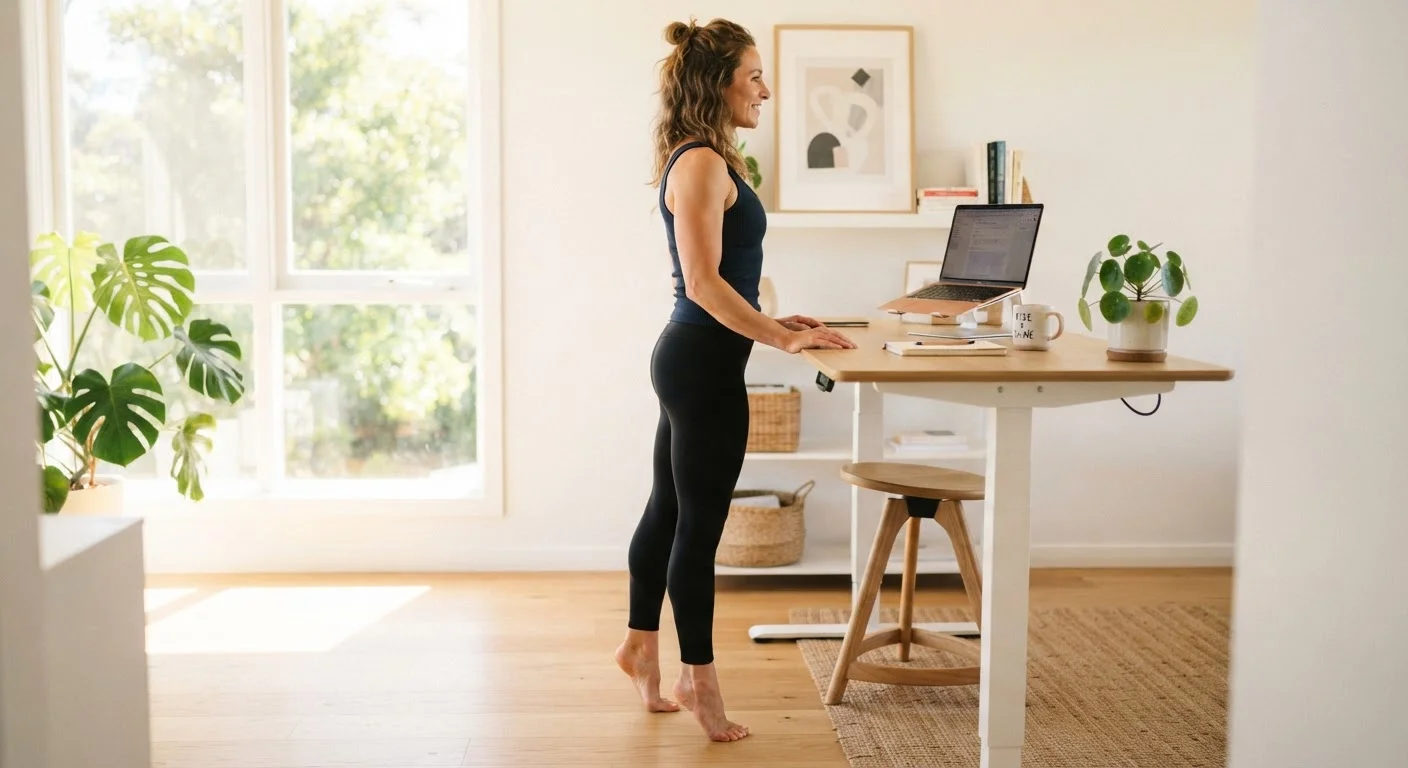
- Standing and calf raises while on a phone call - no one needs to know.
- Chair squats (standing up from and sitting back into your chair slowly, 8-10 times) between tasks.
- A one-minute walk to a bathroom, kitchen, or other room every hour.
- Shoulder rolls, neck stretches, and torso twists to address desk-related tension.
- Marching in place during the first few minutes of a video call before it starts.
The key principle is using natural transition points in your day - the end of a meeting, a screen break, or a task switch - as movement cues. This is the foundation of building sustainable daily movement habits.
Use Your Calendar as a Movement Prompt
Block brief 'movement breaks' directly into your daily calendar the same way you schedule meetings. Even a two-minute placeholder between back-to-back calls signals your brain that moving is part of the plan - not an afterthought. Over time, these scheduled prompts often become automatic habits that no longer need reminders.
If you want to go further and build a structured routine around short sessions, our guide on strength training on a busy schedule walks through how to combine brief efforts into a realistic weekly plan.
How Movement Snacks Fit Into a Broader Active Life
Movement snacks are not a replacement for structured physical activity - they're a complement to it. The current U.S. physical activity guidelines recommend at least 150 minutes of moderate-intensity aerobic activity per week for most adults, plus muscle-strengthening activities. Movement snacks help you fill the gaps between those sessions and counteract the harm of prolonged sitting on days when a full workout isn't possible.
Think of them as a floor, not a ceiling. On days you do exercise - a run, a class, a long walk - movement snacks still offer value by interrupting desk time throughout the rest of the day. On days when a structured workout doesn't happen, they keep your body from being completely static. For a comprehensive overview of how movement fits together across fitness levels, see our head-to-toe physical activity guide.
This article is for general informational and educational purposes only and is not a substitute for professional medical advice, diagnosis, or treatment. Always consult a qualified healthcare provider before making changes to your physical activity routine, particularly if you have a health condition or injury.
Frequently Asked Questions
Yes, accumulated short bouts of activity can contribute to the physical activity guidelines recommended by major health organizations. Research has shown that breaking exercise into smaller chunks can provide cardiovascular and metabolic benefits similar to continuous sessions of equivalent total duration. They're not a full replacement for structured exercise for everyone, but they're far better than remaining sedentary.
There's no single prescription that fits everyone. A practical starting point many researchers use is breaking up sitting time every 30 to 60 minutes with a one- to three-minute activity. Even three to five short bouts daily can make a difference. Consult a healthcare professional if you have specific fitness goals or health conditions.
Movement snacks contribute to total daily energy expenditure, which plays a role in weight management alongside diet and other factors. However, no single habit guarantees weight loss, and individual results vary widely. Speak with a healthcare or nutrition professional for personalized guidance.
Short, low-intensity activity is generally well-tolerated, but people with heart conditions, joint problems, diabetes, or other chronic conditions should consult their healthcare provider before starting any new activity pattern. A doctor or physical therapist can help identify movement types that are appropriate and safe.
Standing and doing calf raises, marching in place, chair squats, shoulder rolls, or a short walk to another room are all low-barrier options. The goal is simply to move your body in a way that temporarily interrupts prolonged sitting.
The content on this site is for informational purposes only and is not a substitute for professional advice. Always consult a qualified professional for guidance specific to your situation.