

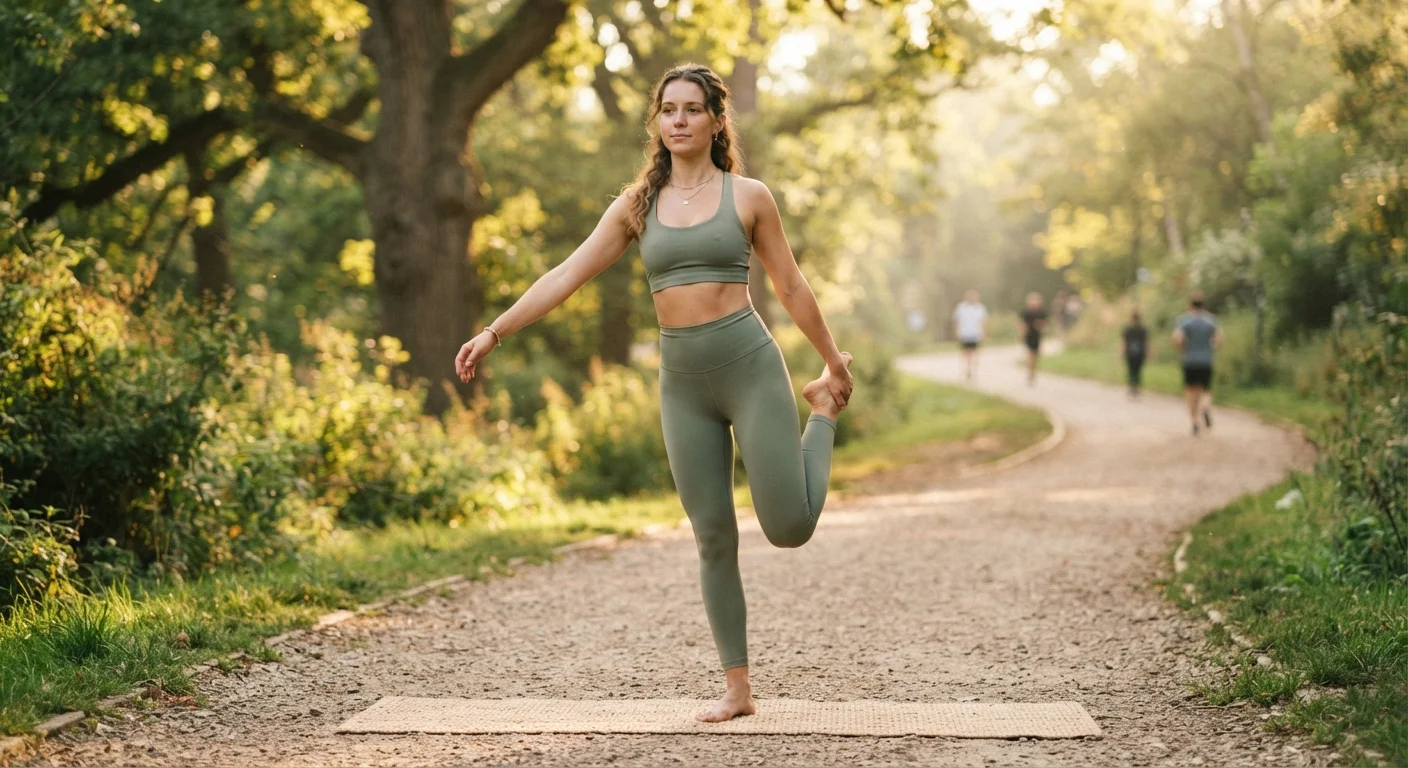
Option A
Static Stretching
The slow, sustained hold for post-workout recovery.
Best for: Best for cooling down after exercise, improving long-term flexibility, and calming the body.
Option B
Dynamic Stretching
The movement-based warm-up that prepares muscles for action.
Best for: Best for warming up before exercise, activating muscles, and improving range of motion pre-activity.
What Sets These Two Approaches Apart
Stretching is one of the most accessible tools in any fitness routine, yet it is often done at the wrong time or in the wrong way. Understanding the core difference between static and dynamic approaches helps you get more out of every workout - whether you are just getting started or returning to regular movement.
Static stretching means moving a muscle or group of muscles to the end of its comfortable range and holding that position, typically for 15 to 60 seconds. Think of a seated hamstring stretch or a standing calf hold. There is no bouncing; the goal is a steady, sustained lengthening.
Dynamic stretching involves controlled, purposeful movements that take joints and muscles through their range of motion repeatedly. Leg swings, hip circles, and walking lunges are common examples. The motion itself is the stretch - you are not holding a fixed position.
Both types are used to improve flexibility, but they accomplish different things in the body, and timing matters. For a broader look at how movement variety fits into an overall routine, see our head-to-toe physical activity guide.
| Criterion | Static Stretching | Dynamic Stretching |
|---|---|---|
| Movement type | Held, stationary position | Controlled, repeated motion |
| Best timing | After exercise (cool-down) | Before exercise (warm-up) |
| Primary benefit | Long-term flexibility gains | Muscle activation and joint readiness |
| Effect on pre-exercise power | May temporarily reduce power if prolonged | Generally maintains or supports performance |
| Examples | Hamstring hold, calf stretch | Leg swings, arm circles, walking lunges |
| Skill level needed | Beginner-friendly | Beginner-friendly with proper form |
What the Research Generally Shows
Sports science has shifted noticeably on pre-exercise static stretching over the past two decades. A number of studies - including reviews published in journals such as the Scandinavian Journal of Medicine & Science in Sports - have found that prolonged static stretching immediately before intense activity can temporarily reduce muscle strength and power output. This does not mean static stretching is harmful, but timing matters.
Dynamic stretching before exercise, by contrast, has been associated with maintaining or modestly improving subsequent performance. By raising muscle temperature and activating the neuromuscular system, dynamic movements appear to better prepare the body for athletic effort.
After exercise, when muscles are already warm, static stretching is generally well-tolerated and is associated with improvements in flexibility over time. The American College of Sports Medicine has broadly recommended flexibility exercises - including static stretching - as part of a complete fitness program, typically placed in the cool-down phase.
~8%
Average strength reduction from prolonged pre-exercise static stretching
A meta-analysis in the Scandinavian Journal of Medicine & Science in Sports found acute strength decreases of roughly 5-8% when static stretching exceeded 60 seconds immediately before activity.
30 sec
Commonly studied static hold duration for flexibility gains
Research has generally shown that holds of around 30 seconds are associated with meaningful flexibility improvements without excessive discomfort for most healthy adults.
It is worth noting that most stretching research is conducted in controlled settings. Individual responses vary, and factors such as age, injury history, and fitness level all influence outcomes. This content is general health information - not personal medical advice.
Putting Both Into Your Routine
For most people, the simplest framework is: dynamic before, static after. Before a workout, spend five to ten minutes on controlled movements that mimic what you are about to do - hip circles before a run, arm swings before lifting, or gentle walking lunges before a lower-body session. This primes your nervous system without dampening muscle readiness.
After your session - when muscles are warm and your heart rate is dropping - static holds are a natural fit. Held stretches during this window feel more comfortable and may yield better flexibility gains over time. This is also a useful moment to slow down mentally, which complements the physical cool-down.
If you exercise at a lower intensity - such as walking or gentle cycling - the distinction matters less, but a few minutes of dynamic movement to start still supports joint mobility. Our guide to low-impact exercises covers movement approaches that work well alongside a consistent stretching habit.
Consistency beats perfection here. Even brief, regular stretching practice - a few minutes most days - tends to produce more lasting flexibility improvements than occasional long sessions. If you are managing an injury, chronic pain, or a health condition, speak with a qualified healthcare professional or physical therapist before modifying your routine.
A Note on Stretching and Injury Prevention
Stretching is widely practiced as part of injury prevention routines, but the evidence is more nuanced than many assume. Research does not consistently show that stretching alone prevents muscle injuries during exercise. Proper warm-up, gradual progression of intensity, and adequate recovery time are also important factors. If you experience pain - not just mild discomfort - during any stretch, stop and consult a healthcare professional.
For those balancing stretching with other fitness goals, consider how it fits alongside cardio and strength work. Our busy-schedule strength training guide and our look at walking vs. running can help you build a balanced, realistic plan.
This article is for general informational purposes only and does not constitute medical advice. Consult a qualified healthcare professional before making changes to your exercise routine, particularly if you have an existing injury or health condition.
The content on this site is for informational purposes only and is not a substitute for professional advice. Always consult a qualified professional for guidance specific to your situation.