

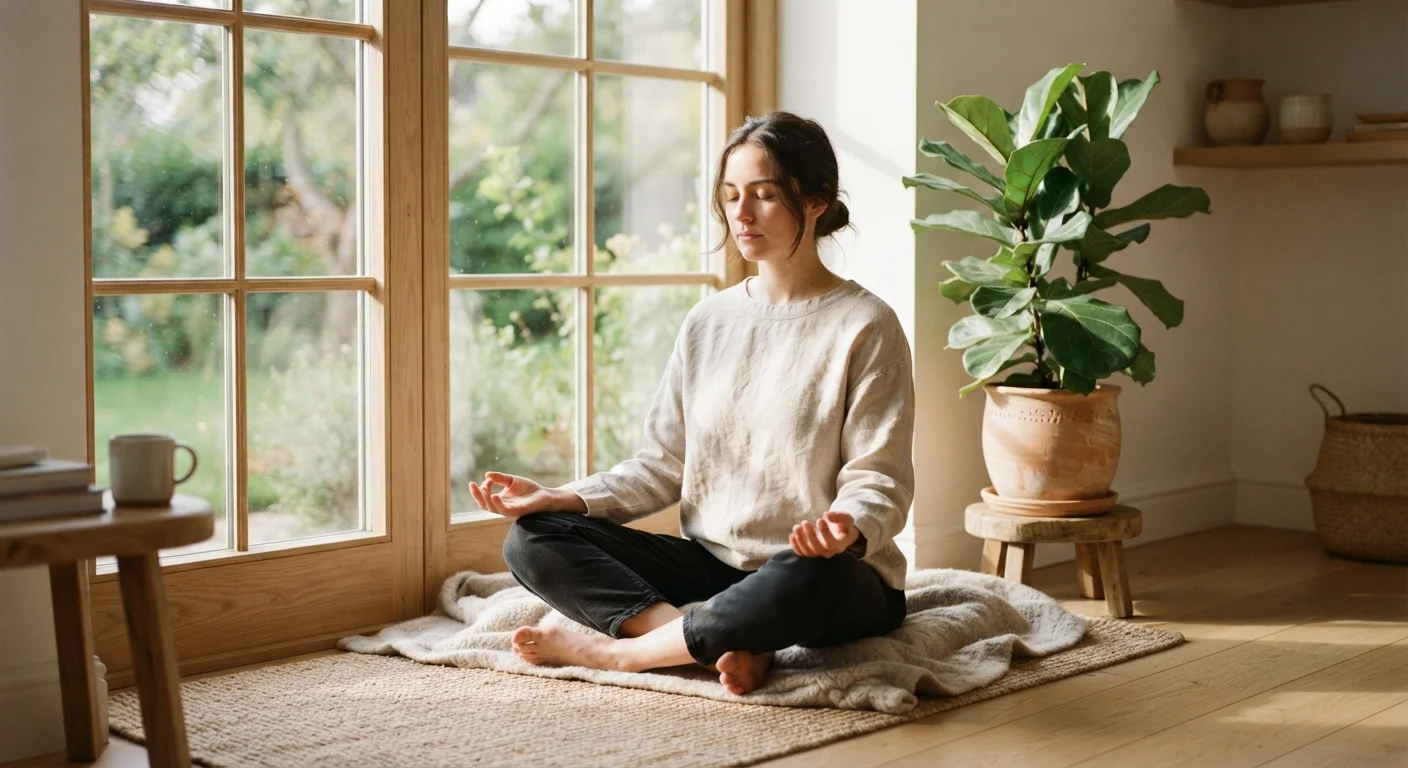
Option A
Mindfulness
An everyday awareness practice you can do anywhere.
Best for: People who want to reduce stress and stay present during routine daily activities.
Option B
Meditation
A structured mental training session with a defined start and end.
Best for: People looking to build focused mental discipline through a dedicated, repeated practice.
What Each Practice Actually Means
The words mindfulness and meditation get used interchangeably in wellness conversations, but they describe different things. Understanding the distinction helps you choose what actually fits your life.
Mindfulness is a mental quality - the deliberate act of paying attention to the present moment without judgment. You can be mindful while sipping coffee, walking to your car, or listening to a colleague. No special position, timer, or app required.
Meditation is a formal practice - a structured activity you sit down to do with a beginning and an end. Many styles of meditation use mindfulness as their core tool, but others focus on visualization, mantra repetition, or body-scan techniques. Think of mindfulness as the skill and meditation as one way to sharpen it.
| Criterion | Mindfulness | Meditation |
|---|---|---|
| Definition | Quality of present-moment attention | Structured practice with defined session |
| When you do it | During any daily activity | During a set, dedicated time block |
| Time required | No extra time needed | Typically 5-45 minutes per session |
| Learning curve | Low - can start immediately | Moderate - benefits from guidance |
| Clinical evidence | Strong within MBSR programs | Varies by technique; moderate overall |
| Tools needed | None | Optional: timer, guided audio, cushion |
For a broader look at how structured practices fit alongside professional support, see understanding your mental wellness options.
The Science Behind Each Approach
Both practices have meaningful research behind them, though the depth varies by technique.
Mindfulness-Based Stress Reduction (MBSR) - an eight-week structured program developed at the University of Massachusetts Medical School - has been studied extensively. Peer-reviewed research published in journals such as JAMA Internal Medicine suggests MBSR can reduce symptoms of anxiety, depression, and chronic pain in some populations. The program formally combines meditation sessions with mindfulness skill-building throughout the day.
Broader mindfulness practice - paying deliberate attention during daily tasks - is associated in observational studies with lower perceived stress and improved emotional regulation. However, study designs vary widely, so it is accurate to say the evidence is promising rather than definitive for any single outcome.
47
Randomized trials reviewed in landmark MBSR meta-analysis
A 2014 meta-analysis in JAMA Internal Medicine reviewed 47 trials and found moderate evidence that mindfulness meditation reduced anxiety, depression, and pain symptoms.
~200M
Americans who have tried meditation at least once
National health survey data from the CDC's National Health Interview Survey indicates that meditation use among U.S. adults has grown significantly over the past decade.
Meditation research spans dozens of techniques. Loving-kindness meditation, breath-focused meditation, and body-scan meditation each show different patterns of benefit in neuroimaging and self-report studies. A 2014 meta-analysis in JAMA Internal Medicine reviewed 47 trials and found moderate evidence that mindfulness meditation programs improved anxiety, depression, and pain. Researchers noted that stronger trial designs are still needed in many areas.
This content is general health information, not medical advice. Speak with a qualified healthcare professional about any mental health concerns.
How to Bring Either Practice Into Your Day
Starting does not require a retreat, an app subscription, or a perfectly quiet room. Here are practical entry points for each.
Informal Mindfulness
- Anchor to a habit: Choose one daily routine - brushing your teeth, making coffee - and give it your full attention for its entire duration.
- Single-task deliberately: When reading or eating, set your phone aside and focus only on that activity.
- Notice without judging: When your mind wanders (it will), simply note that it wandered and return your attention. That gentle redirect is the practice itself.
Formal Meditation
- Start short: Research suggests even brief sessions - five to ten minutes - can produce measurable shifts in mood when practiced consistently.
- Pick one technique first: Breath awareness (counting inhales and exhales) is a reliable starting point supported by most meditation traditions and evidence-based programs.
- Schedule it like an appointment: Consistency matters more than duration. A regular time of day helps the habit stick.
Both practices work best when approached with curiosity rather than a pressure to perform. Neither guarantees specific outcomes, and either can complement - but not replace - professional mental health support when that is needed.
The content on this site is for informational purposes only and is not a substitute for professional advice. Always consult a qualified professional for guidance specific to your situation.