

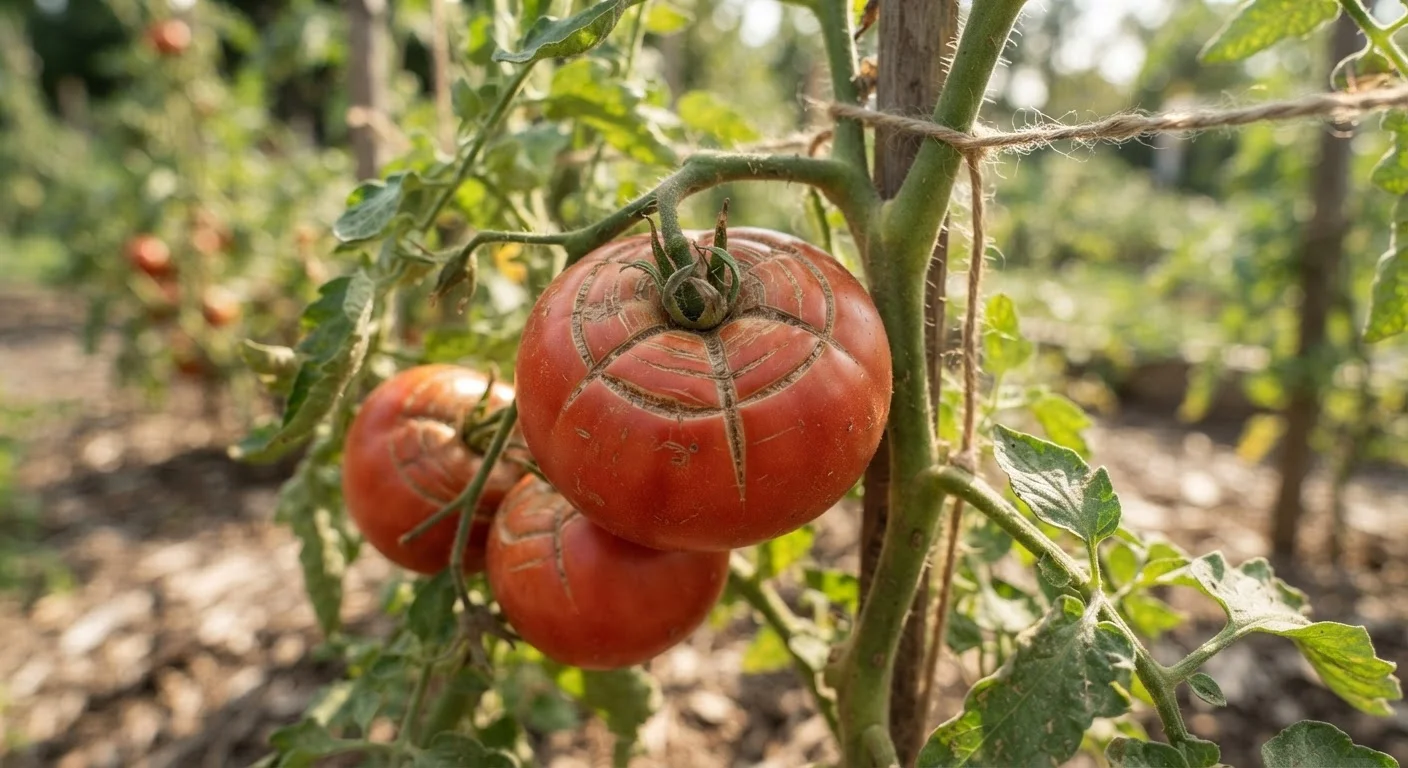
What's Actually Happening When Tomatoes Crack
Tomato cracking happens when the fruit's inner flesh expands faster than its skin can stretch. The result is either radial cracks - long splits running from the stem end downward - or concentric cracks, which form rings around the stem. Both are stress responses, and both tell you something specific about what went wrong in the garden.
Radial cracks typically appear after a heavy rainfall or deep watering following a dry spell. The tomato drinks rapidly, the flesh swells quickly, and the skin tears. Concentric cracks are usually linked to heat stress or wide temperature swings that slow skin development while the fruit continues to ripen inside. Understanding which type you're seeing is the first step toward fixing the right problem.
~40%
Tomato yield lost to cracking in wet seasons
University extension programs commonly report that moisture-related fruit defects, including cracking, account for significant post-harvest losses for home and small-scale growers during rainy summers.
2-3 inches
Recommended mulch depth around tomatoes
Cooperative extension guidelines across multiple US states consistently recommend this mulch depth to stabilize soil moisture and reduce temperature fluctuations that trigger cracking.
Common Mistakes That Lead to Cracking - and How to Avoid Them
Most cracking is preventable once you recognize the habits behind it. Here are the most frequent missteps home gardeners make:
Watering inconsistently - letting soil dry out completely between waterings, then soaking it.
Why it happens: Many gardeners water reactively, waiting until plants look wilted before irrigating heavily. This boom-and-bust cycle is the single biggest driver of radial cracking.
Neglecting to mulch around tomato plants, leaving soil bare.
Why it happens: Mulching can feel like an extra step, and gardeners sometimes skip it when time is short. Bare soil dries out rapidly in summer heat, making moisture fluctuations more extreme.
Ignoring the forecast and watering right before heavy rain.
Why it happens: Many gardeners follow a fixed watering schedule without accounting for weather, inadvertently overloading plants with moisture just before a downpour.
Leaving tomatoes on the vine well past their peak ripeness.
Why it happens: Gardeners often want tomatoes to reach maximum color and sweetness on the vine, but fully ripe fruit on the plant is highly vulnerable to any moisture surge.
Planting only thin-skinned heirloom varieties without adjusting care practices.
Why it happens: Heirlooms are beloved for flavor, but their skins evolved without commercial crack-resistance breeding. Gardeners unfamiliar with this trade-off are often caught off guard.
Variety Choice and Harvest Timing Also Matter
Not all tomato varieties are equally prone to cracking. Thin-skinned types - especially large heirlooms - crack far more readily than varieties bred with crack resistance in mind. If cracking has been a persistent problem in your garden, consider asking at your local cooperative extension office or seed supplier about crack-resistant options suited to your regional climate. This isn't about abandoning favorite varieties; it's about pairing them with better management or accepting some cosmetic imperfection as part of growing heirlooms.
Harvest timing is another underrated factor. Tomatoes that stay on the vine past full maturity have skins that grow increasingly taut and brittle. Picking fruit at the breaker stage - when color has just begun to develop but the tomato isn't fully ripe - lets it finish ripening indoors away from rain and temperature swings. The flavor difference is minimal, and the cracking risk drops substantially.
Don't Compost Heavily Cracked Tomatoes Without Checking
Deeply cracked tomatoes are an entry point for mold and bacterial rot. Before tossing cracked fruit into your compost pile, inspect it carefully. Fruit showing signs of Botrytis (gray mold) or bacterial soft rot should go in the trash, not the compost, to avoid spreading pathogens. Lightly cracked tomatoes that are otherwise sound are fine to eat or compost.
The content on this site is for informational purposes only and is not a substitute for professional advice. Always consult a qualified professional for guidance specific to your situation.