

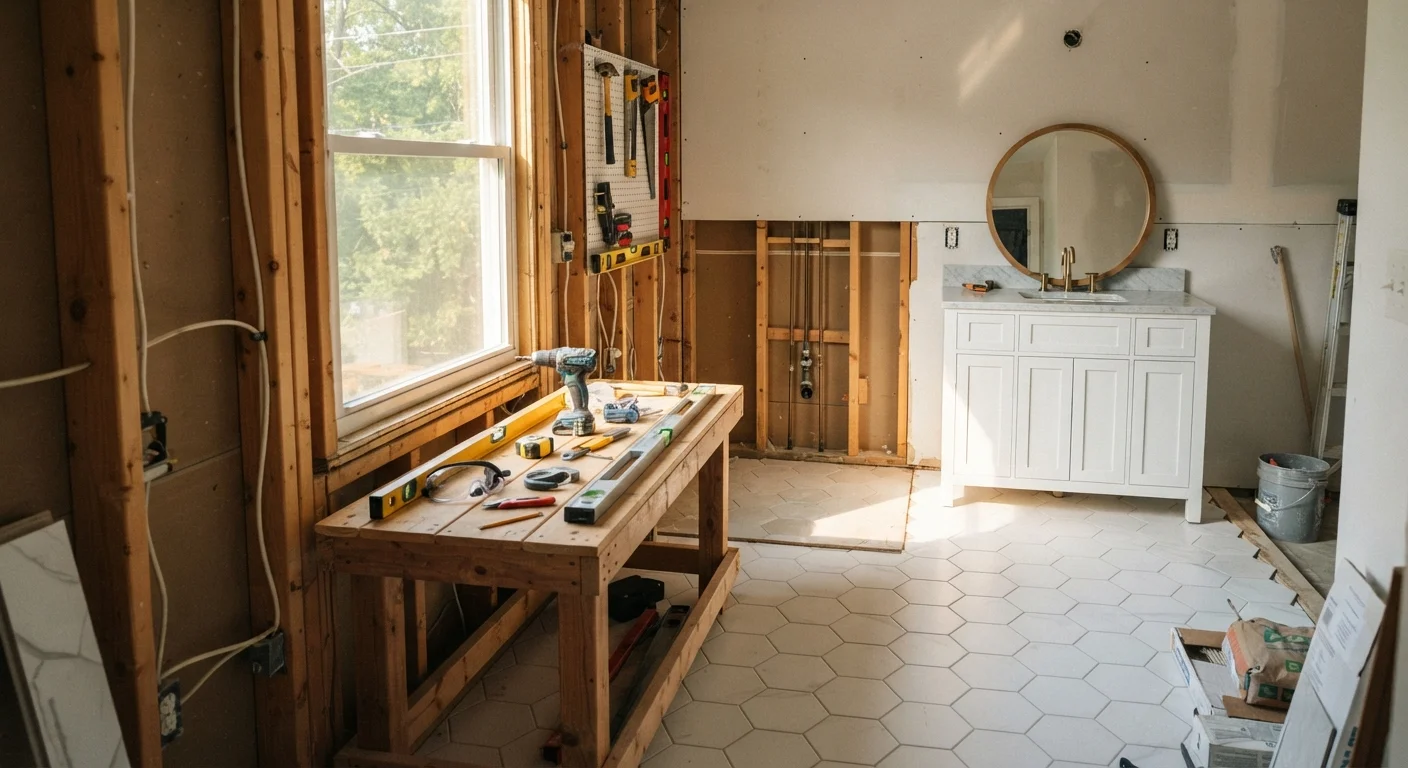
Define Your Scope Before Anything Else
The most common reason bathroom renovations go over budget or stall mid-project is a vague scope. Before calling a single contractor, write down exactly what you want to change. Will fixtures stay in their current locations, or are you moving the toilet, sink, or shower? Are you keeping the layout and simply refreshing finishes, or gutting down to studs?
These aren't cosmetic decisions - they determine which licensed trades you'll need, whether permits are required, and how long the project will realistically take. A cosmetic refresh (new vanity, paint, light fixture) might take a weekend. A full gut renovation of a primary bathroom can take four to eight weeks or longer.
As you define scope, build a realistic budget. A useful framework for prioritizing which projects to fund first is covered in our home renovation budgeting guide. Whatever your budget, hold back a 10-20% contingency - hidden moisture damage, outdated wiring, or deteriorated subfloor is discovered in many older bathrooms once walls open.
Write Down Every Detail Before Getting Bids
Create a simple one-page scope document listing every item you want changed, every finish you've chosen, and every question you still have. Handing this to contractors ensures you get comparable bids and reduces the chance of misunderstandings mid-project.
Permits and Code Requirements
In most U.S. jurisdictions, any work that moves or adds plumbing supply or drain lines, alters electrical circuits, or changes the ventilation system requires a permit. Simply replacing a toilet in the same location typically does not. When in doubt, contact your local building department - not a contractor - for a definitive answer.
Skipping permits is a genuine risk. Unpermitted work can complicate a future home sale, void homeowner's insurance claims related to the work, and leave you responsible for bringing everything up to current code later at your own expense.
Older Homes: Test Before You Demo
Homes built before 1978 may contain lead paint and asbestos in tile adhesive, drywall compound, or flooring materials. Disturbing these materials without professional testing and proper abatement is a serious health hazard. Contact a licensed abatement professional and consult your local health or environmental agency before any demolition work begins.
If your home was built before 1978, be aware that tile, drywall compound, and flooring adhesive may contain lead or asbestos. Disturbing these materials without proper testing and abatement procedures is hazardous. A licensed abatement contractor should test before any demolition begins. Check with your local health or environmental agency for guidance on testing requirements in your area.
Hiring the Right Trades
A full bathroom remodel typically involves multiple licensed trades: a plumber for supply and drain work, an electrician for circuits and GFCI outlets (ground fault circuit interrupters, required near water sources), and a tile setter for floors and walls. A general contractor coordinates all of these; if you act as your own general contractor, you're responsible for scheduling, coordination, and quality oversight.
When gathering bids, request itemized quotes so you can compare like for like. Our guide to reading a construction quote explains what line items to look for and what's often left out. Verify that every trade holds a current license and carries liability insurance and workers' compensation - ask for certificates, not just verbal assurances.
Request a detailed payment schedule tied to project milestones - not calendar dates - before signing any contract. This protects you from paying ahead of work completed.
Milestone-based payments align contractor incentives with progress and give you leverage if work stalls or quality issues arise before the next phase.
Order tile and fixtures before demolition begins, not after. Confirm everything is in hand and undamaged before your contractor tears out the old bathroom.
Backordered materials are one of the most common reasons bathroom renovations extend far beyond the original timeline, leaving homeowners without a functioning bathroom for weeks longer than planned.
The Correct Order of Work
Bathroom renovations follow a specific sequence. Deviating from it creates rework and cost. Here is the standard progression:
- Demolition: Remove existing fixtures, tile, drywall, and flooring down to the required depth.
- Rough-in work: Plumbers and electricians run new pipes and wiring before walls close. This is when inspections occur for those systems.
- Waterproofing and backer board: Cement board or equivalent moisture-resistant substrate goes up on walls that will be tiled. Shower pans and niches get a waterproof membrane.
- Tile installation: Floor tile first, then wall tile. Grout follows after tile adhesive cures.
- Drywall and paint: Non-wet areas get finished drywall and primer before paint.
- Fixture installation: Vanity, toilet, tub, or shower door - set only after tile and paint are complete.
- Trim and accessories: Towel bars, mirrors, hardware, and trim are the final layer.
For unfamiliar renovation terminology at any stage, the home renovation glossary is a helpful plain-language reference.
~4-8 weeks
Typical full bathroom remodel timeline
Industry estimates for a complete gut-and-rebuild of a primary bathroom, excluding permit delays or special-order materials.
10-20%
Recommended budget contingency
Home renovation professionals consistently recommend reserving this range to cover hidden conditions discovered after demolition begins.
What to Expect During Construction
Once work begins, expect your bathroom to be completely unusable for at least the duration of rough-in through tile cure - often two to three weeks minimum on a full remodel. If it's your only full bathroom, arrange an alternative in advance.
Inspections will pause the schedule. After rough-in plumbing and electrical are complete, the inspector must approve that work before walls can close. Build this into your timeline - inspections are not always scheduled the next day.
Tile work has its own built-in waits. Mortar and adhesive need to cure before grouting, and grout needs to cure before the shower or tub is used. Rushing these steps leads to cracked grout and tile failures. Ask your tile setter for the manufacturer's recommended cure times, and hold to them.
Don't Use the Shower Until Grout Fully Cures
Using a tiled shower before grout and sealant have fully cured - typically 48 to 72 hours for grout, longer for some sealants - can introduce moisture that causes grout to crack, loosen tiles, or compromise the waterproof membrane beneath. Always follow the specific product instructions your tile setter uses.
Finishing Touches and Final Inspections
The punch list - a construction term for the final list of incomplete or deficient items - is one of the most important documents in any renovation. Before making your final payment, walk through the bathroom with your contractor and note every item that needs correction: paint touch-ups, caulk gaps, fixtures that aren't plumb, grout voids, hardware not fully secured.
A final inspection from the building department (if permits were pulled) must be scheduled and passed before the project is officially closed. Keep copies of all permits, inspection approvals, and warranties for fixtures and materials - these documents matter when you sell the home.
Once your bathroom is complete, it becomes part of the home systems you'll maintain over time. Our complete home maintenance reference covers how to keep plumbing, tile, caulk, and ventilation in good shape for years to come. And if this is your first renovation, the first-time homeowner maintenance guide provides helpful context for building a long-term upkeep routine.
The content on this site is for informational purposes only and is not a substitute for professional advice. Always consult a qualified professional for guidance specific to your situation.