

What Are Closing Costs?
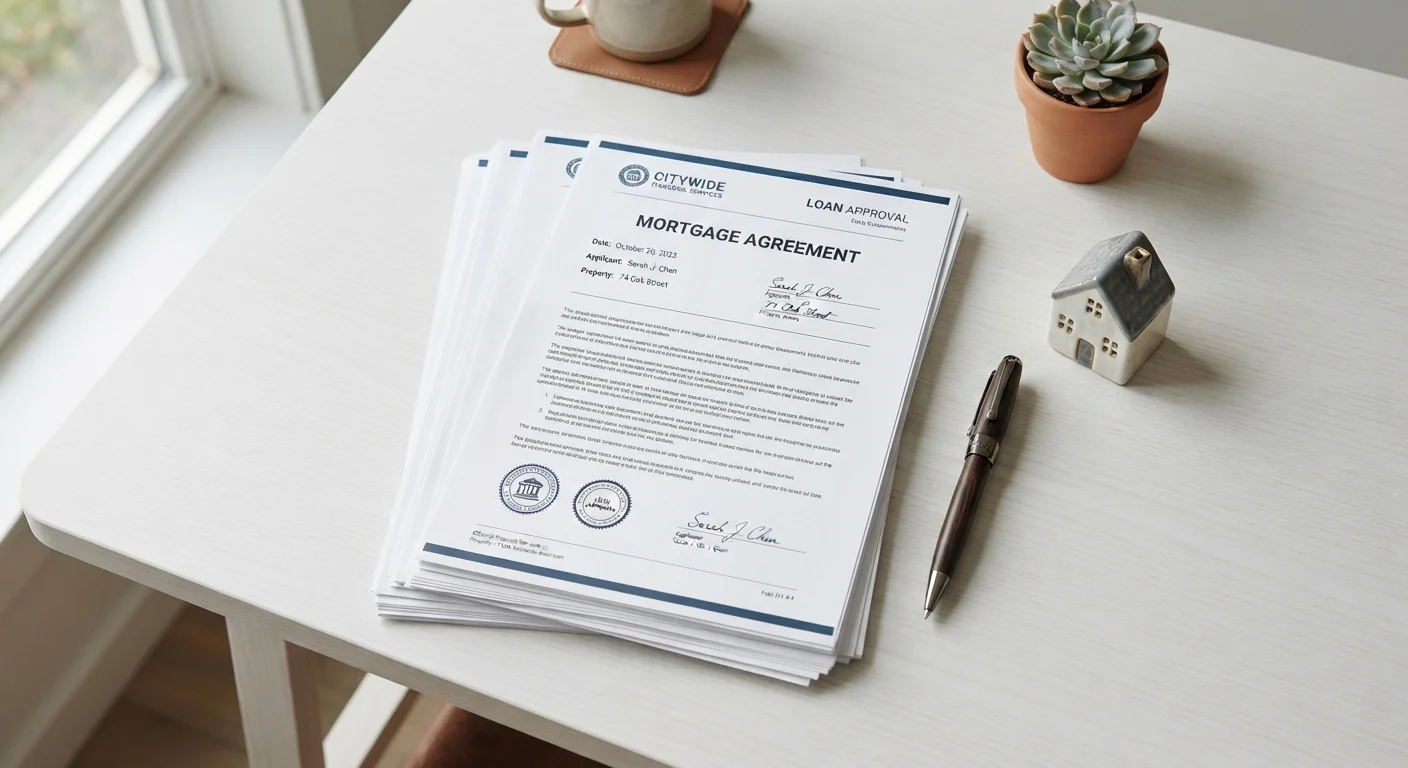
When you buy a home, the purchase price isn't the only number that matters. Before you get the keys, you'll sign a stack of paperwork and pay a set of fees collectively called closing costs. These cover the services, taxes, and insurance required to transfer ownership from seller to buyer - and they can add up to 2-5% of the home's purchase price, according to general industry guidance from the Consumer Financial Protection Bureau (CFPB).
On a $350,000 home, that's roughly $7,000 to $17,500 due at the closing table - often the same day you make your down payment. For first-time buyers especially, this number catches people off guard. See our full homebuying process guide to understand where closing fits into the bigger picture.
| Typical closing cost range | 2-5% of the purchase price (Consumer Financial Protection Bureau (CFPB)) |
| When costs are paid | At the closing/settlement date |
| Required federal disclosure | Loan Estimate (within 3 business days of application) (CFPB TRID rules) |
| Final cost document | Closing Disclosure (provided 3 business days before closing) (CFPB TRID rules) |
| Largest seller-side cost | Real estate agent commissions |
| Assistance available | State and local programs for qualifying buyers (HUD-approved housing agencies) |
A Breakdown of Common Closing Fees
Closing costs aren't one charge - they're a collection of individual line items. Here's what each one typically covers:
- Loan origination fee: Charged by the lender for processing your mortgage application, usually 0.5-1% of the loan amount.
- Appraisal fee: Pays a licensed appraiser to confirm the home's market value. Lenders require this before approving your loan.
- Title search and title insurance: A title search examines public records to confirm the seller legally owns the home. Title insurance protects you (and your lender) if an ownership dispute surfaces later.
- Survey fee: Verifies the property's boundaries. Not always required, but common in many states.
- Escrow or settlement fee: Paid to the closing agent (an attorney or title company) who coordinates the paperwork and funds transfer.
- Prepaid interest: Interest on your loan for the days between closing and your first mortgage payment.
- Homeowners insurance (prepaid): Lenders typically require the first year's premium upfront.
- Property taxes (prorated): You reimburse the seller for taxes already paid beyond the closing date, or prepay into an escrow account.
- Recording fees: Charged by the local government to officially record the deed transfer.
If any of these terms feel unfamiliar, the first-time homebuyer glossary explains the jargon in plain language.
Closing costs
Fees and expenses paid at settlement to finalize a real estate transaction. They are separate from the down payment and typically range from 2-5% of the purchase price.
Title insurance
A policy that protects against financial loss from defects in a property's title - such as undisclosed liens or ownership disputes. Lenders require their own policy; buyers can also purchase an owner's policy.
Escrow
A neutral account or process managed by a third party that holds funds and documents until all conditions of the sale are met and the transaction can close.
Loan origination fee
A fee charged by the mortgage lender for evaluating and processing your loan application. It's usually expressed as a percentage of the loan amount.
Seller concession
An agreement in which the seller contributes a set amount toward the buyer's closing costs. The allowable limit depends on the loan type and lender guidelines.
Loan Estimate
A standardized three-page form lenders must provide within three business days of receiving a mortgage application. It outlines projected loan terms and closing costs.
Who Pays What - Buyer vs. Seller
Closing costs aren't always paid solely by the buyer. Some fees customarily fall to the seller, and others are negotiable.
Costs Vary Significantly by Location
Closing costs can differ substantially from state to state, and even county to county, due to differences in transfer taxes, attorney requirements, and local fees. What's standard in New York may look very different from a closing in Texas. Always review your specific Loan Estimate rather than relying on national averages alone.
Buyers typically pay: loan origination fees, appraisal, title insurance (lender's policy), prepaid interest, homeowners insurance, and recording fees.
Sellers typically pay: real estate agent commissions (often the largest closing cost overall), transfer taxes, the owner's title insurance policy, and any agreed-upon concessions.
Negotiated costs: In some markets, buyers ask sellers to cover a portion of buyer closing costs as a seller concession. This is more common in a buyer's market. The amount a seller can contribute may be capped depending on your loan type.
Notably, a home purchase shares something with other major purchases - hidden or unexpected fees can quietly inflate the total. Our piece on fees that inflate everyday bills explores how this pattern shows up across financial transactions.
2-5%
Of purchase price in closing costs
General range cited by the Consumer Financial Protection Bureau for U.S. home purchases.
$6,000-$10,000
Average buyer closing costs nationally
Estimates vary by loan size, location, and lender; individual costs can differ significantly.
3 days
Time lender must provide Loan Estimate
Required under federal TRID (TILA-RESPA Integrated Disclosure) rules overseen by the CFPB.
How to Prepare and Where to Look for Help
Federal law requires lenders to give you a Loan Estimate within three business days of receiving your mortgage application. This document lists all expected closing costs by category. Three days before closing, you'll receive a Closing Disclosure with final numbers - compare it carefully to the Loan Estimate and ask your lender to explain any differences.
A few strategies that may reduce what you owe at closing:
- Shop lenders: Origination fees and some third-party costs vary by lender. Getting multiple Loan Estimates lets you compare apples to apples.
- Ask about no-closing-cost mortgages: Some lenders roll costs into the loan balance or offer a higher interest rate in exchange for covering fees upfront - weigh the long-term trade-off carefully.
- Look into assistance programs: Many state and local programs offer closing cost assistance to qualifying buyers, especially first-timers. Your state's housing finance agency is a good starting point.
This article is for general informational purposes only and does not constitute financial, legal, or mortgage advice. Costs vary by location, loan type, and lender. Consult a licensed real estate professional or HUD-approved housing counselor for guidance specific to your situation.
The content on this site is for informational purposes only and is not a substitute for professional advice. Always consult a qualified professional for guidance specific to your situation.