

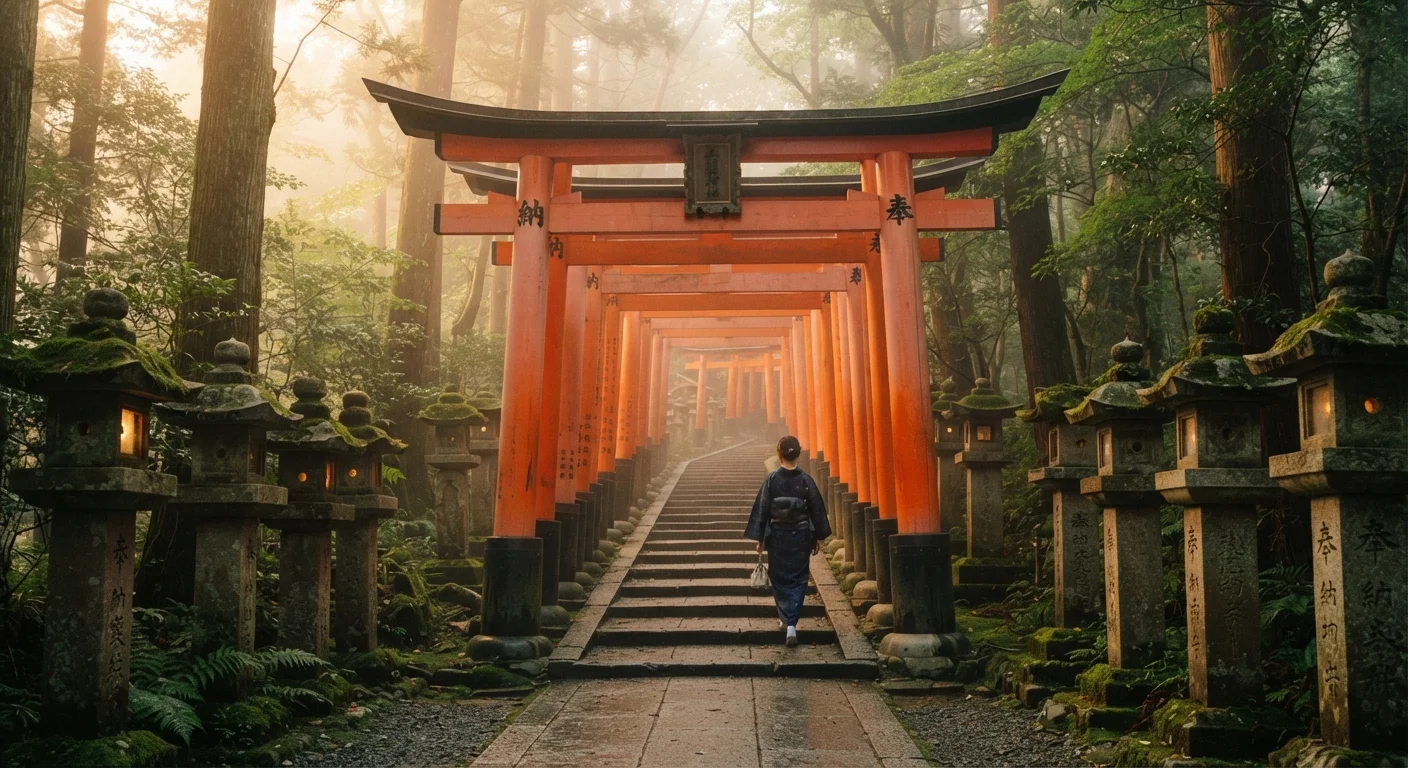
Why Japan Surprises Even Experienced American Travelers
Japan consistently ranks among the most visited destinations in the world - and for good reason. The food is extraordinary, the transit system is remarkably efficient, and the cities pulse with energy unlike anywhere else. But Americans arriving with a Western mindset often stumble into awkward moments that are entirely avoidable with a little preparation.
This isn't about memorizing an encyclopedia of rules. It's about understanding a few core values - respect for shared spaces, appreciation for quiet, and a culture of thoughtful consideration - that shape everyday behavior in Japan. Once you grasp the spirit behind the customs, the specifics start to make intuitive sense.
Before you pack your bags, it's also worth reviewing common planning assumptions that trip up travelers, since missteps often start well before you board the plane.
Myth
Tipping your server or taxi driver is a polite way to show appreciation.
Fact
Tipping is not practiced in Japan and can create confusion or discomfort for service workers.
In the United States, tipping is how workers make a livable wage. In Japan, service staff are paid a full salary and exceptional service is simply the professional standard - not something that requires a monetary reward on top. Leaving cash behind after a meal may cause a server to chase you down to return it, genuinely believing you forgot your money. Skip the tip and instead offer a sincere arigatou gozaimasu (thank you very much) - that's the real currency of appreciation here.
Myth
You can keep your shoes on anywhere indoors, just like at home.
Fact
Removing shoes before entering homes, ryokans (traditional inns), many temples, and some restaurants is a firm cultural expectation.
The line between outdoor and indoor space is treated very seriously in Japan. Look for the genkan - an entryway step - as your signal to remove shoes and slip on any provided slippers. Some traditional restaurant areas require bare feet or socks entirely. Wearing shoes with easy-to-remove laces or straps makes this seamless. Socks with holes, take note: you'll be showing them off more than you'd expect.
Myth
Talking on your phone or chatting with friends on the train is totally fine.
Fact
Public transit in Japan is treated as a quiet, shared space - loud talking and phone calls are considered inconsiderate.
Japanese train etiquette operates on a kind of unspoken social contract: keep noise minimal, set your phone to silent, and avoid phone calls entirely. Even busy rush-hour trains can feel remarkably quiet. Most rail operators display signs explicitly asking passengers not to speak on calls. A low conversation with a travel companion is generally tolerated, but matching the ambient volume of those around you is the respectful move.
Myth
A firm handshake signals confidence and friendliness when meeting locals.
Fact
Bowing is the standard form of greeting in Japan; handshakes are uncommon and usually reserved for international business settings.
You don't need to master the precise angles of a formal bow - as a visitor, a genuine, modest nod of the head conveys respect and will be warmly received. If a Japanese person extends their hand first, by all means shake it. But don't initiate a handshake expecting it to land the same way it does back home. The bow is not just a gesture; it expresses humility, gratitude, and acknowledgment all at once.
Myth
Eating and drinking while walking around the city is perfectly acceptable.
Fact
In most parts of Japan, eating while walking is considered impolite; the expectation is that you stop and eat in one place.
Street food stalls and convenience store snacks are everywhere - but notice that locals typically eat standing near the vendor or find a nearby spot to pause. Wandering through a market while eating is increasingly tolerated in heavy tourist areas, but it remains a breach of etiquette in most contexts. The underlying value is cleanliness and consideration for shared spaces. Eat at the stall, enjoy every bite, then continue your adventure.
On the Ground: Practical Habits That Keep You Respectful
Beyond the specific myths, a few general habits will carry you far. When in doubt, observe what locals around you are doing - Japan's social cues are often visible if you're paying attention. Stand on the correct side of escalators (it varies by city: left in Tokyo, right in Osaka). Queue patiently at crosswalks and train platforms. Keep your voice low in restaurants and on transit.
3.2M
American tourists visited Japan in 2023
According to Japan's National Tourism Agency, the US was one of the top source countries for inbound international visitors following the country's post-pandemic reopening.
~99%
Train punctuality rate on major Japanese rail lines
Japan's rail operators are internationally recognized for near-perfect on-time performance, with average delays measured in under a minute on most major lines.
One area that genuinely catches Americans off guard is waste disposal. Public trash cans are uncommon outside of convenience stores and train stations. Rather than leaving wrappers on benches or windowsills, carry a small zip-lock bag to collect your trash until you find a proper bin. It's a small habit with a big impact on how you're perceived.
And if you're planning a longer stay, getting your booking sequence right for flights and accommodations matters - especially for cherry blossom season or Golden Week, when availability disappears fast.
Tattoos May Restrict Access to Certain Facilities
Many onsen (hot spring baths) and some gyms or pools in Japan prohibit visible tattoos, a policy rooted in longstanding cultural associations. This is not universal, and tattoo-friendly facilities do exist. If visiting an onsen is on your itinerary, research individual venues in advance and contact them directly if you're unsure. This is one area where planning ahead saves real disappointment.
The content on this site is for informational purposes only and is not a substitute for professional advice. Always consult a qualified professional for guidance specific to your situation.