

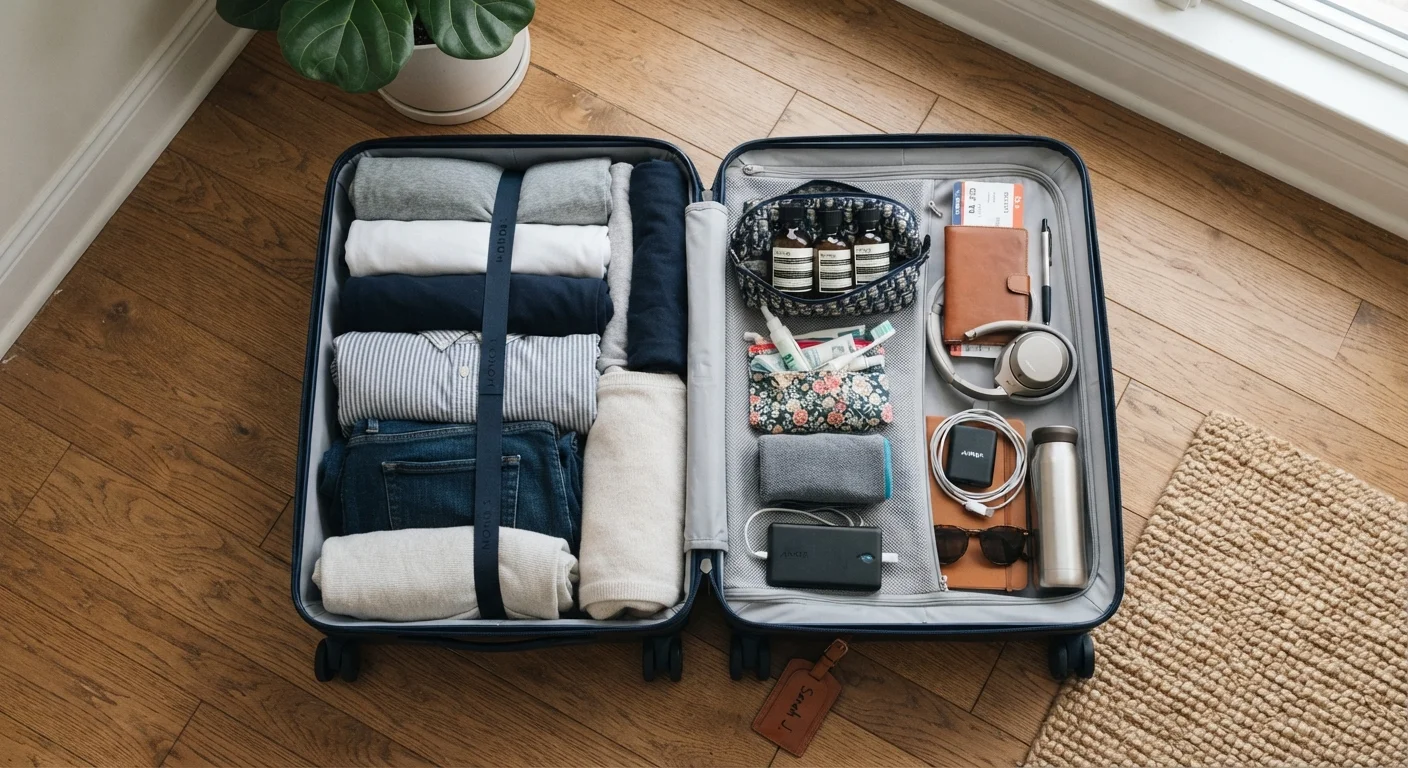
Why Carry-On Only Is Worth the Effort
Checked bags add cost, time, and anxiety to every trip. Baggage fees on domestic and international routes can add up meaningfully - and that's before accounting for the time spent waiting at carousels or, in the worst case, filing a lost luggage claim. Traveling carry-on only means you walk off the plane and go directly to your destination. For budget-conscious travelers, it's one of the most reliable ways to keep trip costs predictable from the start.
That said, two-week carry-on packing isn't about extreme minimalism or wearing the same outfit three days running. It's about intentional choices. The true cost of a trip often includes fees and expenses people don't anticipate at booking - eliminating checked bag fees is one of the simpler wins available before you even leave home.
The Mid-Trip Laundry Strategy Is Everything
Planning one laundry day around day seven or eight is what makes two-week carry-on travel genuinely work. Many hotels offer laundry services, and most cities have laundromats or self-service machines. Quick-dry fabrics - merino wool, nylon blends - can also be hand-washed in a sink and dry overnight, giving you flexibility without planning around a laundromat.
Before you start packing, make sure you've covered the broader trip logistics. Our international trip planning checklist walks through documents, bookings, and health prep so packing is the last thing you finalize - not the first.
What to Bring, What to Leave, and What to Buy There
The toughest carry-on decisions usually fall into three categories: shoes, electronics, and "just in case" items.
Shoes
Two pairs is the standard for most trips - one worn on travel day, one packed. Choose a versatile shoe that works for walking, casual dinners, and light sightseeing. Specialized footwear (hiking boots, heels) is worth including only if your itinerary truly requires it.
Electronics
A phone, a charging cable, and a universal travel adapter cover most travelers' needs. Tablets and laptops are genuinely useful on long trips but occupy serious bag real estate. Be honest about whether you'll use them daily or just bring them out of habit.
"Just in case" items
This is where most bags get overloaded. A small first-aid kit with basics is worthwhile; packing full cold medicine for a trip to a city with pharmacies on every block is not. Most everyday items are available at your destination - often at comparable prices.
Check Airline Carry-On Size Rules First
Carry-on size limits vary meaningfully between airlines - especially budget and international carriers. A bag that fits in a US domestic overhead bin may be gate-checked on a European low-cost airline. Always confirm the specific dimensions and weight limits for every airline on your itinerary before you pack. This single step prevents the most common and frustrating carry-on setback.
Need tools and gear to get started? Here's what you'll want before packing:
Packing cubes
Compress and organize clothing into distinct sections so you can find items without unpacking the whole bag.
Quart-sized clear zip bag
Required for carrying liquids through TSA security checkpoints per the 3-1-1 rule.
Travel-size toiletry bottles
Decant your preferred products into TSA-compliant containers to avoid having to buy new products at your destination.
Luggage scale
Verify your bag's weight before reaching the airport, especially on international routes with stricter carry-on weight limits.
Laundry detergent sheets or pods
Lightweight, mess-free option for hand-washing clothes in a hotel sink mid-trip.
For a fuller pre-departure routine, the pre-departure checklist covers the practical steps - like notifying your bank and checking passport validity - that are easy to miss when you're focused on what's going into your bag.
Define your trip context before touching your bag
The biggest packing mistake is starting with clothes and working backward. Instead, start with your itinerary. Note the climate range, the most formal occasion you'll attend, and the most physically demanding activity planned. These three anchors tell you exactly what your wardrobe needs to cover - and nothing else.
Build a capsule wardrobe around five to seven clothing pieces
Choose items that mix and match across multiple outfits. A reliable formula: two or three bottoms, four or five tops, one layer (jacket or cardigan), and one pair of versatile shoes worn on travel days. Neutral colors make combination easier. Quick-dry fabrics - particularly merino wool and nylon blends - are worth prioritizing because they wash and dry overnight.
Pack toiletries into a single quart-sized bag
Decant only what you'll realistically use into 3.4 oz containers. Shampoo, conditioner, face wash, and lotion are frequently available at accommodations - confirm before overpacking. Solid alternatives (shampoo bars, solid sunscreen sticks) sidestep the liquids rule entirely and save significant space.
Use packing cubes and roll every garment
Rolling clothes rather than folding them reduces wrinkles and creates roughly 20-30% more usable space in most bags. Organize cubes by category - one for tops, one for bottoms, one for underwear and socks - so you can access items without disrupting the full pack. Compression cubes can squeeze soft layers down further.
Do a trial pack at least two days before departure
Pack everything, zip the bag, and then walk around with it for ten minutes. Can you lift it into an overhead bin comfortably? Does it meet your airline's size restrictions? If you're over capacity, apply the subtraction rule: remove the three items you're least likely to reach for, and reassess. Most travelers who try this step are surprised by what they initially included out of anxiety rather than need.
Plan your mid-trip laundry before you leave
Identify whether your accommodations offer laundry service, a coin laundromat is nearby, or you'll rely on hand-washing. Book this into your rough itinerary now - choosing a slower day around the trip's midpoint. Knowing you have a laundry window removes the mental pressure of packing for every single day and is the practical engine behind successful two-week carry-on travel.
Not every trip calls for the same approach. If you're working with a shorter window, the dynamics shift - see how planning for a short trip differs from a two-week itinerary.
TSA Liquids Rules Apply on Every Domestic Leg
The 3-1-1 rule - liquids in containers of 3.4 oz (100ml) or less, all fitting in one quart-sized clear bag - applies at every TSA checkpoint, even mid-trip. Buying full-size products at your destination and trying to fly home with them is a common mistake. Decant into travel-size bottles before you leave, or plan to buy toiletries at your destination and leave them behind.
Airline carry-on policies, TSA rules, and baggage fees are subject to change. Always verify current requirements with your airline and the TSA directly before travel.
The content on this site is for informational purposes only and is not a substitute for professional advice. Always consult a qualified professional for guidance specific to your situation.