

Option A
Collision Coverage
The coverage for accidents involving another vehicle or object.
Best for: Drivers who want protection when their car is damaged in a crash, regardless of fault.
Option B
Comprehensive Coverage
The coverage for damage that happens outside of a crash.
Best for: Drivers who want protection from theft, weather events, and other non-collision hazards.
What Each Type of Coverage Actually Does
Collision coverage pays to repair or replace your vehicle when it's damaged in a crash - whether you hit another car, back into a pole, or skid into a guardrail. It applies regardless of fault, meaning your insurer handles your vehicle's damage even if the accident was your mistake. However, if another driver is at fault and carries adequate liability insurance, their policy may cover your repairs instead.
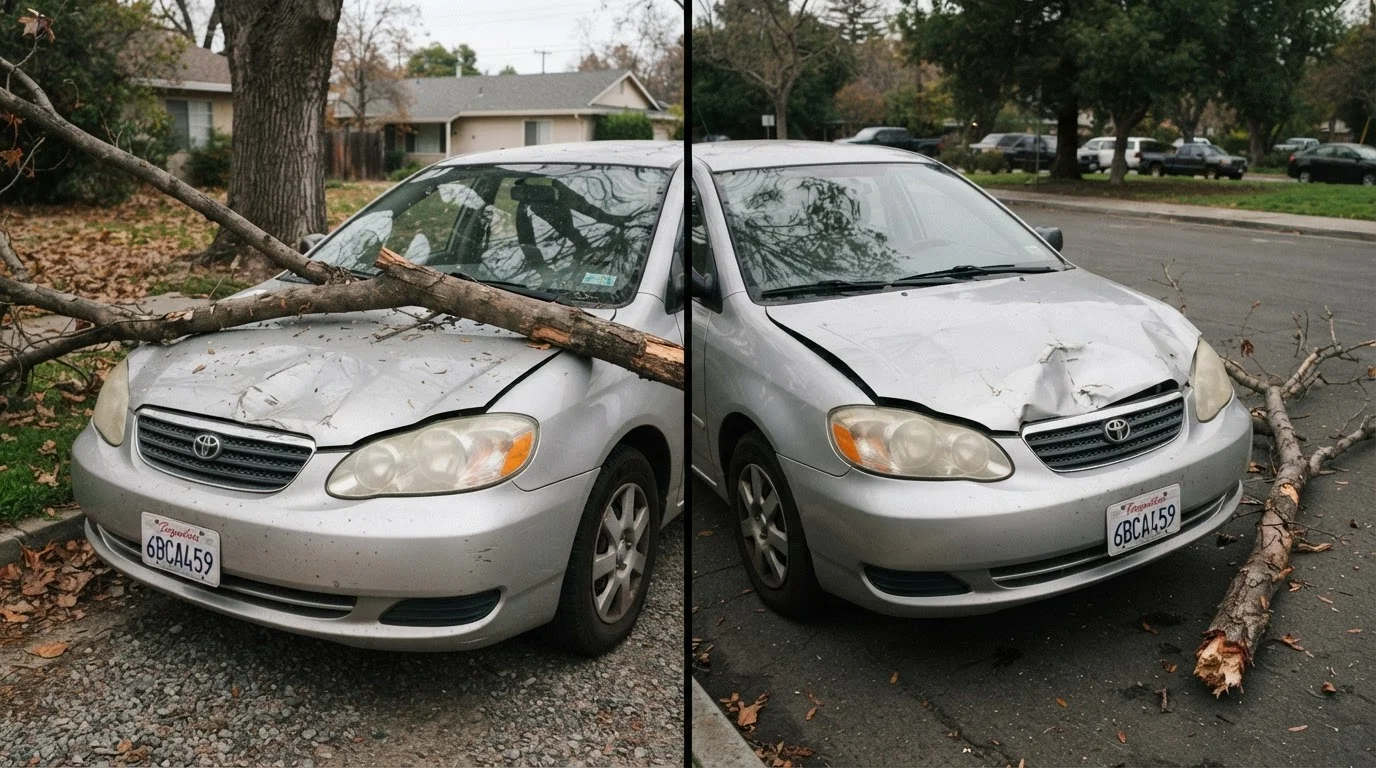
Comprehensive coverage handles damage that occurs outside of a collision. Common covered events include theft, vandalism, hail, flooding, fire, falling objects like tree limbs, and striking an animal. The name can feel misleading - it doesn't mean everything is covered. It specifically means perils other than a crash.
Both coverages are optional under most state laws, but your lender will almost certainly require both if you're financing or leasing your vehicle. For a broader look at how these fit into a full policy, see our guide to liability-only vs. full coverage auto insurance.
| Criterion | Collision Coverage | Comprehensive Coverage |
|---|---|---|
| What triggers a claim | Crashes with vehicles or objects | Theft, weather, animals, vandalism |
| Fault required? | No - applies regardless of fault | No - event-based, not fault-based |
| Typical annual cost | Higher premium on average | Generally lower premium |
| Deductible applies? | Yes | Yes |
| Required by lenders? | Usually yes | Usually yes |
| Covers total theft? | No | Yes |
| Covers hitting a deer? | No | Yes |
| Covers at-fault crash? | Yes | No |
What Neither Coverage Includes
It's just as important to know the gaps. Neither collision nor comprehensive covers:
- Damage to the other driver's vehicle - that's handled by your liability coverage.
- Mechanical failures or wear and tear - a blown engine or worn brake pads aren't covered by either.
- Personal belongings inside the car - a stolen laptop left in your vehicle isn't a car insurance claim. Renters or homeowners policies typically handle that. See our article on what renters insurance actually covers for more detail.
- Medical bills for you or your passengers - those fall under medical payments (MedPay) or personal injury protection (PIP) coverage.
Deductibles Apply to Both Coverages
Both collision and comprehensive require you to pay a deductible before your insurer covers the remaining repair or replacement cost. You can typically choose your deductible amount when you set up your policy - a higher deductible means lower monthly premiums but more out-of-pocket cost if you file a claim. Make sure the deductible you choose is an amount you could realistically pay on short notice.
Both coverages come with a deductible - the amount you pay out of pocket before insurance kicks in. A higher deductible lowers your premium but increases your cost if you file a claim. Common deductibles range from $250 to $1,500.
How to Decide What Makes Sense for You
The right combination depends on a few practical factors:
~$290
Average annual collision premium (U.S.)
According to the National Association of Insurance Commissioners, collision is typically the priciest optional add-on to a standard auto policy.
~$168
Average annual comprehensive premium (U.S.)
The NAIC reports comprehensive coverage costs significantly less than collision on average, partly because losses are spread across many different event types.
Your vehicle's value matters most. If your car is worth $3,000 and your combined annual premiums plus deductible exceed that, the math may not favor carrying both coverages. A rough rule of thumb: if your annual premium for a coverage type is more than 10% of the car's actual cash value, it's worth reconsidering.
Where you live and park influences risk. Drivers in areas with high vehicle theft rates, frequent hail storms, or heavy deer populations get more value from comprehensive. Urban drivers with heavy traffic exposure may lean harder on collision.
Your financial cushion also plays a role. If you couldn't comfortably absorb a $5,000 repair bill out of pocket, carrying both coverages provides a meaningful safety net regardless of the vehicle's age.
This article provides general information about auto insurance coverage types and is not a substitute for personalized advice from a licensed insurance professional. Coverage terms, exclusions, and availability vary by insurer and state. Always read your policy documents carefully and consult a licensed agent for guidance specific to your situation.
The content on this site is for informational purposes only and is not a substitute for professional advice. Always consult a qualified professional for guidance specific to your situation.