

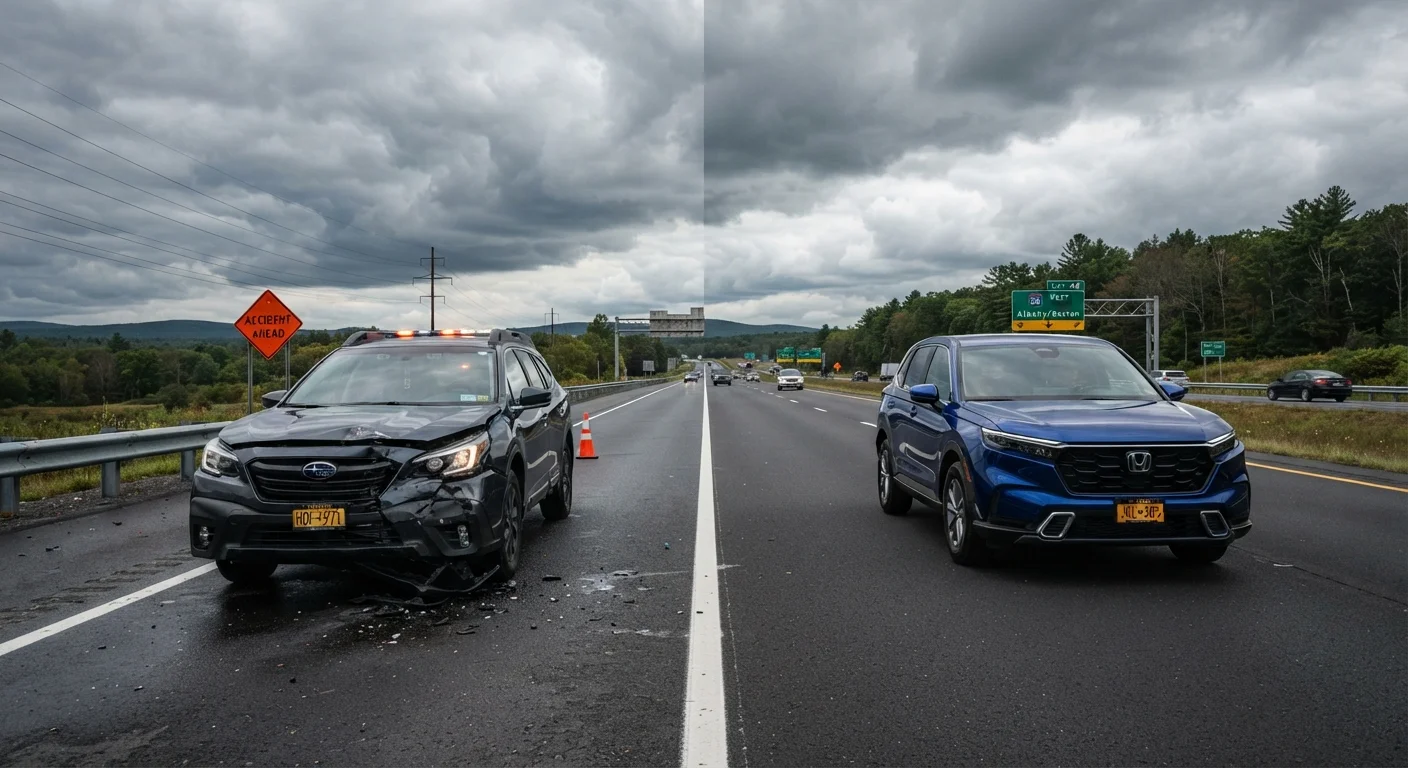
Option A
Liability-Only Coverage
The legal minimum that protects others, not your own vehicle.
Best for: Drivers with older, lower-value vehicles who can afford to repair or replace their car out of pocket.
Option B
Full Coverage
Broader protection that includes damage to your own vehicle.
Best for: Drivers with newer or financed vehicles who want protection against a wide range of damage scenarios.
What Each Policy Actually Covers
The phrase "full coverage" isn't a single policy type - it's shorthand for a combination of coverages. Understanding what's inside each option is the starting point for any honest comparison.
Liability-only means your policy pays for bodily injury and property damage you cause to other people in an at-fault accident. It does not pay to fix or replace your own vehicle. Most states require drivers to carry at least a minimum amount of liability coverage as a condition of registering a car. See what state minimums actually mean for your protection for a fuller picture of those limits.
Full coverage typically layers two additional coverages on top of liability:
- Collision: Pays to repair or replace your vehicle after a collision with another car or object, regardless of fault.
- Comprehensive: Covers non-collision damage - theft, vandalism, hail, flooding, hitting an animal, and similar events.
For a detailed breakdown of what each of those components includes, auto insurance coverage types, decoded is a useful reference. You may also find it helpful to compare exactly what collision and comprehensive each protect.
| Criterion | Liability-Only | Full Coverage |
|---|---|---|
| Covers damage to others | Yes | Yes |
| Covers your own vehicle damage | No | Yes (collision + comprehensive) |
| Covers vehicle theft | No | Yes (comprehensive) |
| Covers weather/animal damage | No | Yes (comprehensive) |
| Required by lenders | No | Typically yes |
| Typical premium cost | Lower | Higher |
| Best suited for | Older, low-value vehicles | Newer or financed vehicles |
The Financial Logic Behind Each Choice
Insurance is fundamentally a financial risk transfer. The question isn't which policy sounds more thorough - it's which level of risk makes sense given your specific situation.
For an older vehicle worth a few thousand dollars, the math often works against full coverage. If your car has a market value of $4,000 and you're paying $800 a year in combined collision and comprehensive premiums, a total-loss claim might net you very little after your deductible. Over several years, you could pay more in premiums than you'd ever collect on a claim.
~$700
Average annual cost of full coverage in the U.S.
According to the National Association of Insurance Commissioners (NAIC), full coverage averages significantly more per year than liability-only policies.
~$500
Typical annual savings by dropping to liability-only
The premium gap between liability-only and full coverage varies widely by state, vehicle, and driver profile, but the difference can be substantial on older cars.
For a newer or financed vehicle, the calculus reverses. A serious accident could leave you owing thousands on a loan for a car that's been totaled - a situation known as being "upside down." Full coverage, sometimes supplemented by gap insurance, addresses that exposure directly. Our article on coverage gaps that catch drivers off guard covers gap insurance and similar situations in more detail.
Deductible choice also affects this equation. Raising your deductible lowers your premium but shifts more of any claim cost back to you. The trade-off between deductible and premium is worth understanding before you decide.
What Neither Policy Covers - and Why It Matters
Drivers frequently assume their policy covers more than it does. Liability-only has obvious gaps - your own vehicle is unprotected. But full coverage has its own blind spots that surprise people at claim time.
- Medical payments for you and your passengers aren't automatically included. Personal Injury Protection (PIP) or Medical Payments coverage are separate add-ons, and not all states require them.
- Rental car reimbursement is optional in most policies - if your car is in the shop after a claim, you may be on your own for transportation costs unless you added this coverage.
- Roadside assistance isn't standard in most base policies.
- Custom equipment and aftermarket parts are typically excluded or capped.
Full Coverage Isn't a Single Policy Name
No insurer sells a product literally called "full coverage." The term describes a combination of liability, collision, and comprehensive. When you see it referenced in a quote or policy, confirm exactly which coverages are included and at what limits. Policy terms can differ meaningfully between providers.
If you've ever been caught off guard by what a policy didn't cover, you're not alone. Common misunderstandings about what policies actually cover documents these surprises in detail. Before committing to any policy, review this checklist of questions to ask to avoid assumptions that could cost you later.
This article is for general informational purposes only and does not constitute personalized insurance or financial advice. Coverage terms, limits, and requirements vary by provider and state. Consult a licensed insurance agent to evaluate your specific situation.
The content on this site is for informational purposes only and is not a substitute for professional advice. Always consult a qualified professional for guidance specific to your situation.