

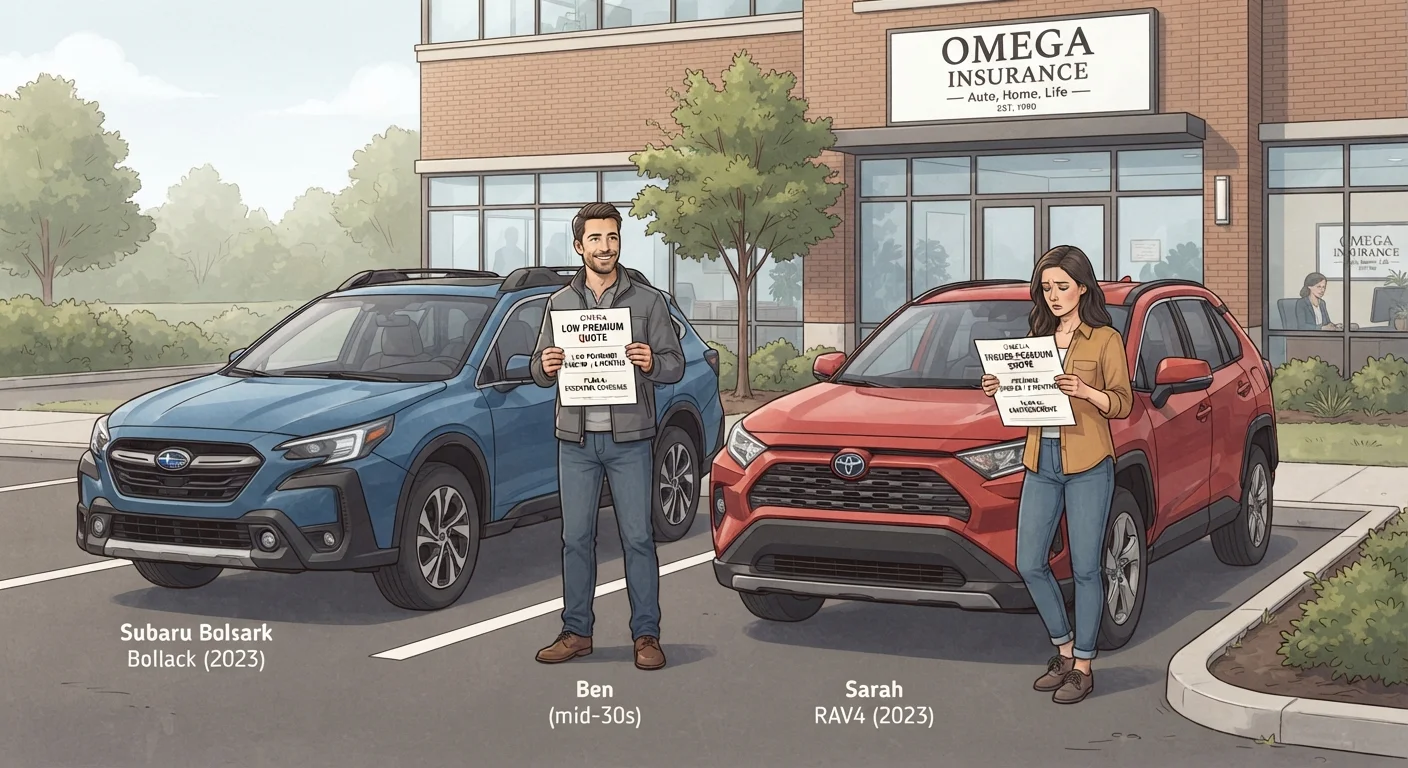
The Same Policy, Two Very Different Bills
Imagine two drivers - same state, same insurer, same coverage limits. One pays $980 a year. The other pays $1,740. If they're buying identical protection, why the gap? The answer lies in how insurers price risk, not just coverage.
Before digging into the factors, it helps to understand the starting point. Your coverage choices - liability limits, collision, comprehensive, and so on - determine what you're protected against. (If those terms are unfamiliar, Auto Insurance Coverage Types, Decoded is a solid place to start.) But once you've chosen your coverage, the insurer still has to decide what to charge you specifically for it.
That's where rating factors come in. Think of them as the insurer's way of estimating how likely you are to cost them money - and how much.
20-40%
Typical premium increase after one at-fault accident
Estimates from insurance industry research consistently place the surcharge in this range at renewal, though the exact amount varies by insurer and state.
~30
Rating factors a typical insurer may evaluate
While the exact number varies by carrier, insurers commonly weigh dozens of data points beyond the basic coverage type when calculating a premium.
3 states
States that ban credit-based insurance scoring
California, Hawaii, and Massachusetts prohibit or significantly restrict the use of credit history in auto insurance rating, according to the NAIC.
The Factors That Drive Your Rate
Insurers in the U.S. use a mix of personal, vehicle, and geographic data. Here are the most significant ones:
Driving Record
This carries the most weight for most insurers. At-fault accidents, speeding tickets, DUIs, and other violations signal higher risk and typically raise your rate - sometimes significantly and for multiple years. A clean record is one of the most reliable ways to keep premiums lower over time.
Age and Years of Experience
Teen and young adult drivers have statistically higher accident rates, so they pay more. Rates generally decline through a driver's 20s and 30s, then can tick back up in older age groups. Experience behind the wheel matters alongside age.
Location
Your ZIP code is a real factor. Insurers look at local accident rates, vehicle theft rates, weather patterns, and how often claims are filed in your area. Moving from a rural county to a dense urban area can raise your premium even if nothing else about you changes.
Credit-Based Insurance Score
In most states, insurers use a version of your credit history - not your credit score directly - as a predictor of claim frequency. Research cited by the National Association of Insurance Commissioners (NAIC) has found a statistical correlation between credit history and claim likelihood. This practice is regulated or prohibited in a handful of states.
Vehicle Make, Model, and Age
Your car's safety record, theft rate, repair costs, and replacement value all factor in. A vehicle with expensive parts or a high theft incidence will generally cost more to insure than a more modest, widely available model.
Annual Mileage
The more you drive, the more exposure you have to accidents. Drivers who log fewer miles annually may qualify for lower rates or usage-based programs through their insurer.
What You Can - and Can't - Control
Some rating factors are things you can actively manage. Your driving habits, how well you maintain your credit history, the vehicle you choose, and the mileage you put on are all in your hands to some degree. Others - your age, where you live for work or family reasons, an accident that wasn't your fault - are harder to change.
Knowing the difference helps you set realistic expectations. If your premium feels high, it's worth asking your insurer exactly which factors are driving it. Many will walk through your quote on request. You can also review whether life changes - a move, a new vehicle, changes in how much you drive - should prompt a policy review. Keeping your auto policy working for you over time covers how to stay on top of those updates.
Ask Your Insurer to Walk Through Your Rating Factors
If your premium feels unexpectedly high, you have the right to ask your insurer which factors are influencing your rate. Some states also require insurers to provide an adverse action notice if credit history contributed to a higher premium. Understanding your specific profile helps you identify what's movable and what isn't.
It's also worth separating premium from protection. Paying less doesn't necessarily mean you're covered for less - but it can, depending on choices you've made about deductibles or coverage limits. Liability-only vs. full coverage explains where those lines fall.
This article is for general informational purposes only and does not constitute personalized insurance, financial, or legal advice. Coverage terms, rating practices, and regulations vary by state and insurer. Consult a licensed insurance agent or adviser for guidance specific to your situation.
Frequently Asked Questions
Your neighbor likely has a different driving record, credit score, vehicle, or even a longer history with their insurer. Insurers weigh dozens of variables, so even minor differences in your profiles can produce noticeably different premiums - even for the same coverage.
In most U.S. states, yes. Insurers use a credit-based insurance score - distinct from a standard credit score - as a predictor of claim likelihood. A few states, including California, Hawaii, and Massachusetts, prohibit or restrict this practice.
Sometimes. Completing a defensive driving course, maintaining a clean record, or asking about available discounts (multi-policy, low mileage, good student) can reduce your rate without touching your coverage limits. Raising your deductible is another option - see <a href="/automotive/auto-insurance/raising-your-deductible-to-lower-your-premium-the-trade-off-explained">the trade-off explained</a>.
It varies by insurer and state, but a single at-fault accident commonly increases premiums by 20% to 40% or more at renewal. The surcharge typically remains on your record for three to five years, though it usually diminishes over time with a clean driving history.
Yes. Insurers consider a vehicle's make, model, age, safety ratings, theft rates, and repair costs. A vehicle that's expensive to repair or statistically more likely to be stolen will generally cost more to insure, all else being equal.
Where you live influences the statistical likelihood of accidents, theft, and weather-related claims in your area. Urban ZIP codes with higher traffic density and vehicle theft rates typically carry higher premiums than rural or suburban areas with lower claim frequency.
The content on this site is for informational purposes only and is not a substitute for professional advice. Always consult a qualified professional for guidance specific to your situation.