

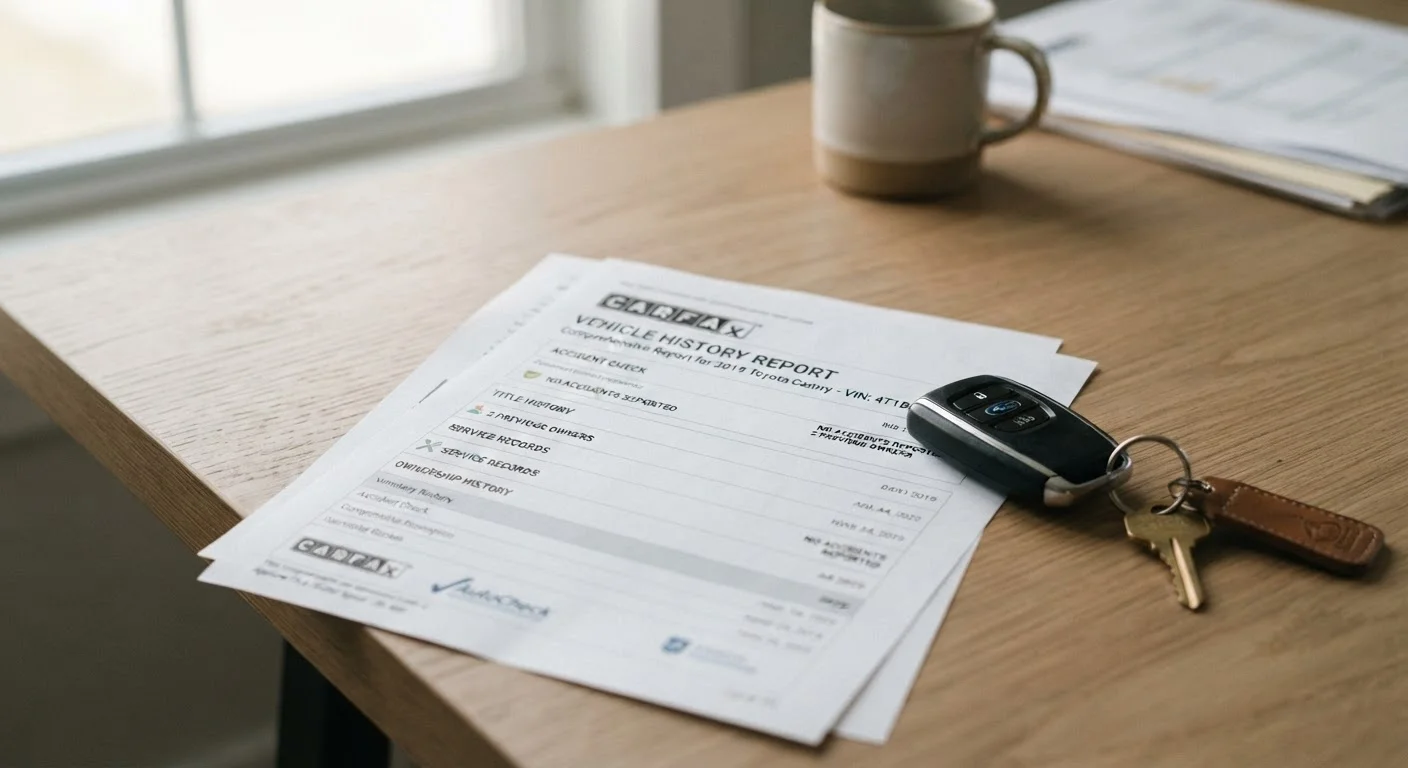
What a Vehicle History Report Actually Contains
A vehicle history report pulls together records from state DMVs, insurance companies, auto auction data, salvage yards, and service databases - all tied to a specific VIN. It gives you a structured timeline of significant events in that car's life.
Most reports cover five core areas: title and brand history, ownership and usage, reported accidents and damage, odometer readings, and service or inspection records. Think of it like a credit report for a car - useful and informative, but only as complete as what's been formally reported. For a helpful parallel on reading records-based reports in another area of your financial life, see our guide on making sense of your credit report.
A Clean Report Isn't a Guarantee
Vehicle history reports only include events that were formally reported to insurance companies, law enforcement, or state agencies. A car can have significant hidden damage and still produce a clean report. Always pair the report with a professional pre-purchase mechanical inspection before signing anything.
Before you get to the report itself, make sure you have what you need.
What you will need
How to Work Through the Report, Step by Step
A vehicle history report can run several pages and feel overwhelming at first. Working through it systematically - section by section - makes the process manageable. Here's how to read one with purpose.
Verify the VIN Before You Pay
Before purchasing a report, confirm the 17-character VIN on the report matches the sticker inside the driver's door jamb and the plate visible through the windshield. A mismatch can indicate a switched VIN plate - a serious fraud warning sign.
Locate and verify the VIN
The VIN is a 17-character code unique to every vehicle. Find it on the sticker inside the driver's door jamb or on a metal plate visible through the bottom of the windshield on the driver's side. Write it down exactly - one wrong character pulls the wrong report.
Run the report and check the title history section
The title history section is the first place to focus. Look for any title brands - designations such as salvage, flood, rebuilt, lemon law buyback, or junk. These are legally required to follow a vehicle through ownership changes and represent its most significant known problems. Also note how many states the vehicle has been titled in; frequent state changes can sometimes indicate title washing, a practice of moving a vehicle across states to clear a problematic brand.
Review the ownership and usage history
This section shows how many owners the vehicle has had and whether it was used as a personal vehicle, rental, fleet, lease, or commercial unit. A high number of previous owners in a short time can suggest recurring problems. Rental and fleet use typically means higher mileage with more regimented maintenance, though wear patterns may differ from personal-use vehicles.
Check the accident and damage records
Look for any reported collisions, airbag deployments, or structural damage. Reports typically note the severity - minor, moderate, or severe - and which area of the vehicle was affected. Pay close attention to structural or frame damage, which can compromise safety even after repair. Keep in mind that not every accident gets reported; a private repair paid out-of-pocket may not appear here at all.
Examine the odometer readings over time
The report logs odometer readings recorded at each ownership transfer, inspection, or service visit. Look for a consistent upward progression. A reading that drops between events - or a sudden large gap with no corresponding mileage - can indicate odometer rollback, which is both illegal and a sign you should walk away.
Look at service and inspection records
Some reports include records from dealership service departments or state inspection stations. Regular oil changes and scheduled maintenance logged over time are a good indicator of how the car was cared for. Long gaps with no recorded service don't necessarily mean neglect - many owners use independent shops that don't report to national databases - but they do mean less visibility.
Check for open recalls
Vehicle history reports may note past recall repairs, but they don't always reflect the current status of open recalls. Visit the National Highway Traffic Safety Administration (NHTSA) website at nhtsa.gov and enter the VIN to see whether any outstanding safety recalls apply to the vehicle. Unaddressed recalls are the manufacturer's responsibility to fix at no cost - but only if the vehicle is still within the recall scope.
Once you've reviewed the report thoroughly, pair your findings with the right questions for the seller. Our guide on questions worth asking before buying any used vehicle covers what to raise based on what the report surfaces.
What to Do After You've Read the Report
A vehicle history report is a starting point, not a final verdict. Once you've reviewed it, use what you've found to guide the next steps.
Watch Out for Title Brands
A 'salvage' title means an insurer declared the vehicle a total loss at some point. A 'flood' or 'rebuilt' brand carries similar weight. These designations can affect the car's insurability, resale value, and long-term reliability. Treat any title brand as a significant warning, not a minor footnote.
If the report is clean but something still feels off, trust that instinct and get the car inspected. A licensed mechanic can evaluate the engine, transmission, brakes, suspension, and frame in ways no database ever could. If the report flags issues - especially title brands or structural damage - factor that into your price negotiation, or consider walking away entirely.
Used-car buying involves more moving parts than most people expect. If you're navigating this for the first time, our first-time car buyer guide walks through the full process from budgeting to signing. And once you own the vehicle, knowing your dashboard warning lights is the next practical skill to develop - see your car's dashboard warning lights, decoded for a plain-language reference.
The content on this site is for informational purposes only and is not a substitute for professional advice. Always consult a qualified professional for guidance specific to your situation.