

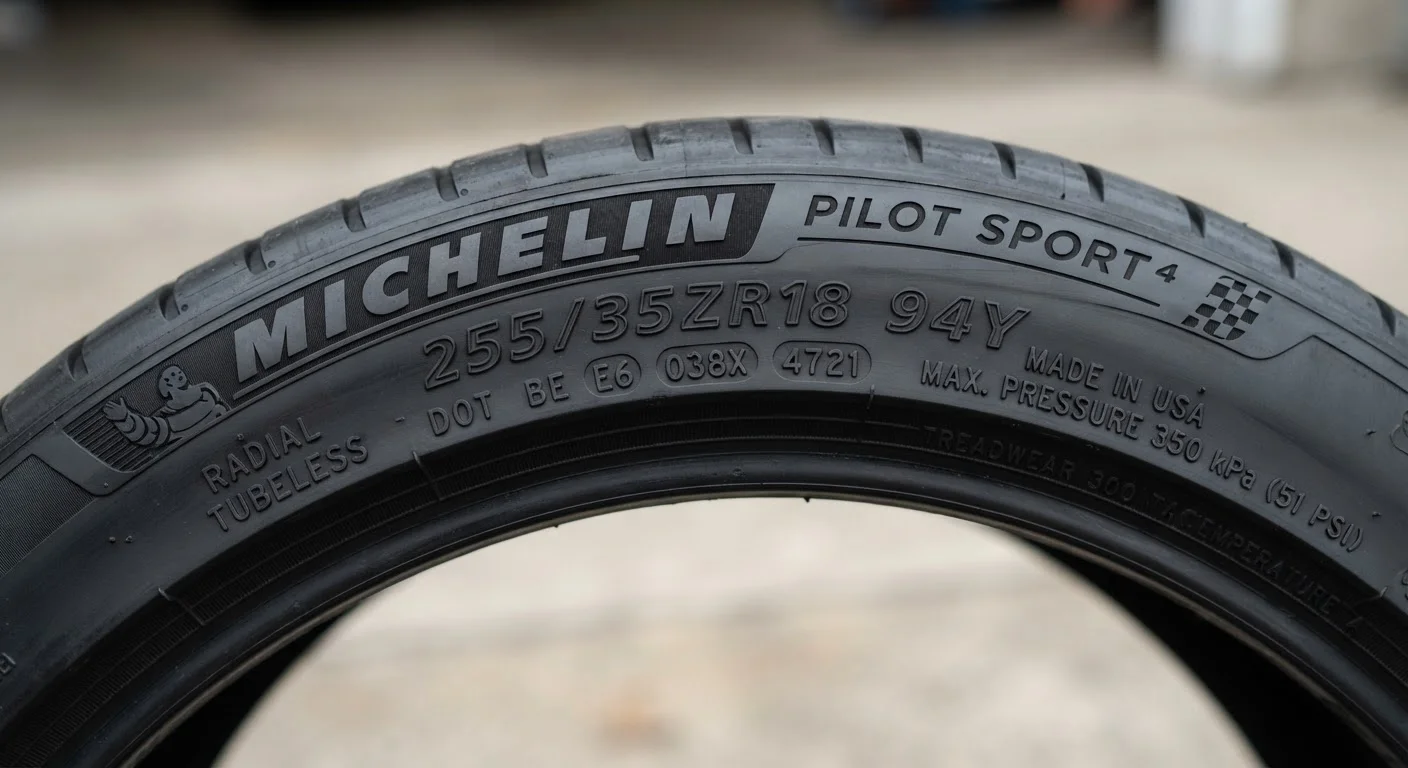
Why Tire Sidewall Markings Matter
That wall of text stamped into your tire isn't filler - it's a compact data sheet that tells you everything about what that tire is built to do. Getting this information right matters for safety, legal compliance, and your wallet. If you ever need to replace a tire, file an insurance claim related to a blowout, or simply check whether your current tires are appropriate for your vehicle, these markings are the starting point.
If your dashboard has already flagged a tire issue, our guide to dashboard warning lights can help you understand what the alert means and how urgently to act.
Flashlight or phone torch
Illuminates the sidewall markings, which can be difficult to read in shadow.
Owner's manual or door jamb placard
Provides the manufacturer-specified tire size and pressure to compare against sidewall data.
Step-by-Step: Reading Your Tire Sidewall
You don't need any special tools - just good light and a few minutes. Work through these steps in order and you'll be able to interpret any passenger or light truck tire sold in the U.S.
What you will need
Find the tire size string
Look for a sequence that starts with a letter - most commonly P (passenger car) or LT (light truck). A typical example looks like P215/65R17. This is the most prominent marking on the sidewall and usually appears in large, raised lettering.
Decode the width and aspect ratio
In P215/65R17, the 215 is the tire's section width in millimeters - measured from sidewall to sidewall. The 65 is the aspect ratio: the sidewall height as a percentage of the width. So a 65 means the sidewall height is 65% of 215 mm. Lower aspect ratios (like 45 or 35) mean shorter, stiffer sidewalls - common on performance vehicles.
Identify the construction type and rim diameter
The R in P215/65R17 stands for radial construction, which is standard on virtually all modern passenger tires. The 17 is the rim diameter in inches - this must match your wheel exactly. An 18-inch tire will not fit a 17-inch rim.
Read the load index
After the size string, you'll see two or three numbers followed by a letter - for example, 98H. The number is the load index, a standardized code that corresponds to the maximum weight each tire can carry. A load index of 98 equals roughly 1,653 lbs per tire. Load index tables are widely available from tire industry sources if you want to look up the exact figure for your tire.
Check the speed rating
The letter immediately following the load index is the speed rating - the maximum sustained speed the tire is designed to handle. Common ratings include S (112 mph), H (130 mph), V (149 mph), and W (168 mph). This is a sustained-speed ceiling under optimal conditions, not an invitation to drive at those speeds.
Find the DOT date code
Look for the letters DOT followed by a series of characters. The last four digits are the ones that matter most: the first two indicate the week of manufacture, the last two indicate the year. For example, 2319 means the tire was made in the 23rd week of 2019. This code may be on the inboard sidewall, so you may need to crouch down and look toward the inside of the wheel.
Old Tires Can Be Dangerous Even With Tread
Tire rubber degrades over time regardless of how much tread remains. Most manufacturers recommend replacing tires that are 6-10 years old, even if they look fine. Always check the DOT date code before assuming a tire is still serviceable.
Check Your Owner's Manual First
Your vehicle's owner's manual or the placard inside the driver's door jamb lists the exact tire size and inflation pressure your car requires. The sidewall markings tell you what the tire can handle - the placard tells you what your vehicle needs. Always match to the vehicle spec, not just the tire spec.
Never Downgrade Load or Speed Ratings
Installing a tire with a lower load index or speed rating than your vehicle requires is a safety risk. It can cause tire failure at highway speeds or under heavy loads. When in doubt, consult a qualified tire technician before making a substitution.
Putting It All Together
Once you can read a sidewall fluently, routine tire checks become much faster and more meaningful. You'll know at a glance whether a replacement tire matches the original spec, whether an older tire is pushing its age limit, and whether the load and speed ratings fit your driving needs.
Reading the sidewall is only one piece of tire ownership. For guidance on keeping your tires in good shape between replacements, see our tire maintenance habits that extend tread life.
And if decoding dense technical documents is becoming a theme - the same close-reading skills apply to other parts of car ownership. Our guide on reading your auto insurance declarations page walks you through another document most drivers overlook.
The content on this site is for informational purposes only and is not a substitute for professional advice. Always consult a qualified professional for guidance specific to your situation.