

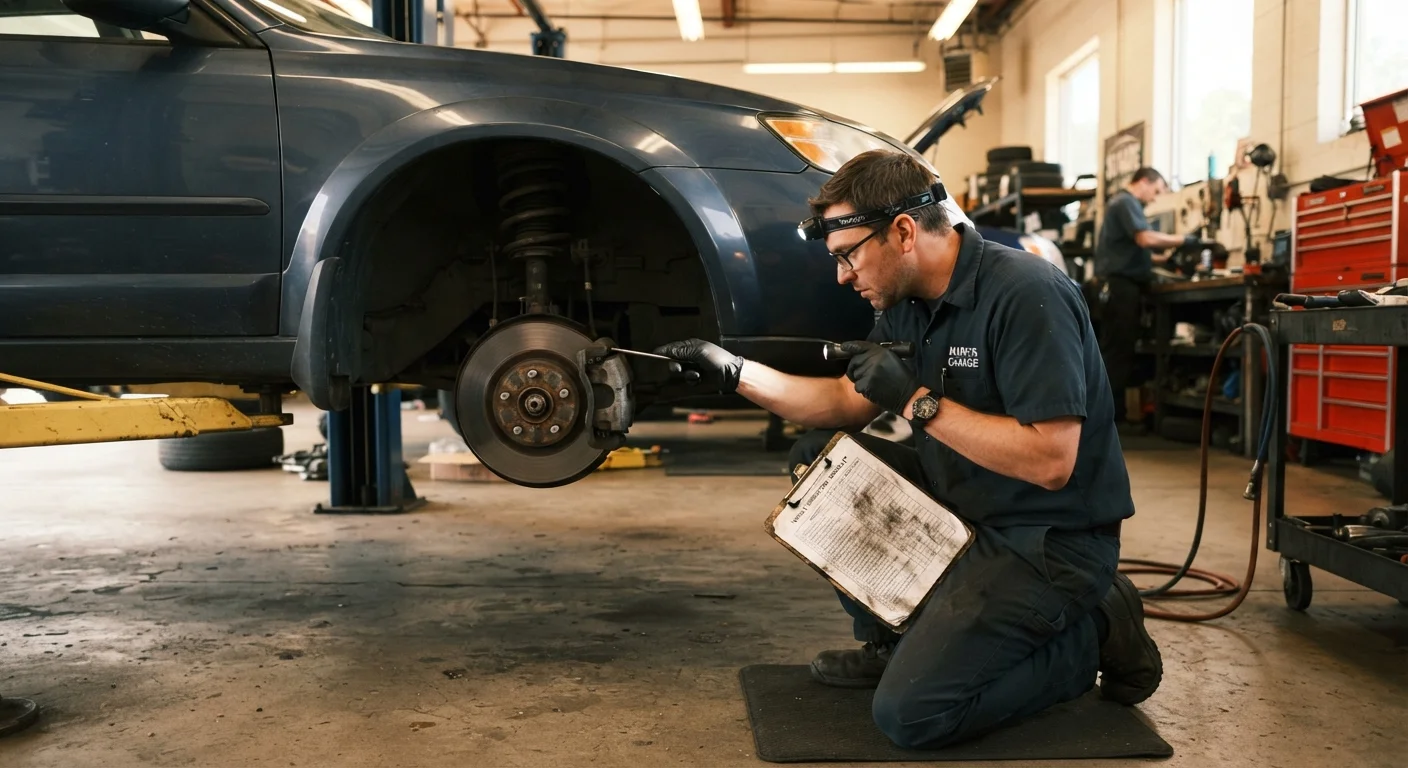
What Gets Checked and Why It's More Than a Glance
When a mechanic runs a multi-point inspection, they're working through a structured checklist - not just looking the car over. The exact items vary by shop and vehicle, but most inspections cover the same core categories.
Brakes
Brake pad thickness, rotor condition, and brake fluid level are standard checks. Worn pads and warped rotors are among the most common findings, and catching them early keeps stopping distances predictable and replacement costs lower.
Tires
The mechanic checks tread depth, sidewall condition, and inflation pressure on all four tires. Uneven wear patterns can also signal alignment or suspension problems that a fresh set of tires won't fix on their own.
Fluids
Engine oil, coolant, transmission fluid, power steering fluid, and brake fluid each get evaluated for level and condition. Degraded or low fluid is one of the most preventable causes of engine and transmission damage.
Belts and Hoses
The serpentine belt and cooling hoses are inspected for cracking, fraying, and wear. A snapped serpentine belt can disable your alternator, power steering, and water pump simultaneously - making this a high-stakes checkpoint despite how inexpensive the belt itself is.
Lights and Electrical
Headlights, taillights, brake lights, turn signals, and interior warning indicators are tested. Burned-out bulbs are easy to miss when you're the one driving the car.
Suspension and Undercarriage
Shocks, struts, ball joints, and tie rods are inspected for wear or looseness. These components directly affect handling and tire wear. Suspension issues that go unaddressed tend to accelerate wear on neighboring parts.
Ask for Your Inspection Report in Writing
A written copy of your inspection results gives you a record to track wear over time and compare findings between visits. It also makes it easier to get a second opinion if a repair estimate seems unexpectedly high. Ask for one if the shop doesn't provide it automatically.
A written copy of your inspection report gives you a record you can reference when deciding what to fix and when. Ask for one if the shop doesn't provide it automatically.
What an Inspection Doesn't Cover
A routine inspection is a visual and functional assessment - it isn't a teardown or a full diagnostic. A mechanic can identify that a component looks worn or operates incorrectly, but they can't always determine the root cause without additional testing.
For example, an inspection might flag an engine warning light or note low compression without pinpointing exactly which sensor or cylinder is responsible. That deeper diagnosis usually requires a separate appointment and dedicated diagnostic equipment.
Routine vs. Pre-Purchase Inspections
A routine multi-point inspection is designed for vehicles you already own and drive regularly. If you're evaluating a used car before buying, a pre-purchase inspection goes deeper - it's specifically scoped to help you decide whether a car is a sound investment. Our pre-purchase checklist for used cars walks through what that process involves and what to watch for.
If you're buying a used vehicle, a pre-purchase inspection goes further than a routine check - it's specifically designed to evaluate whether a car is worth buying. Our pre-purchase checklist for used cars walks through what that process covers.
How to Use the Results
A good inspection report organizes findings into tiers - typically safety-critical items, items to address soon, and items to monitor. This helps you prioritize without feeling like everything needs to be fixed immediately.
Safety-critical findings - things like metal-on-metal brakes or a cracked brake line - warrant prompt attention. Items in the "monitor" category can often wait until your next service interval, but make a note of them so you're not surprised later.
Understanding the report also helps you have more informed conversations with your mechanic. If you're unsure whether a task is one you could handle at home or one that really needs a professional, this breakdown of DIY vs. shop repairs can help you decide.
~$0
Cost of many multi-point inspections
Many shops offer multi-point inspections at no charge when combined with an oil change or scheduled service visit.
30-50
Typical checkpoints in a multi-point inspection
The exact number varies by shop; most inspections cover brakes, tires, fluids, belts, lights, and suspension components.
4-5x
Estimated cost multiplier for neglected repairs
According to automotive industry guidance, minor maintenance issues left unaddressed commonly multiply in repair cost once they cause secondary damage.
Frequently Asked Questions
Most multi-point inspections take between 30 minutes and one hour, depending on the shop and the number of checkpoints. If the mechanic finds issues that need closer evaluation, it can take longer. Many shops offer inspections during oil changes to save you a separate trip.
No. A state-mandated vehicle inspection checks that your car meets specific safety and emissions standards required by law. A routine multi-point inspection is a voluntary service where a mechanic evaluates the overall condition of your vehicle's systems. Some items overlap, but they are distinct processes.
Most manufacturers recommend an inspection at least once a year or every 12,000 miles, though your owner's manual may specify different intervals. Many drivers align inspections with oil changes or seasonal transitions - before winter and before summer - to catch weather-related wear.
No. An inspection report identifies issues by urgency - typically safety-critical, recommended soon, or monitor over time. A mechanic can explain which items affect safety or reliability immediately and which are lower priority. You make the final call on timing.
You can perform basic visual checks yourself - tire pressure, fluid levels, wiper condition, and exterior lights. However, a professional inspection covers components that require a lift, trained eyes, and specialized tools. See our <a href="/automotive/car-maintenance/diy-car-maintenance-vs-taking-it-to-a-mechanic">guide on DIY vs. professional maintenance</a> for a fuller breakdown.
The content on this site is for informational purposes only and is not a substitute for professional advice. Always consult a qualified professional for guidance specific to your situation.