

Our Verdict
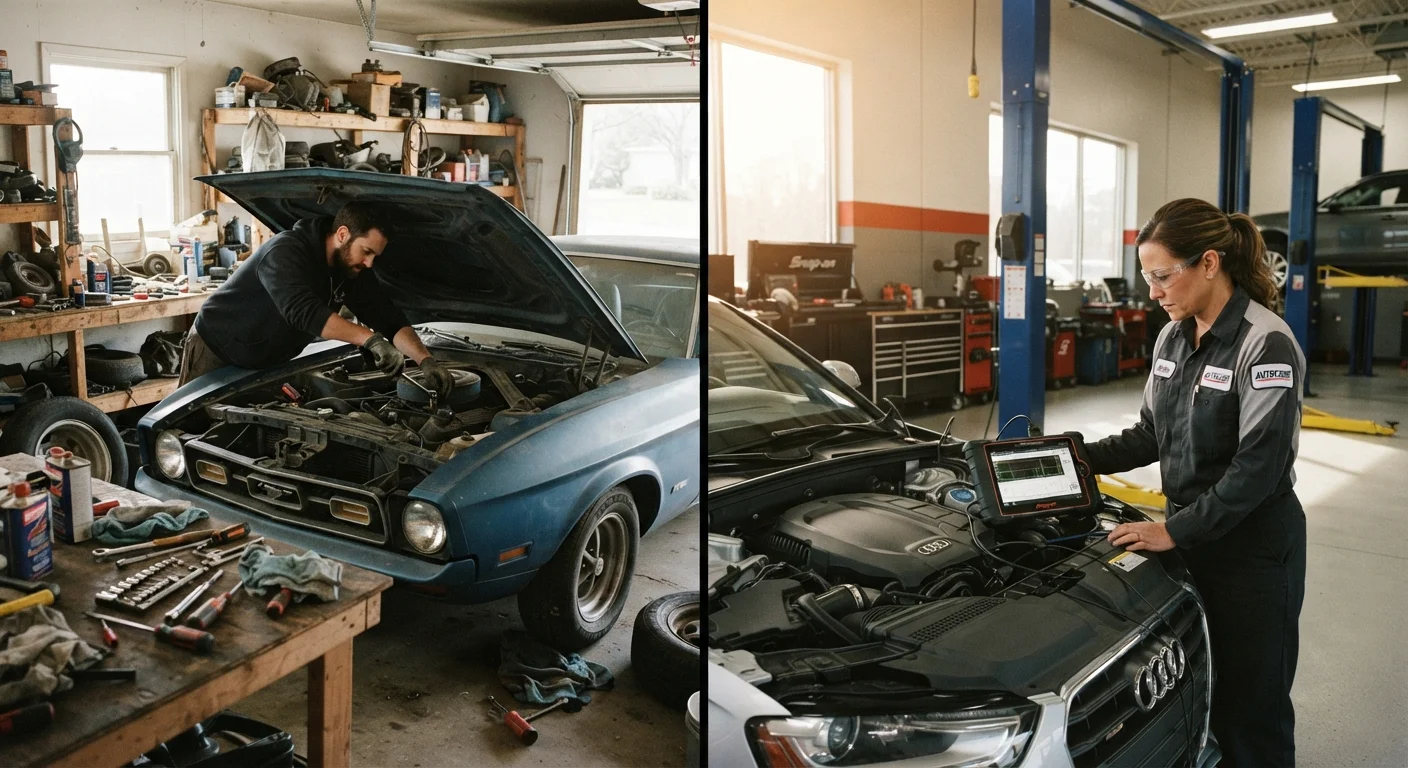
DIY maintenance makes sense for simple, low-risk tasks where the savings are real and the consequences of a mistake are manageable. For anything that affects braking, steering, or safety systems, professional service is the smarter call. Most drivers benefit from doing both - handling the easy stuff themselves and building a relationship with a trusted mechanic for everything else.
| Best for | Recommended |
|---|---|
| Drivers comfortable with basic tools and straightforward tasks | DIY maintenance |
| Complex repairs, safety-critical systems, or unfamiliar problems | Professional mechanic |
| Routine scheduled upkeep with manufacturer-specific requirements | Professional mechanic |
| New drivers learning how their car works | DIY for basics, mechanic for verification |
What Most Drivers Can Safely Handle at Home
A handful of maintenance tasks are genuinely well-suited to home mechanics - not because they're trivial, but because the steps are straightforward, the parts are easy to access, and a mistake is unlikely to create a dangerous situation.
The most common DIY-friendly jobs include:
- Air filter replacement - Usually just a few clips or screws, no special tools needed. Most vehicles make the filter box easy to find.
- Wiper blade replacement - Takes about five minutes and costs a fraction of what a shop charges for labor.
- Cabin air filter replacement - Often located behind the glove box and swappable without tools in many models.
- Checking and topping off fluids - Coolant, washer fluid, and power steering fluid can all be checked and refilled at home. Oil checks are straightforward too, though an oil change requires more prep.
- Battery terminal cleaning - Corrosion on battery terminals is common and easy to address with a wire brush and baking soda solution. Just make sure the car is off and you understand basic electrical precautions first.
Oil changes fall in a middle zone. Many drivers do them at home successfully, but they require the right supplies, a safe way to raise the vehicle, and proper disposal of old oil. If you're new to it, read up carefully before starting - see our guide on conventional vs. synthetic oil to make sure you're using the right type for your car.
Start Simple, Build Confidence Gradually
If you're new to DIY car care, start with the lowest-stakes tasks first - wiper blades and air filters are ideal. Each small success builds familiarity with how your car is put together. Many community colleges and auto parts retailers also offer basic car care workshops that are worth checking out.
Where DIY Carries Real Risk
Some repairs look manageable on a video tutorial but carry genuine consequences if something goes wrong. These are the jobs where a professional's training, equipment, and accountability matter most.
- Brake work - Pad replacement might seem simple, but brakes involve precise torque specs, caliper pistons, and brake fluid handling. An error here directly affects your stopping distance.
- Suspension and steering components - Ball joints, tie rods, and control arms require alignment afterward and, if installed incorrectly, can cause handling failures at speed.
- Electrical diagnosis - Modern cars have complex, interconnected electrical systems. Chasing a short or diagnosing a warning light without proper scan tools often leads to wasted parts and time. See our overview of your car's electrical system to understand why these components are interdependent.
- Timing belt or chain service - This is precision work. Incorrect installation can destroy an engine.
- Transmission and drivetrain repairs - These require specialized knowledge and equipment that most home garages simply don't have.
The pattern here is clear: when a mistake could compromise safety or cause cascading damage, the math usually favors a professional - even accounting for labor costs. For a clearer picture of what skipping these repairs can cost long-term, see our piece on deferred maintenance costs.
Never Work Under a Car Supported Only by a Jack
A floor jack is for lifting - not for supporting a vehicle while you're under it. Always use proper jack stands rated for your vehicle's weight before getting underneath. This is one of the most common and preventable causes of serious injury during DIY repairs.
How to Compare the Real Costs
The price difference between DIY and shop service isn't always as large as it seems - and sometimes it's larger. Here's a realistic side-by-side look at common tasks.
| Task | DIY Cost (Est.) | Shop Cost (Est.) | DIY Difficulty | Risk if Done Wrong | |
|---|---|---|---|---|---|
| Air filter replacement | $15-$30 | $30-$60 | Very easy | Minimal | |
| Wiper blade replacement | $10-$25 | $20-$45 | Very easy | Minimal | |
| Oil change | $25-$70 | $50-$120 | Moderate | Low-moderate | |
| Brake pad replacement | $40-$100 | $150-$300 | Difficult | High - safety risk | |
| Battery replacement | $100-$200 | $150-$280 | Easy-moderate | Low if done carefully | |
| Timing belt service | $50-$120 (parts) | $400-$1,000 | Very difficult | Severe - engine damage |
A few things skew the math. Parts from a retailer may cost less than dealer parts but vary in quality. Labor rates vary significantly by region and shop type. And DIY jobs that require a second attempt - because the first one didn't go right - often end up costing more than a shop visit would have. Factor in your time honestly.
If you're new to owning a car and want a broader framework for staying on top of maintenance without overpaying, our practical starting point for new drivers covers the fundamentals in plain language.
How to Decide: A Simple Framework
Before starting any maintenance task yourself, run through these four questions:
- Is it safety-critical? If the job directly affects your ability to steer or stop, default to a professional.
- Do I have the right tools? Some jobs require torque wrenches, scan tools, or hydraulic lifts. Improvising is how injuries happen.
- Have I done this before - or researched it thoroughly? First-time jobs take longer and carry more room for error. Budget time accordingly.
- What's the cost of getting it wrong? A misinstalled wiper blade is a minor inconvenience. A misinstalled brake caliper is not.
It also helps to keep your owner's manual in the loop. Your manufacturer's recommended service schedule - not generic internet advice - is the most reliable guide for your specific vehicle. Our article on reading your car's maintenance schedule walks through how to use it effectively.
When you do use a mechanic, knowing what they're checking helps you stay informed. Our breakdown of what a routine inspection covers explains what's typically on the checklist and why each item matters.
This article provides general educational information about vehicle maintenance. It is not a substitute for professional mechanical advice. Always consult a qualified mechanic before performing any repair that could affect vehicle safety.
The content on this site is for informational purposes only and is not a substitute for professional advice. Always consult a qualified professional for guidance specific to your situation.