

The Five Ingredients Behind Your Number
Your credit score isn't a mystery - it's a formula. Specifically, it's built from five categories of information drawn from your credit report. Understanding those categories is the first step to actually moving your number in the right direction.
Here's how each factor is weighted in the most widely used FICO scoring model:
- Payment history - 35%
- Credit utilization - 30%
- Length of credit history - 15%
- Credit mix - 10%
- New credit inquiries - 10%
Two factors alone - payment history and utilization - account for nearly two-thirds of your score. That's where most people should focus their energy first.
35%
Weight of payment history in a FICO Score
According to FICO's published scoring model breakdown, on-time payment history is the single largest factor.
30%
Weight of credit utilization in a FICO Score
FICO's model weights the amounts owed - primarily credit card utilization - as the second most influential factor.
300-850
Standard FICO Score range
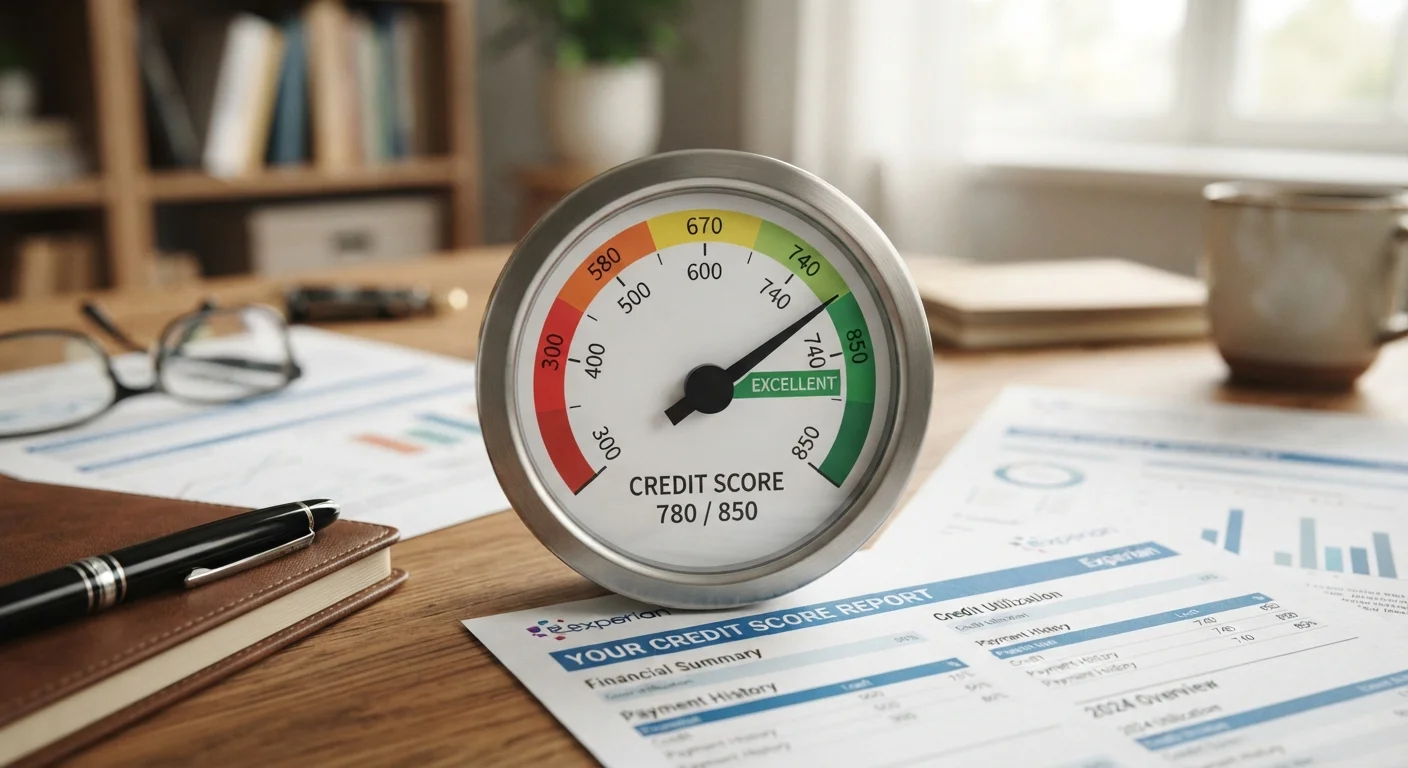
FICO Scores range from 300 (lowest) to 850 (highest), with scores above 670 generally considered good by many lenders.
Payment History: The Foundation
Every time you make a payment - or miss one - it gets recorded. Lenders care most about whether you pay what you owe, on time. Even one payment that's 30 or more days late can leave a mark that lingers on your credit report for up to seven years.
The good news: consistent on-time payments over months and years steadily build this part of your score. Setting up autopay for at least the minimum payment is a simple way to protect this category.
See also: credit myths that might be holding you back - including the idea that carrying a balance helps your score (it doesn't).
Credit Utilization: How Much You're Using
Credit utilization is the percentage of your available revolving credit that you're currently using. If your credit cards have a combined limit of $10,000 and your current balances total $3,000, your utilization is 30%.
Scoring models reward lower utilization. Carrying balances close to your credit limits signals financial strain, even if you pay everything off eventually. This is why paying down a card balance - or asking for a credit limit increase while keeping spending the same - can bump your score noticeably.
Lower Your Utilization Before Applying
If you're planning to apply for a major loan in the next few months, paying down credit card balances beforehand can meaningfully improve your utilization ratio - and potentially your score. Even paying a week or two before your statement closes can make a difference in what gets reported.
For a deeper look at why this factor trips people up, our guide on how high credit utilization hurts your score explains the mechanics in plain terms.
History, Mix, and New Credit
Length of credit history (15%) rewards accounts that have been open for a long time. The scoring model looks at the age of your oldest account, your newest account, and the average age of all your accounts. This is one reason financial professionals often caution against closing old credit cards - even ones you rarely use.
Credit mix (10%) reflects whether you have experience managing different types of credit: revolving accounts like credit cards, and installment loans like auto loans or mortgages. A variety can help slightly, but don't open accounts you don't need just to diversify.
New credit inquiries (10%) tracks how often you've applied for new credit recently. Each hard inquiry - the kind a lender runs when you apply - can cause a small, temporary dip. Multiple applications in a short window can compound that effect, though rate-shopping for a single mortgage or auto loan within a focused timeframe is typically treated as one inquiry by most scoring models.
Your credit report is the raw data behind all five factors. If you haven't reviewed yours lately, our guide to reading your credit report walks through each section.
Why Your Score Matters Beyond Just Credit Cards
Your credit score shapes more than just whether you get approved for a credit card. It directly affects the interest rate you're offered on major purchases - and over years of payments, even a small rate difference adds up to thousands of dollars.
Before financing a vehicle, it helps to understand how your credit score affects auto loan terms. And if homeownership is on your horizon, how your score shapes your mortgage options is worth reading before you start shopping.
This article is for general informational purposes only and does not constitute personalized financial or credit advice. Consider speaking with a licensed financial professional about your specific situation.
Frequently Asked Questions
Payment history makes up about 35% of a FICO Score, making it the single most influential factor. Paying every bill on time - even the minimum - is the most direct way to protect and improve your score.
A payment reported 30 or more days late can drop your score significantly, sometimes by 50-100 points or more depending on your starting point. The impact tends to fade over time, but the mark stays on your credit report for up to seven years.
No. Checking your own score is considered a "soft inquiry" and has no effect on your score. Only "hard inquiries" - triggered when a lender reviews your credit after an application - can cause a small, temporary dip.
Scoring models generally reward keeping your utilization below 30% of your total available credit, and lower is better. If you're trying to improve your score, paying down balances before your statement closing date can help reduce the number reported.
Most scoring models require at least one account open for six months and at least one creditor reporting activity within the last six months before generating a score. Building a solid score from that starting point typically takes one to two years of consistent on-time payments.
The content on this site is for informational purposes only and is not a substitute for professional advice. Always consult a qualified professional for guidance specific to your situation.