

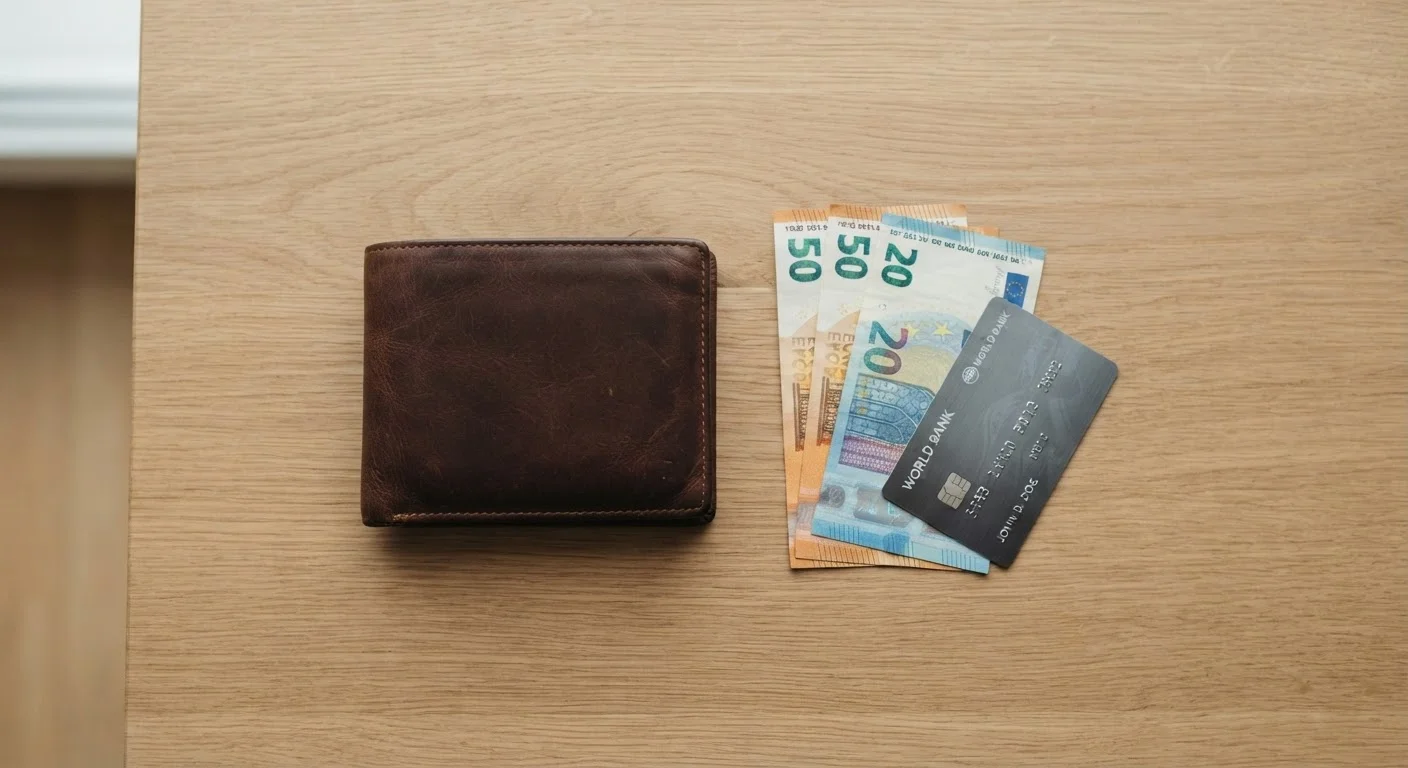
Option A
Paying with Cash
The tangible, spend-what-you-have approach.
Best for: People who want hard spending limits and no risk of carrying debt.
Option B
Paying with a Card
The flexible, traceable, rewards-eligible option.
Best for: Shoppers who pay balances in full and want purchase protections or rewards.
How Each Payment Method Actually Works
At its core, paying cash means the transaction settles immediately. Money leaves your hand; the purchase is done. There's no bill arriving later, no interest accumulating overnight.
Paying by card - whether credit or debit - introduces a middleman. With a debit card, funds are pulled from your bank account, usually within one to two business days. With a credit card, you're borrowing short-term from the card issuer and agreeing to repay it, ideally in full when the statement arrives. That gap between purchase and repayment is where costs can quietly build. If you're ever tempted to carry a balance, it's worth understanding exactly why that gets expensive - our breakdown on why minimum payments cost so much explains the math plainly.
Understanding the mechanics matters because the method shapes not just convenience, but your financial exposure.
| Criterion | Paying with Cash | Paying with a Card |
|---|---|---|
| Debt risk | None - spend only what you have | Possible if balance isn't paid in full |
| Purchase protections | Seller policy only | Dispute rights, extended warranties (credit) |
| Spending record | Manual tracking required | Automatic statement record |
| Rewards or cash back | None | Possible, if balance paid in full |
| Fraud exposure | Lost cash not recoverable | Card number can be stolen remotely |
| Acceptance | Not accepted for online purchases | Widely accepted in-store and online |
| Behavioral spending effect | Tends to limit spending naturally | May encourage higher spending |
Spending Behavior: Does the Payment Method Change How Much You Spend?
Research in behavioral economics has consistently found that people tend to spend more freely when using cards than when using cash. The working theory is psychological: handing over physical bills feels more like a loss than swiping a card does. This is sometimes called the "pain of paying."
That said, individual habits vary widely. Some people track card spending meticulously through banking apps and spend no more than they would with cash. Others use cash-based systems - like the envelope method - specifically to impose discipline. If you're curious whether physical cash budgeting could work for you, cash stuffing in the digital age takes an honest look at the tradeoffs.
The key variable isn't the payment method itself - it's whether you have a reliable system for monitoring what you spend.
~40%
Share of U.S. payments made with cash
According to the Federal Reserve's 2023 Diary of Consumer Payment Choice, cash accounted for roughly 18% of all payments by value but remains common for small-dollar transactions.
2x
Typical spending increase with card vs. cash
Multiple behavioral studies, including research cited by the Journal of Consumer Research, have found people tend to spend more when paying by card compared to cash in equivalent situations.
Protections, Records, and What Happens When Things Go Wrong
One area where cards hold a clear, practical edge over cash is consumer protection. If you pay cash for a product that turns out to be defective, your recourse depends entirely on the seller's return policy. The money is gone the moment it leaves your hand.
Credit cards, and to a lesser extent debit cards, come with federally backed dispute rights. Under the Fair Credit Billing Act, credit card holders can dispute charges for goods or services that weren't delivered as promised. Many issuers also offer extended warranty protections and purchase insurance as card benefits - though terms vary by card and issuer, so it's worth checking your cardholder agreement.
Debit Cards Offer Fewer Protections Than Credit Cards
While debit cards do carry some fraud protections under the Electronic Fund Transfer Act, the coverage is generally weaker than what credit cards offer. With a debit card, disputed funds may be temporarily removed from your checking account while the investigation proceeds, which can disrupt your cash flow. Credit card disputes typically don't affect your available cash in the same way. It's worth understanding your specific card's terms before relying on either for high-value purchases.
For record-keeping, cards win easily. Every transaction appears on your statement, which simplifies budgeting reviews, tax preparation, and spotting unauthorized charges. Cash requires manual logging to achieve the same result.
Cards are also the practical choice in certain spending categories. Renting a car, booking a hotel, or making a large appliance purchase often involves holds or deposits that most vendors require to be placed on a card. For a side-by-side look at how credit cards stack up against other borrowing tools, see our comparison of credit cards vs. personal loans.
When Cash Still Makes Sense
Despite the advantages cards offer, cash holds its ground in specific situations. For small, everyday purchases - a cup of coffee, a farmers market item, a tip - cash is immediate, accepted everywhere, and requires no technology.
Cash also has a role in privacy. Card transactions are logged by banks and can be accessed by third parties in ways cash transactions are not. For people who prefer not to have a detailed digital record of every purchase, cash provides a level of anonymity that cards don't.
There's also no fraud risk attached to cash in your wallet the same way there is with a card number that could be stolen in a data breach. Though cash has its own risk - it can be lost or stolen with no recourse - it doesn't expose your bank account or credit line to remote compromise.
Finally, sticking to cash can be a deliberate financial strategy. If you're working on reducing debt or rebuilding spending habits, removing card access from certain categories - dining out, entertainment - can function as a practical guardrail. The Saving & Credit hub has more guidance on managing everyday credit decisions.
This article is for general informational and educational purposes only and does not constitute financial or legal advice. Consult a qualified financial professional for guidance specific to your situation.
The content on this site is for informational purposes only and is not a substitute for professional advice. Always consult a qualified professional for guidance specific to your situation.