

Our Verdict
Cash stuffing is a genuinely effective tool for people who struggle with overspending in specific categories, particularly discretionary ones like dining and entertainment. Its biggest drawbacks - inconvenience, no fraud protection, and poor fit for online spending - mean it's rarely a complete system on its own. For most people, the envelope method works best as one layer of a broader budgeting approach rather than a whole replacement for modern money management.
Ideal for anyone who consistently overspends in a handful of categories and wants a concrete, tactile way to stay accountable without relying on willpower alone.
What Is Cash Stuffing, and Why Is It Trending Again?
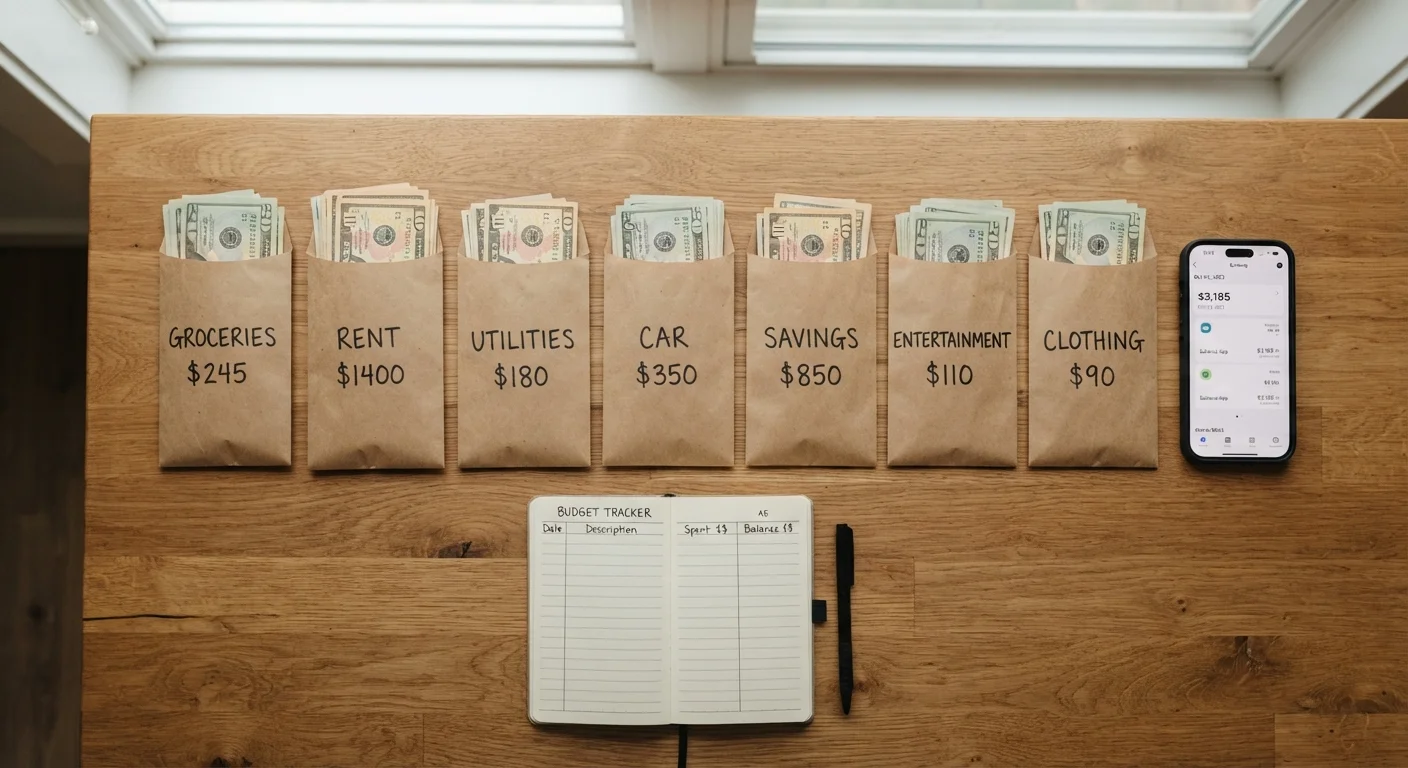
Cash stuffing is a modern name for an old idea: the envelope budgeting method. You decide how much to spend in each category - groceries, gas, dining out, entertainment - then physically place that amount of cash in a labeled envelope at the start of the month. When the envelope is empty, spending in that category stops.
The concept predates credit cards by decades, but it found a second life on social media, where personal finance creators share colorful binders stuffed with labeled envelopes. The visual appeal is real, but so is the underlying logic: when you can see and feel money leaving your hand, it's harder to ignore than a digital transaction.
If you're just getting started with budgeting overall, our complete personal budgeting guide walks through building a full system from scratch.
The Real Advantages of Using Physical Envelopes
There's more than nostalgia behind envelope budgeting. Several practical benefits explain why it still resonates with people who've tried apps and spreadsheets without success.
Creates a hard spending limit by design
When the envelope is empty, the money is gone - there's no overdraft buffer or credit line to fall back on. This hard stop removes the temptation to rationalize one more purchase.
Makes spending feel more deliberate and real
Research on payment method psychology consistently suggests that handing over physical cash registers as more 'painful' than swiping a card, which can make people more thoughtful about purchases.
No app, subscription, or technical setup required
Envelope budgeting needs only envelopes, cash, and a pen. For people who find budgeting apps overwhelming or who don't trust third-party apps with bank credentials, that simplicity matters.
Immediately visible progress each month
Seeing envelopes fill back up on payday and watching them thin out over the month gives a constant, real-time picture of where you stand - no logging in required.
Effective for discretionary overspending categories
Categories like dining out, coffee, or entertainment are where most people's budgets slip. Assigning a cash envelope specifically to those areas creates accountability exactly where it's needed most.
~$1,000
Average American's monthly discretionary spending
Federal Reserve consumer spending data has consistently shown that non-essential spending represents a substantial share of household budgets, making category-level controls particularly valuable.
Higher
Perceived 'pain of paying' with cash vs. cards
Behavioral economics studies, including work referenced by the American Psychological Association, indicate that cash transactions feel more costly to consumers than equivalent card payments.
For a deeper look at which spending categories tend to trip people up most, see eight spending categories that quietly blow most budgets - many of them are exactly where the envelope method adds the most friction.
The Drawbacks You Shouldn't Ignore
Cash stuffing isn't frictionless, and for some households it creates more problems than it solves. Before committing to the method, these limitations are worth taking seriously.
Cash doesn't work for online or autopay purchases
A significant share of everyday spending - utilities, streaming services, online shopping - happens digitally. Envelope budgeting doesn't naturally extend to these transactions without a workaround.
Lost or stolen cash is simply gone
Unlike a debit or credit card, there's no fraud protection, dispute process, or reimbursement pathway for cash. Losing an envelope can mean losing the entire month's grocery budget with no recourse.
Withdrawing and managing cash takes real time
Making regular ATM trips, sorting cash into envelopes, and tracking exact amounts adds friction that many busy households find unsustainable over the long term.
You miss out on card rewards and purchase protections
Many credit and debit cards offer cash back, travel points, extended warranties, or purchase protection. Paying cash forfeits all of these benefits, which can add up meaningfully over a year.
Doesn't build credit history
Consistent, responsible credit card use is one of the main ways Americans build or strengthen a credit score. An all-cash approach removes that opportunity entirely.
Rigid structure can backfire with unexpected expenses
Real life doesn't fit neatly into preset categories. An unexpected car repair or medical copay can disrupt the whole envelope system, leaving people feeling like they've 'failed' the budget rather than simply needing to adjust.
Digital Envelope Apps: A Middle Ground
Several budgeting apps replicate the envelope method without requiring physical cash. You allocate a set dollar amount to each spending category, and the app deducts purchases as you log them or sync your bank account. This approach keeps the psychological boundary intact while remaining compatible with card payments, online shopping, and autopay bills. Whether digital envelopes feel as concrete as physical cash varies from person to person - some users find them just as effective, while others need the tangibility of actual bills to stay accountable.
The tradeoffs between using cash and cards go beyond budgeting. Paying cash vs. putting it on a card covers fraud protection, purchase benefits, and other real differences in payment method.
Making It Work in a Digital World
Most households don't need to choose between all-cash and all-digital. A hybrid approach often captures the benefits of both. Keep autopay bills, subscriptions, and online purchases on a card or bank account - then use cash envelopes only for the two or three categories where you habitually overspend.
Some budgeting apps replicate the envelope concept digitally, letting you assign spending limits by category and tracking when you've hit the cap. This removes the safety and convenience drawbacks of physical cash while preserving the psychological boundary that makes the method work. Whether digital envelopes carry the same behavioral weight as physical cash is a fair question, and honest answer is: it varies by person.
Common budgeting myths often make people believe they need a perfect system before they can start. Envelope budgeting - in any form - works best when treated as a starting point, not a permanent commitment. If small, habitual spending is quietly draining your budget, shopping habits that slowly erode a budget is worth a read alongside any budgeting method you choose.
This article is for general informational purposes only and does not constitute personalized financial advice. Consider consulting a qualified financial professional for guidance specific to your situation.
The content on this site is for informational purposes only and is not a substitute for professional advice. Always consult a qualified professional for guidance specific to your situation.