

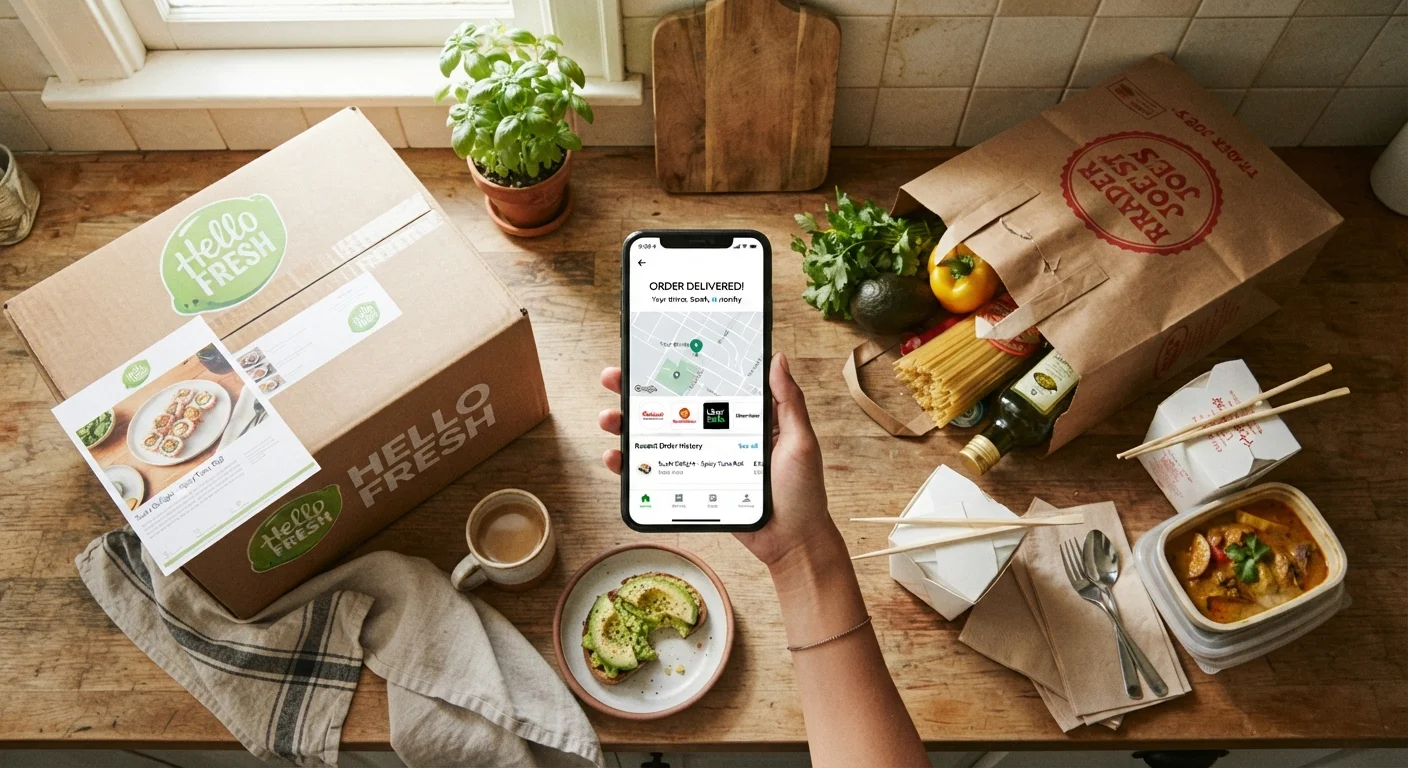
What You're Really Paying for When You Order Delivery
Opening a food delivery app feels simple - pick a restaurant, tap a few items, and food arrives at your door. But the final total rarely reflects what the meal costs at the restaurant itself. Multiple fees layer on top of the menu price before you hit 'place order.'
A typical delivery order might include a delivery fee (often $2-$8), a service fee charged by the platform (commonly 10-15% of the subtotal), a small order fee if you're under a minimum, and a tip for the driver. Some apps also inflate menu prices by 10-20% compared to what you'd pay ordering directly. Add those together and a $15 restaurant meal can easily become a $25-$28 transaction.
For occasional use, that premium is manageable. Used several times a week, it becomes a significant recurring expense. Hidden fees across everyday services follow a similar pattern - small charges that appear routine but accumulate fast.
Meal Kits: Convenience vs. Cost Per Serving
Meal kit services ship pre-portioned ingredients with step-by-step recipes, eliminating the planning and shopping that many people find time-consuming. That's a genuine benefit - but it comes at a price.
Per-serving costs for meal kit services generally range from $8 to $12 or more, depending on the plan and number of meals ordered. Cooking the same recipe from scratch using grocery-store ingredients typically costs $3-$6 per serving. The gap covers the packaging, refrigerated shipping, recipe development, and the labor of portioning ingredients.
One area where meal kits can save money: food waste. When ingredients arrive pre-measured, you're less likely to buy a full bunch of herbs for one tablespoon and throw the rest away. For households that regularly discard unused produce, that hidden savings can offset part of the premium. Understanding unit pricing at the grocery store is another way to sharpen your sense of true food costs.
Premade and Grab-and-Go Foods: The Supermarket Markup
You don't need a delivery app to pay a convenience premium. Grocery stores charge more for food that's already been prepped, cooked, or portioned. A bag of pre-washed, pre-cut stir-fry vegetables costs noticeably more than buying the same vegetables whole. Pre-marinated meats, individually wrapped snacks, and deli-prepared entrees all carry markups that reflect the labor and packaging involved.
The math varies by item. A container of pre-cut melon can cost two to three times as much per pound as buying a whole melon. Pre-shredded cheese runs higher per ounce than a block of the same cheese. These aren't scams - the convenience is real - but knowing the markup helps you decide when the time savings justify the cost and when they don't.
Rotisserie chicken is one category where the premade price is often competitive with raw chicken, largely because stores use it as a traffic driver. It's worth knowing which premade items are genuinely good value and which are primarily priced for impulse convenience.
Putting It Together: What Convenience Costs You Annually
Individual convenience purchases look small in isolation. Stacked across a month, the picture changes. Consider a household that orders delivery twice a week, subscribes to a meal kit service for three meals weekly, and buys premade grocery items a few times a week. The combined convenience premium - just the extra above what the same food would cost prepared at home - can easily reach $150-$300 per month, or $1,800-$3,600 per year.
That's not an argument against convenience. Time has real value, and nobody cooks everything from scratch. But it is an argument for being deliberate. Knowing which services you use most and what each one actually costs per use gives you a clearer basis for deciding what to keep, what to cut back on, and where substitutes (like batch cooking or grocery pickup instead of delivery) get you most of the convenience at a fraction of the cost.
Just as hidden costs compound in other spending categories - car ownership costs beyond the sticker price is a parallel example - food convenience fees reward the same kind of honest accounting.
This article is for general informational and educational purposes only and does not constitute financial or professional advice. Individual costs vary by location, provider, and personal habits. Consult a qualified financial professional for guidance specific to your situation.
Frequently Asked Questions
When you add delivery fees, service fees, item markups, and a tip, a typical order can cost 30-50% more than picking up the same food yourself. Some apps also charge a higher menu price than the restaurant's own takeout menu, which isn't always obvious at checkout.
Meal kits offer real value in convenience and reduced food waste, but the per-serving cost is generally higher than buying equivalent ingredients at a grocery store. Whether it's worth it depends on how much you value the time saved and how often you'd otherwise let fresh ingredients go unused.
A service fee is a charge added by the delivery platform - separate from the delivery fee and tip - to cover operating costs. It's often calculated as a percentage of your order total and can range from 10-15% or more.
Yes. Strategies include using pickup instead of delivery, ordering in larger batches to reduce per-order fees, cooking in bulk on weekends, and rotating convenience services so you're not using all of them at once.
Generally, yes. Rotisserie chicken is a well-known exception where the price can rival raw chicken, but most deli-prepared, heat-and-eat, or pre-portioned items carry a markup for the labor and packaging involved.
Review your bank or credit card statements and separate out food delivery, subscription meal services, and grab-and-go purchases as their own category. Many budgeting apps let you tag transactions manually so you can see the monthly total clearly.
The content on this site is for informational purposes only and is not a substitute for professional advice. Always consult a qualified professional for guidance specific to your situation.