

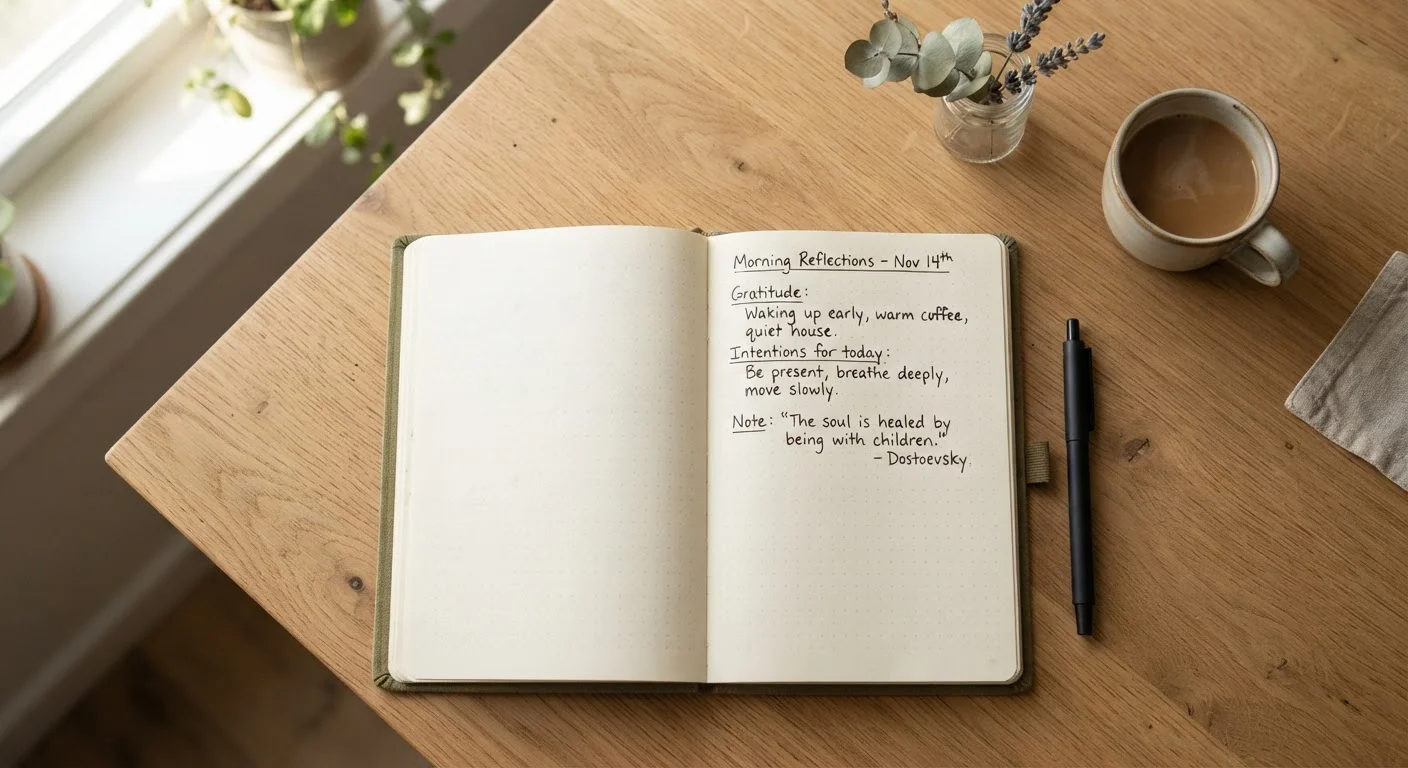
What the Research Actually Shows
The science behind journaling and stress relief is more substantial than many people realize. Psychologist James Pennebaker's foundational studies found that participants who wrote about emotionally significant experiences showed improvements in immune function, mood, and physical health markers compared to those who wrote about neutral topics. Subsequent meta-analyses have broadly supported the idea that expressive writing - writing that engages with emotions and thoughts rather than just logging events - is the mechanism that matters.
A 2018 review published in JMIR Mental Health examined digital expressive writing interventions and found reductions in depression and general psychological distress across multiple studies. Gratitude journaling, a structured variation where writers record things they appreciate, has separately been linked to improved well-being in studies from positive psychology research groups.
That said, the evidence is not uniformly strong. Effect sizes vary, study methodologies differ, and journaling does not appear equally helpful for everyone. Researchers are still exploring which formats benefit which populations most. What is consistent, however, is that the practice carries very low risk and a meaningful potential upside - which is why many mental health clinicians recommend it as a complement to other wellness habits.
Journaling pairs naturally with other evidence-informed practices. For example, a consistent nighttime journaling ritual may support the kind of mental wind-down that improves sleep quality - something explored in our sleep hygiene article. It can also serve as one of several small daily anchors that quietly build resilience over time.
Journaling Is Not Therapy
While research supports journaling as a useful self-care tool, it is not a clinical treatment and should not replace professional care for anxiety disorders, depression, trauma, or other mental health conditions. If you are struggling with persistent or severe symptoms, please speak with a qualified mental health professional. See our guide to mental wellness support options for help understanding what kind of help might fit your situation.
How to Build Your Journaling Practice
Starting a journaling habit does not require a special notebook, a perfect time of day, or any prior writing experience. What it requires is a repeatable structure you can return to without thinking too hard about it. The steps below draw on protocols used in expressive writing research and are designed to be practical for everyday schedules.
What you will need
Notebook or journal
Provides a dedicated, distraction-free space for handwritten reflection.
Word processor or notes app
A digital alternative for those who prefer typing or want easy searchability.
Timer (phone or watch)
Helps you commit to a fixed writing window without watching the clock.
Prompt list
Pre-written questions or sentence starters that help you begin when you feel stuck.
Choose your format and medium
Decide whether you prefer paper or digital writing. Research does not consistently favor one medium over the other, so comfort is the deciding factor. Paper removes digital distractions; a phone notes app means your journal is always with you. Pick whichever you are actually likely to use.
Set a consistent time and location
Anchor your journaling to an existing daily habit - morning coffee, a lunch break, or the wind-down period before bed. Consistency in timing helps the practice become automatic rather than something you have to motivate yourself to do each day. Even three sessions per week is enough to start building the habit.
Start with a specific prompt instead of a blank page
The single biggest barrier for new journalers is not knowing what to write. Prompts remove that friction. Try starting with one of these:
- "What is taking up the most mental space right now, and why?"
- "What emotion am I carrying today, and where might it be coming from?"
- "What went well today, even in a small way?"
Expressive prompts - those that invite you to explore thoughts and feelings - have the strongest research backing for stress reduction.
Write without editing or judging
This is the core instruction in most evidence-based expressive writing protocols: write continuously for your chosen time without stopping to correct spelling, cross things out, or second-guess your word choice. The goal is honest output, not polished prose. No one needs to read this but you.
Close with a brief grounding statement
End each session with one or two sentences that bring you back to the present. This might be a simple observation ("I handled today reasonably well"), an intention ("Tomorrow I will focus on one thing at a time"), or a note of something you are grateful for. This closing ritual signals a mental transition out of reflective mode and into the rest of your day.
Short Sessions Still Count
You do not need 30 minutes to benefit. Studies by psychologist James Pennebaker, whose expressive writing research is among the most cited in this area, typically used writing sessions of just 15-20 minutes over three to four days. Even shorter, more frequent entries can accumulate meaningful benefit over weeks. Start small and build from there.
When Topics Feel Too Difficult to Write About
Some research suggests that repeatedly writing about unresolved trauma without adequate support can, in some cases, reinforce distress rather than relieve it. If a topic consistently leaves you feeling worse after writing - not just temporarily uncomfortable - that is worth discussing with a licensed counselor or therapist. Self-help tools work best alongside, not instead of, professional guidance when the need is serious.
As your practice develops, you may notice patterns - recurring stressors, emotional cycles, or unmet needs - that you had not previously recognized. This self-awareness is often where journaling delivers its deepest value. If you want to build a broader daily mental wellness check-in, our self-check routine guide offers a structured approach that complements journaling well.
This article is for general informational and educational purposes only and does not constitute medical or mental health advice. If you are experiencing significant stress, anxiety, depression, or any mental health concern, please consult a qualified healthcare or mental health professional.
The content on this site is for informational purposes only and is not a substitute for professional advice. Always consult a qualified professional for guidance specific to your situation.