

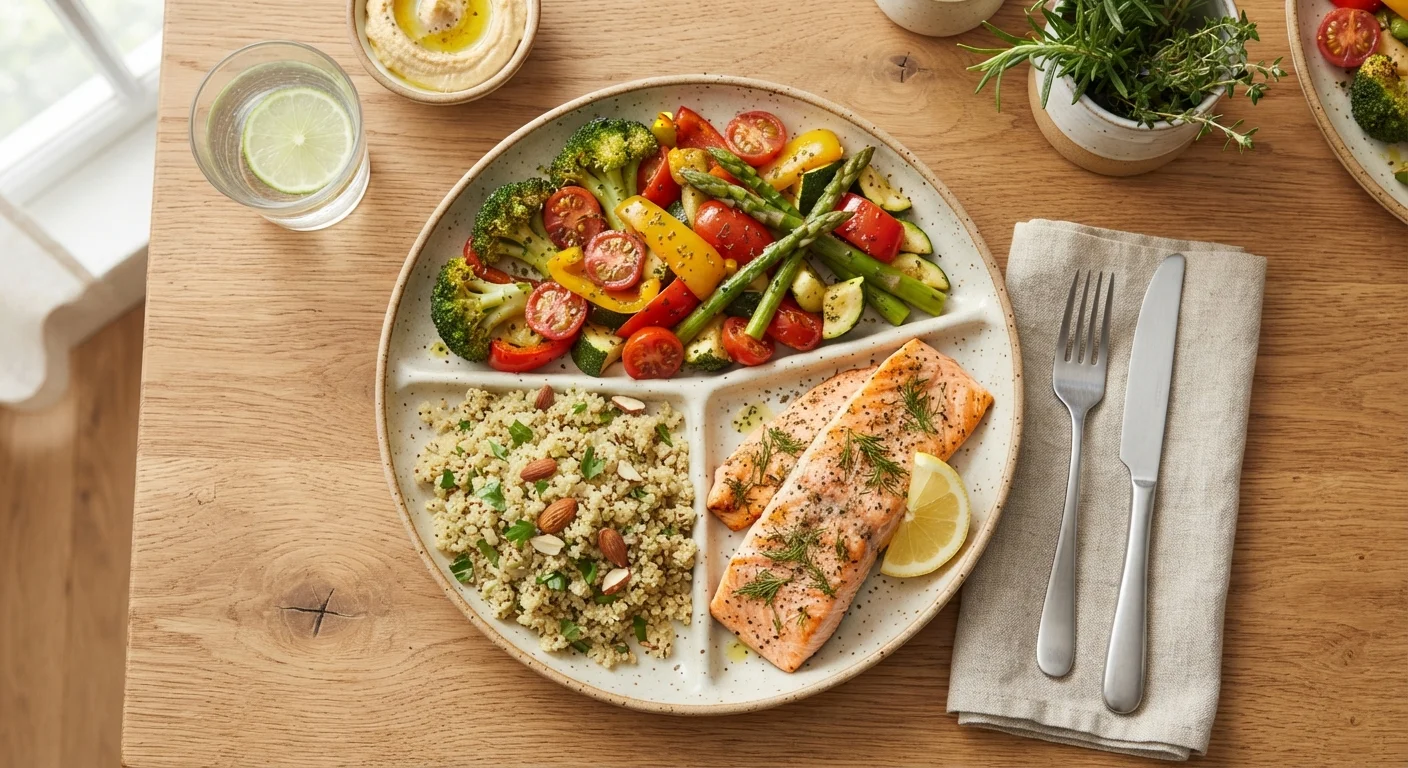
Why Visual Portioning Works
Calorie counting can be a useful tool in specific clinical contexts, but research suggests that for most people it is difficult to sustain and can foster an unhelpful relationship with food. Studies published in journals like Appetite and Nutrition Reviews indicate that food environment cues - including plate size, food arrangement, and visual variety - reliably shape how much people eat, often without conscious awareness.
The plate method, endorsed by organizations including the U.S. Department of Agriculture through its MyPlate initiative, translates nutritional science into a spatial guide anyone can use. Instead of calculating numbers, you manage proportions. This approach won't produce laboratory-precise nutrient totals, but for everyday eating it provides a practical framework that covers major food groups and naturally limits excess.
What you will need
If you want to understand what's inside packaged items you're adding to your plate, learning to read a Nutrition Facts label is a complementary skill worth developing.
This Is General Information, Not Medical Advice
The guidance in this article is intended for general educational purposes only. Individual nutritional needs vary based on age, health status, activity level, and medical history. If you have a chronic condition, are pregnant, or have specific dietary concerns, consult a registered dietitian or your healthcare provider before making significant changes to your eating habits.
Building Your Plate: The Step-by-Step Method
The following steps walk you through assembling a nutritionally balanced meal using visual and hand-based cues. The tools required are minimal - a standard plate, your own hand as a measuring guide, and an assortment of foods from different categories.
Standard Dinner Plate (9-10 inches)
Serves as your visual portioning guide - plate size directly influences perceived portion adequacy.
Your Hand
Palm, fist, and cupped hand are reliable, portable measures for protein, vegetables, and grains.
Measuring Cups (set)
Useful during a learning phase to calibrate your visual estimates before relying on hand cues alone.
Fill Half Your Plate With Non-Starchy Vegetables
Non-starchy vegetables - think leafy greens, broccoli, bell peppers, cucumbers, tomatoes, and zucchini - are high in fiber, vitamins, and minerals while contributing relatively little to overall energy intake. Covering half your plate with them creates volume and satiety without crowding out other nutrients.
Variety matters: different colors signal different phytonutrients, so mixing greens, reds, and oranges across the week broadens your nutritional coverage. Frozen and canned vegetables (choose low-sodium options) count just as much as fresh. See affordable ways to stock up on vegetables year-round.
Reserve One Quarter for a Quality Protein Source
Protein supports muscle maintenance, immune function, and sustained satiety. A palm-sized serving - roughly 3-4 ounces for most adults - is a practical visual benchmark. Good options include fish, poultry, eggs, legumes, tofu, and lean cuts of meat.
Plant-based proteins like beans and lentils serve double duty, contributing both protein and fiber. If you rely on packaged proteins, reading the Nutrition Facts label can help you spot added sodium or saturated fat that may not be obvious.
Use the Remaining Quarter for Whole Grains or Starchy Vegetables
Whole grains - brown rice, quinoa, whole-wheat pasta, barley, oats - and starchy vegetables like sweet potatoes and corn provide complex carbohydrates for sustained energy. A cupped handful (roughly half a cup cooked) is a reasonable visual portion for this section.
Choosing whole over refined grains preserves the fiber and micronutrients stripped away during processing. The dietary patterns most supported by nutrition research - such as Mediterranean and DASH - consistently emphasize whole grains over refined ones.
Add a Small Amount of Healthy Fat
Fats are essential for absorbing fat-soluble vitamins (A, D, E, K) and maintaining cell function. They don't need their own quarter of the plate - a thumb-sized portion of olive oil, avocado, nuts, or seeds is usually sufficient to complement a meal.
Focus on unsaturated fats from whole food sources rather than heavily processed oils or packaged products high in trans fats. A drizzle of olive oil over roasted vegetables or a few slices of avocado alongside your protein covers this need without overloading any single section of the plate.
Choose Water or an Unsweetened Beverage as Your Default Drink
What you drink alongside a meal contributes significantly to overall dietary quality. Sugary drinks can add substantial calories and added sugars without increasing satiety. Water, sparkling water, unsweetened tea, or black coffee are straightforward choices that keep beverage calories from quietly offsetting balanced plate efforts.
Milk and fortified plant-based milks can also complement a meal by contributing calcium and vitamin D, particularly if dairy-based options are limited elsewhere in your day.
Apply the Same Framework Across Meals and Plan Ahead
The plate method works at breakfast, lunch, and dinner with minor adaptations. Breakfast might look like eggs (protein), sautéed spinach (vegetables), and a slice of whole-grain toast (grain) rather than a traditional dinner layout. The proportional logic remains the same.
Building this into a weekly rhythm reduces daily decision fatigue considerably. A weekly meal planning checklist can help you confirm food group coverage before you shop, rather than improvising at every meal.
Consistency Beats Perfection Every Time
No single meal determines your overall nutrition. If lunch was unbalanced, use dinner to add more vegetables and a quality protein - it's the pattern over days and weeks that matters. Research consistently shows that sustainable dietary habits outperform short-term strict regimens.
Avoid Over-Restricting Food Groups
Visual portion methods are meant to encourage balance, not elimination. Cutting out entire food groups without professional guidance can lead to nutrient gaps over time. If certain foods cause discomfort or you suspect an intolerance, speak with a healthcare provider rather than self-diagnosing.
Over time, these proportions become intuitive. Most people find that after two to three weeks of deliberate practice, they no longer need to think consciously about the divisions - the habit becomes automatic. For further reading on eating patterns that share these principles at a broader dietary level, see nutrition research on consistent dietary patterns.
This article provides general nutrition information for educational purposes only and is not a substitute for personalized advice from a registered dietitian, physician, or other qualified healthcare professional.
The content on this site is for informational purposes only and is not a substitute for professional advice. Always consult a qualified professional for guidance specific to your situation.