

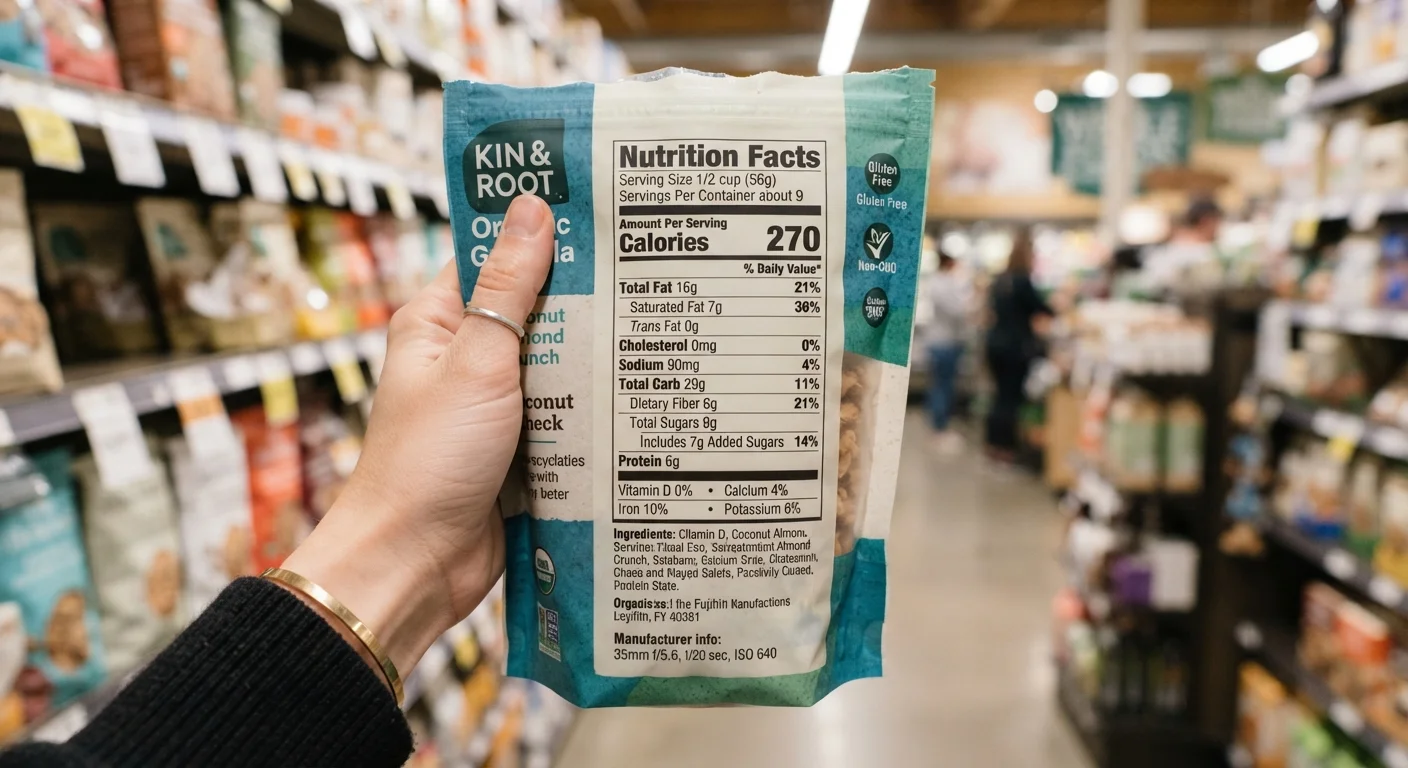
Why the Nutrition Facts Label Matters
The U.S. Nutrition Facts panel - updated by the FDA in 2020 - is one of the most practical health tools available to consumers, yet it's often skimmed or ignored at the grocery store. Understanding it takes just a few minutes and can meaningfully inform everyday food choices without requiring a nutrition degree.
If you're new to thinking about food and health, our foundation guide to nutrition covers the core concepts before you dive in. Once you can read a label confidently, tools like building a balanced plate without calorie counting and weekly meal planning become much easier to apply.
This Is General Nutrition Education
The guidance here is intended to help you understand a food label - it is not personalized dietary advice. If you have a medical condition, food allergy, or specific nutrition goal, consult a registered dietitian or your healthcare provider before making significant changes to your diet.
The steps below walk you through each part of the label in the order it appears, so you can follow along with any packaged food in hand.
What you will need
Step-by-Step: Reading Every Section of the Label
Packaged food item
Provides a real Nutrition Facts label to practice reading.
Calculator or smartphone
Useful for multiplying nutrient values when consuming more than one serving.
Start with serving size and servings per container
The very top of the label - often in bold - tells you the serving size (e.g., "2/3 cup" or "1 slice") and how many servings are in the package. Every calorie count and nutrient figure below is based on one serving. If you eat two servings, double the numbers.
Note the calorie count
Calories appear in large type just below the serving information. This number tells you how much energy one serving provides. Context matters: a food can be high-calorie and nutrient-dense, or high-calorie with few useful nutrients. Calories alone don't tell the full story.
Scan the nutrients to limit
The label groups certain nutrients because most Americans tend to consume too much of them. Pay attention to:
- Saturated fat - associated with cardiovascular risk at high intake levels
- Sodium - high intake is linked to elevated blood pressure
- Added sugars - distinct from naturally occurring sugars; associated with excess calorie intake
For each of these, aim for a low % Daily Value when possible.
Look for nutrients to get enough of
Below the line dividing the label, you'll find nutrients many Americans under-consume:
- Dietary fiber - supports digestion and heart health (see why most Americans fall short on fiber)
- Vitamin D, calcium, iron, potassium - flagged because deficiencies are common
A higher % Daily Value here is a positive sign. Learn more about what these micronutrients do in our plain-English guide to vitamins and minerals.
Understand % Daily Value
% Daily Value (% DV) tells you how much of a nutrient one serving contributes toward the general daily recommendations for a 2,000-calorie diet. It's a relative benchmark - your actual needs may differ based on age, activity level, and health status.
Read the ingredient list
Ingredients are listed in descending order by weight - the first ingredient makes up the largest proportion of the product. A short ingredient list with recognizable items is generally a positive signal, though it's not the only factor. Watch for added sugars listed under many names: corn syrup, dextrose, cane juice, maltose, and others all count.
Packages Often Contain Multiple Servings
A single bottle, bag, or can may list 2, 3, or more servings. If you consume the whole package, multiply every nutrient value by the number of servings listed. This is one of the most common misreads on any nutrition label.
Use the 5/20 Rule as a Quick Guide
A % Daily Value of 5% or less is generally considered low for a nutrient; 20% or more is considered high. Use this as a fast filter when scanning labels: aim for high % DV on fiber and key vitamins, and low % DV on sodium, saturated fat, and added sugars.
Once you've worked through these steps a few times, scanning a label becomes second nature. You don't need to memorize every number - you just need to know which sections to check and what direction is favorable for each nutrient. When you're ready to put label-reading into practice at the store, understanding unit pricing can also help you compare products by value, not just nutrition.
This article is for general informational and educational purposes only and does not constitute medical or dietary advice. Consult a qualified healthcare professional or registered dietitian for guidance specific to your health needs.
The content on this site is for informational purposes only and is not a substitute for professional advice. Always consult a qualified professional for guidance specific to your situation.