

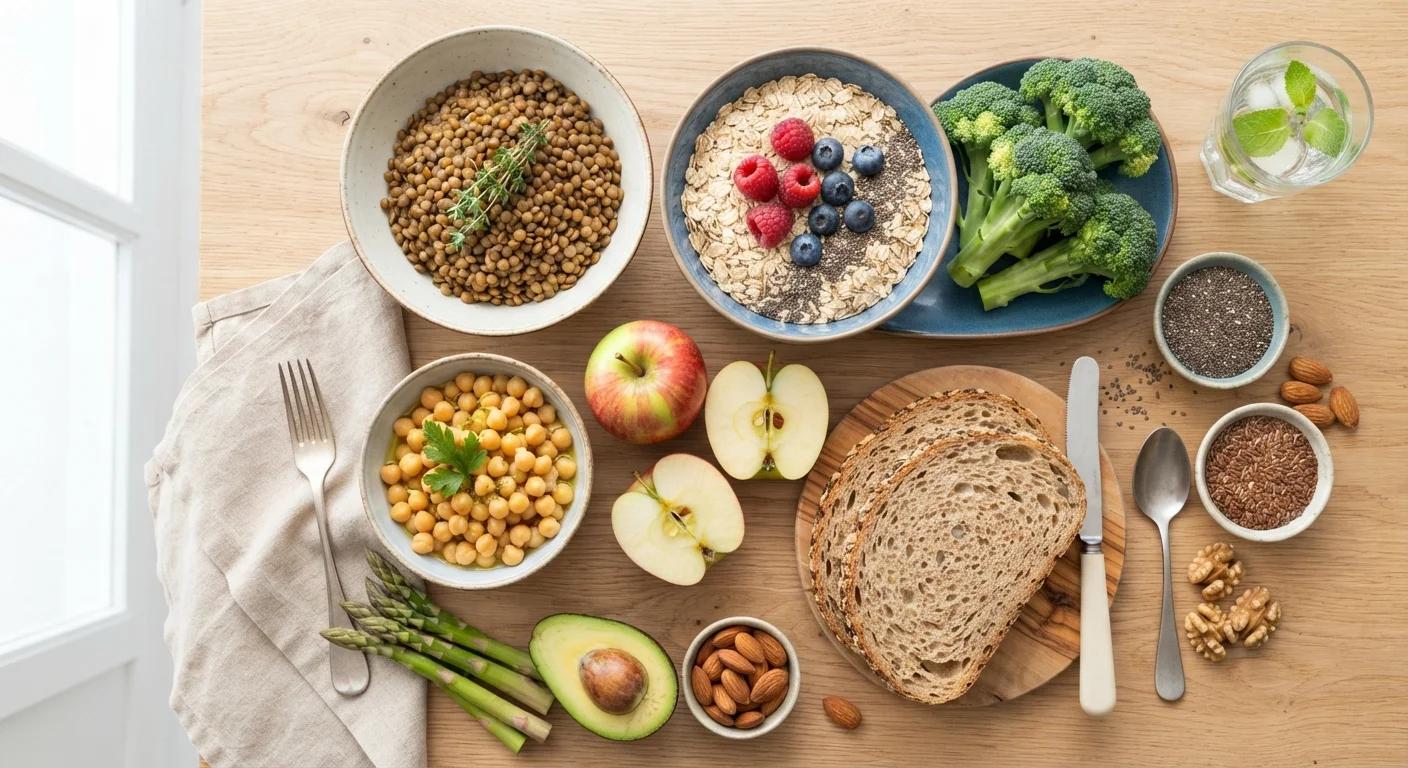
Why Fiber Matters - and Why Most Americans Fall Short
Dietary fiber is one of the most thoroughly researched nutrients in nutrition science, and one of the most consistently under-consumed. According to the Dietary Guidelines for Americans, the average adult eats roughly 15 grams of fiber per day - less than half the recommended amount for most adults. This gap has real consequences for digestive health, blood sugar stability, and cardiovascular risk.
The shortfall largely reflects what's on the average American plate. Highly processed foods - white bread, packaged snacks, fast food - have had much of their natural fiber removed during manufacturing. Whole plant foods, the primary source of fiber, are simply not as central to typical eating patterns as they could be.
Understanding what fiber actually does in the body is the first step toward making more intentional choices. For a broader foundation, see this plain-language guide to core nutrition concepts.
~15g
Average daily fiber intake for U.S. adults
According to data cited in the Dietary Guidelines for Americans, most adults consume far less than the recommended 25-38 grams per day.
95%
Americans not meeting fiber recommendations
Research published in the American Journal of Lifestyle Medicine estimates that approximately 95% of Americans fall short of recommended fiber intake - making it one of the most common nutrient gaps in the U.S. diet.
7-8g
Fiber in a half-cup of cooked lentils
Legumes such as lentils and black beans are consistently among the highest-fiber foods per serving available in a typical grocery store.
What Fiber Does in Your Body
Fiber's benefits stem from the fact that it resists digestion. Rather than being absorbed into the bloodstream like sugars or fats, fiber moves through the intestines, doing useful work along the way.
Soluble fiber - found in oats, apples, beans, and barley - dissolves in water to form a thick gel. This slows the rate at which sugar enters the bloodstream, which helps moderate blood sugar responses after meals. Soluble fiber also binds to cholesterol particles in the digestive tract, which research links to modest reductions in LDL (low-density lipoprotein) cholesterol levels.
Insoluble fiber - found in wheat bran, whole grain bread, and most vegetables - adds bulk to stool and helps material move through the colon more efficiently. This supports regular bowel movements and is associated with a lower risk of constipation.
Fiber also feeds beneficial gut bacteria, which produce short-chain fatty acids that support the intestinal lining. This area of research - the relationship between fiber and the gut microbiome - continues to develop and is considered one of the more promising frontiers in nutrition science.
“Dietary fiber is increasingly recognized not just as a digestive aid, but as a key modulator of metabolic health - affecting everything from blood glucose to inflammation through its interaction with the gut microbiome.”
— Joanne Slavin, Professor of Food Science and Nutrition, University of Minnesota, and member of dietary fiber research panels
Practical Ways to Eat More Fiber
You don't need specialty products or dramatic diet overhauls to increase fiber intake meaningfully. The most reliable strategy is building meals around whole plant foods.
- Legumes: A half-cup of cooked lentils or black beans contains roughly 7-8 grams of fiber. Adding them to soups, salads, or grain bowls is one of the highest-impact changes you can make.
- Whole grains: Swapping refined grains for whole grain versions - oats instead of instant cream of wheat, whole wheat bread instead of white - adds fiber without requiring new meals.
- Vegetables: Broccoli, Brussels sprouts, artichokes, and carrots are particularly fiber-dense. Aim to fill roughly half your plate with vegetables at most meals.
- Fruit: Pears, apples (with skin), raspberries, and avocados provide meaningful fiber per serving. Whole fruit is preferable to juice, which removes most of the fiber.
One practical note: increase fiber gradually rather than all at once, and pair it with adequate water intake. Abrupt large increases can cause gas and bloating as the digestive system adjusts. You can find fiber listed on nutrition labels under the Total Carbohydrates section - see our walkthrough of the Nutrition Facts label for help interpreting the numbers.
Start Low, Go Slow With Fiber
If your current diet is low in fiber, adding too much too quickly can cause bloating, gas, and cramping. A practical approach is to add one high-fiber food per week - such as swapping to whole grain bread one week, then adding beans to meals the next. Drinking adequate water throughout the day helps fiber move smoothly through the digestive tract.
Fiber in the Context of an Overall Eating Pattern
Fiber doesn't work in isolation. It's most beneficial as part of a broader eating pattern that emphasizes whole, minimally processed foods - the same pattern that research consistently ties to reduced chronic disease risk. Dietary patterns with a strong research base, such as the Mediterranean and DASH diets, are naturally high in fiber because they center on vegetables, legumes, fruits, and whole grains.
Hydration also matters. Fiber absorbs water as it moves through the digestive tract, so inadequate fluid intake can actually worsen constipation rather than help it. Learn more about how water fits into a healthy eating pattern.
If you have a digestive condition such as irritable bowel syndrome (IBS), Crohn's disease, or diverticular disease, the right amount and type of fiber may differ from general recommendations. Always consult a qualified healthcare provider before making significant dietary changes if you have an existing health condition.
This article is for general informational and educational purposes only and is not a substitute for professional medical or dietary advice. Consult a qualified healthcare provider for guidance specific to your health needs.
Frequently Asked Questions
The Dietary Guidelines for Americans recommend about 25 grams per day for adult women and 38 grams per day for adult men, though needs shift slightly with age. Most Americans consume only around 15 grams daily. Checking the % Daily Value on nutrition labels can help you track intake.
Legumes such as lentils, black beans, and chickpeas are among the most concentrated sources. Whole grains, avocados, pears, broccoli, and nuts also provide meaningful amounts. Eating a variety of whole plant foods across the day is the most practical approach.
Consuming very high amounts of fiber very quickly - particularly through supplements - can cause bloating, gas, or cramping. Increasing intake gradually over several weeks and staying well hydrated helps your digestive system adjust comfortably.
Whole foods deliver fiber alongside vitamins, minerals, antioxidants, and phytonutrients that supplements don't replicate. Fiber supplements can help close a gap in certain situations, but they are generally considered a secondary option to food-based sources. Speak with a healthcare provider before adding supplements regularly.
Cooking softens the texture of fiber but does not significantly reduce the total fiber content of vegetables. Steamed broccoli, roasted carrots, and cooked lentils all retain most of their fiber. You don't need to eat everything raw to benefit.
The content on this site is for informational purposes only and is not a substitute for professional advice. Always consult a qualified professional for guidance specific to your situation.