

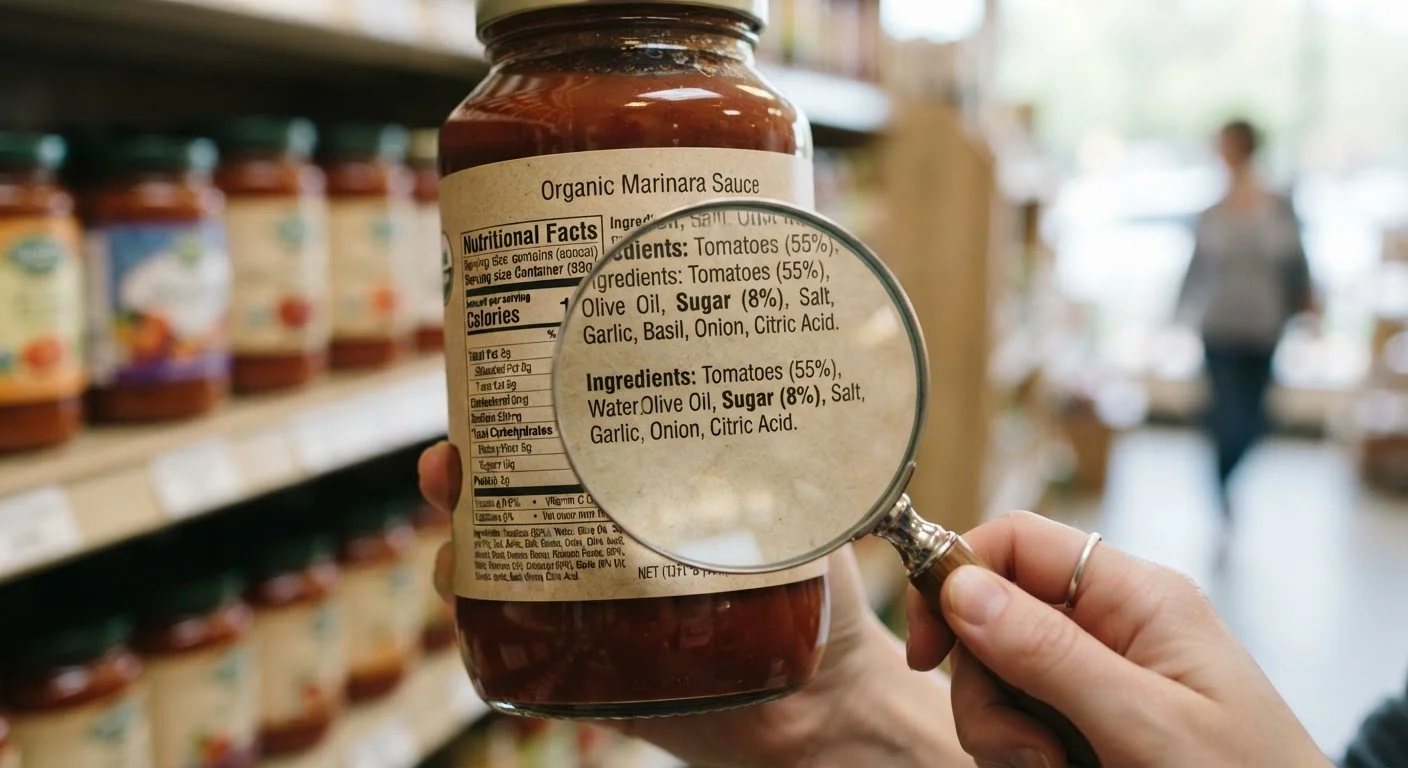
Why Sugar Gets So Many Names
When a food manufacturer lists "sugar" as a first or second ingredient, many shoppers know to take note. The challenge is that sugar rarely goes by just one name. Across thousands of packaged foods, added sweeteners appear as syrups, nectars, juice concentrates, and a long list of chemical-sounding names - each technically accurate, but collectively obscuring how much sweetener a product actually contains.
This variety isn't accidental. Because ingredient lists are ordered by weight from highest to lowest, using several smaller quantities of different sugar types can push each one lower on the list - even when their combined contribution is significant. Understanding this strategy is one of the most practical skills in everyday nutrition label reading.
Naturally Occurring vs. Added Sugars
Not all sugar on a food label is added. Milk naturally contains lactose, and whole fruit contains fructose - neither counts toward the "Added Sugars" total on the Nutrition Facts panel. The key distinction is whether a sweetener was introduced during processing. Whole foods that contain natural sugars also deliver fiber, protein, or micronutrients alongside them, which affects how the body processes them.
The Most Common Aliases for Sugar
Knowing the categories of added sugar names makes scanning labels faster. Here's how they group:
- The "-ose" family: Glucose, fructose, dextrose, sucrose, maltose, and lactose are all sugars. If an ingredient ends in "-ose," treat it as sugar.
- Syrups: Corn syrup, high-fructose corn syrup, rice syrup, malt syrup, barley malt syrup, and golden syrup are all added sweeteners with minimal nutritional distinction from table sugar.
- "Natural" sweeteners: Honey, agave nectar, maple syrup, coconut sugar, and raw cane sugar are still added sugars. Their natural origin does not change how they're processed by the body.
- Juice concentrates used as sweeteners: Apple juice concentrate, white grape juice concentrate, and similar ingredients are counted as added sugars when used in place of whole fruit.
- Molasses and treacle: Byproducts of sugar refining, these are still classified as added sugar despite retaining some minerals.
For a deeper look at how all of this appears on the Nutrition Facts panel itself, see our plain-language guide to reading Nutrition Facts labels.
17 tsp
Average daily added sugar intake for U.S. adults
According to CDC dietary intake data, American adults consume roughly 17 teaspoons of added sugar per day on average - well above the American Heart Association's recommended limits.
60+
Names for added sugar recognized on U.S. labels
The FDA has identified more than 60 ingredient names that represent added sugars, spanning syrups, -ose sugars, concentrates, and natural sweeteners.
14.9%
Share of daily calories from added sugars in U.S. adults
NHANES dietary data has found that added sugars account for roughly 14-15% of total daily caloric intake among American adults, with sweetened beverages as the leading source.
How to Use This Knowledge at the Store
Reading for hidden sugars doesn't require memorizing every name. A few practical habits help:
- Check the "Added Sugars" line first. The updated Nutrition Facts panel lists added sugars separately in grams and as a % Daily Value. This is your quickest signal before you even scan the ingredient list.
- Count the sugar names in the ingredient list. If you see three, four, or five different sugar aliases, the product likely contains a meaningful amount of added sweetener even if no single one appears near the top.
- Watch for "-ose," "syrup," and "concentrate." These three pattern cues catch the majority of added sugar names without requiring memorization of the full list.
- Compare similar products. Ingredient lists and Added Sugars grams make side-by-side comparison straightforward when choosing between two versions of the same food.
Quick Label Scan: Three Patterns to Spot Sugar
When scanning an ingredient list quickly, look for three pattern cues: any word ending in "-ose," any word containing "syrup," and any phrase ending in "concentrate." Finding two or more of these in the same product is a reliable signal to check the Added Sugars grams on the Nutrition Facts panel before deciding.
This article is for general informational purposes only and is not a substitute for professional medical or nutritional advice. For personal dietary guidance, consult a registered dietitian or qualified healthcare provider.
Frequently Asked Questions
The FDA has identified more than 60 names that can refer to added sugar on ingredient lists. These include familiar terms like corn syrup and honey, as well as less recognizable ones like dextrose, maltitol, or agave nectar.
Honey and maple syrup are still classified as added sugars and affect blood glucose similarly to table sugar. They do contain trace minerals and antioxidants, but in the amounts typically consumed, any nutritional advantage over table sugar is minimal. Major health organizations treat them equivalently for daily sugar limits.
The "Added Sugars" line - introduced as part of updated FDA Nutrition Facts rules - shows how many grams of sugar were added during processing. The % Daily Value is based on a limit of 50 grams per day for a 2,000-calorie diet, following guidance from leading health authorities.
Yes. When fruit juice concentrate is used as a sweetener in a product rather than for its original fruit content, it is counted as an added sugar. Look for terms like "apple juice concentrate" or "white grape juice concentrate" in ingredient lists.
A useful rule of thumb: any ingredient ending in "-ose" is almost certainly a sugar. Also look for words like "syrup," "nectar," "malt," and "concentrate." If several of these appear in the same ingredient list, added sugars may make up a larger portion of the product than any single name suggests.
The American Heart Association recommends no more than 25 grams (about 6 teaspoons) of added sugar per day for women and 36 grams (about 9 teaspoons) for men. The FDA's % Daily Value on Nutrition Facts is based on a 50-gram benchmark. Individual needs vary, so consult a healthcare provider for personalized guidance.
The content on this site is for informational purposes only and is not a substitute for professional advice. Always consult a qualified professional for guidance specific to your situation.