

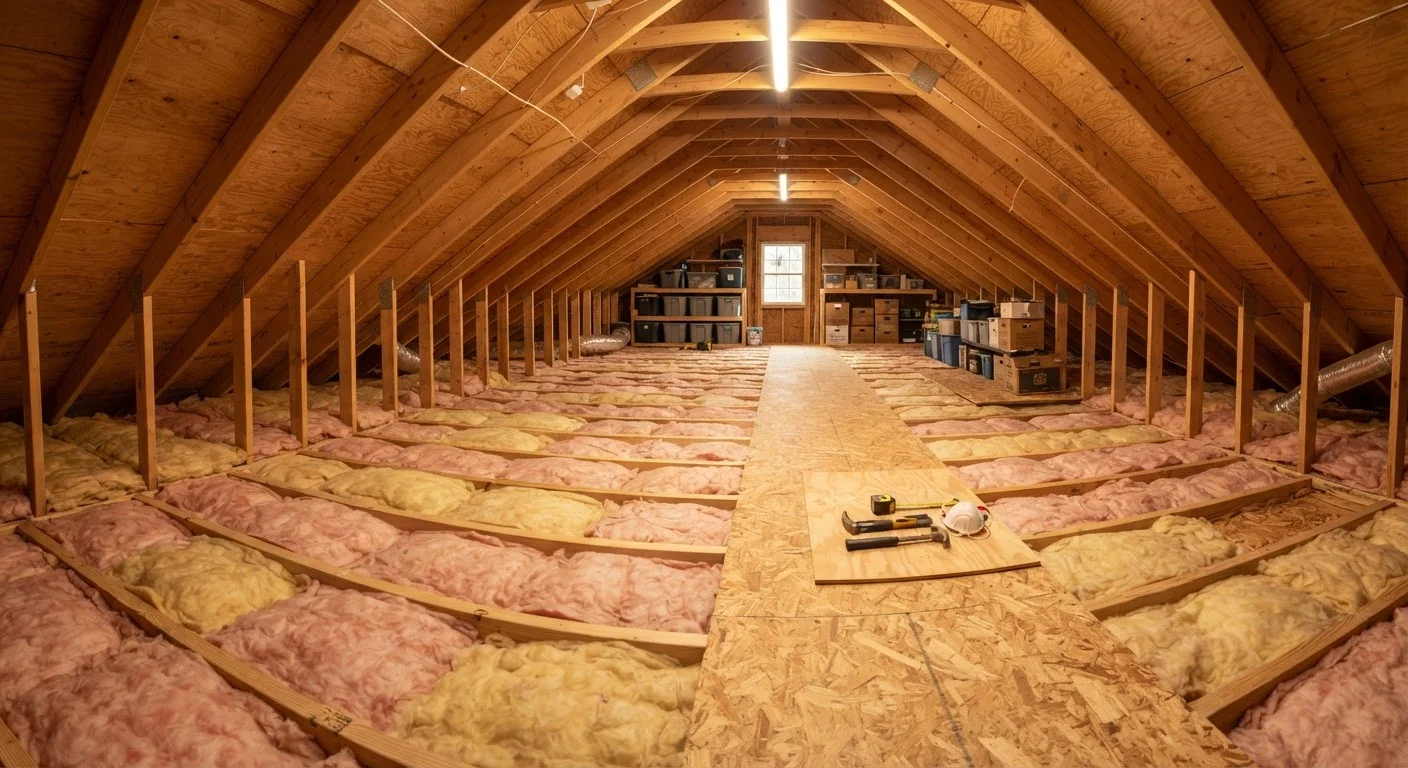
Why Your Attic Is the Most Important Place to Insulate
Heat rises - and in a poorly insulated home, much of it escapes straight through the attic. According to the U.S. Department of Energy, heating and cooling account for roughly half of total home energy use, and the attic is one of the largest contributors to that loss. Before you look anywhere else, understanding where attic heat loss actually begins will help you target your efforts correctly.
Beyond energy savings, proper attic insulation helps keep every room in your home at a more consistent temperature, reduces the strain on your HVAC system, and can prevent moisture-related problems like ice dams in colder climates.
Vented vs. Unvented Attics Work Differently
Most American homes have vented attics, where outside air circulates through soffit and ridge vents to manage moisture. Insulation in these attics goes on the attic floor. Unvented (conditioned) attics seal the roof deck and bring the attic into the home's thermal envelope - insulation goes on the rafters instead. The right approach depends on your home's design, and the two systems should not be mixed without professional guidance.
Breaking Down Insulation Materials
Three main material types cover the vast majority of attic insulation installations in American homes. Each has distinct advantages depending on your attic's layout, budget, and performance goals.
- Fiberglass batts: Pre-cut blanket sections that fit between standard joist spacing. They are widely available, easy to handle for DIYers, and deliver a predictable R-value per inch (roughly R-3.1 to R-3.4). They work best when the space is unobstructed and joists are evenly spaced.
- Blown-in cellulose or fiberglass: Loose material blown into place using a machine. This method fills irregular spaces and around obstructions better than batts. Cellulose (made from recycled paper) offers around R-3.2 to R-3.8 per inch and is a solid choice for adding depth on top of existing insulation.
- Spray polyurethane foam: Applied as a liquid that expands and hardens. Closed-cell spray foam delivers R-6 to R-7 per inch and creates an air seal simultaneously. It is the go-to choice for unvented attic assemblies where the insulation is applied to the underside of the roof deck rather than the attic floor.
Wear Protection When Working in the Attic
Fiberglass and mineral wool particles are irritating to skin, eyes, and lungs. Always wear a properly rated respirator (N95 minimum), safety glasses, long sleeves, and gloves when handling or adding insulation. Attic spaces can also have limited airflow and extreme temperatures - work during mild weather and take frequent breaks.
Climate Zones and Recommended R-Values
The United States is divided into eight climate zones by the DOE. Your zone determines the minimum and recommended R-values for your attic. Using the wrong target - even a perfectly installed one - means you may be under-protecting your home or spending more than necessary.
~50%
Home energy used for heating and cooling
According to the U.S. Department of Energy, heating and cooling account for roughly half of a typical American home's total energy consumption.
90%
US homes that are under-insulated
The North American Insulation Manufacturers Association estimates that the vast majority of existing US homes do not have adequate insulation levels by current standards.
R-6 to R-7
R-value per inch of closed-cell spray foam
Closed-cell spray foam delivers the highest R-value per inch of any common residential insulation material, per DOE and manufacturer specifications.
| Climate Zone | Description | Recommended Attic R-Value |
|---|---|---|
| 1-2 | Hot/very hot (South Florida, Hawaii) | R-30 to R-38 |
| 3 | Warm (Texas, Gulf Coast) | R-38 |
| 4 | Mixed (Mid-Atlantic, Pacific Northwest) | R-38 to R-49 |
| 5-6 | Cool/cold (Midwest, New England) | R-49 |
| 7-8 | Very cold/subarctic (Northern Minnesota, Alaska) | R-49 to R-60 |
These figures represent total R-value in the attic assembly, not just the new material you add. Measure your existing insulation depth and calculate its approximate R-value before deciding how much more to add.
Air Sealing: The Step Most Homeowners Skip
Adding insulation without first air-sealing your attic is like putting a wool coat over a mesh shirt - the insulation helps, but gaps let conditioned air escape freely. Common air-leak points in attics include recessed light fixtures, plumbing penetrations, attic hatches, and gaps around chimneys or flue pipes.
Before adding any insulation, seal penetrations with caulk or foam backer rod for smaller gaps, and fire-rated caulk or sheet metal around chimneys (where code requires non-combustible materials). An attic hatch cover with weatherstripping and rigid foam attached to the back can eliminate a surprisingly large source of air loss.
“Air sealing is often more important than adding more insulation. A well-sealed attic with moderate insulation will outperform a heavily insulated attic full of air leaks.”
— Building Science Corporation, Independent building science research and consulting organization
Choosing the Right Approach for Your Home
The best insulation strategy combines your climate zone, your attic's physical characteristics, and any existing conditions. Use these guidelines to narrow your decision:
- Vented attic with open joists: Blown-in cellulose or fiberglass is typically the most efficient choice - fast to install and effective at filling gaps. Batts work if you prefer DIY and your joists are standard spacing.
- Finished or conditioned attic space: Spray foam on the underside of the roof deck (closed-cell for maximum performance) converts the attic into part of the conditioned envelope. This is a job for a licensed contractor.
- Existing insulation in poor condition: Remove damaged, moldy, or pest-contaminated insulation before adding new material. Installing over compromised insulation traps moisture and reduces effectiveness.
When in doubt, a professional energy audit - often available through utility companies - can identify exactly where your biggest losses are occurring and recommend a targeted solution.
Frequently Asked Questions
The U.S. Department of Energy recommends R-38 to R-60 for most attics, depending on your climate zone. Colder northern climates typically call for R-49 to R-60, while milder southern climates may need only R-38. Check the DOE's zone map or consult a local insulation contractor for your specific area.
If your existing insulation is below the top of the attic floor joists (usually around 3-4 inches deep), it is almost certainly under-insulated by current standards. High energy bills, uneven room temperatures, and ice dams in winter are also common signs.
Yes, in most cases you can add new insulation directly on top of old insulation as long as the existing material is dry, undamaged, and free of mold. Air-sealing penetrations first will maximize the benefit of the added layer.
Neither is universally better - it depends on your attic type. Spray foam is ideal for unvented, conditioned attic spaces and seals air gaps simultaneously. Blown-in is generally more affordable and works well in standard vented attics with floor insulation.
Most jurisdictions do not require a permit for adding insulation to an existing attic, but rules vary by location. If you are converting an unfinished attic or altering the structural elements, a permit may be required. Always verify with your local building department.
Adding batt insulation is a manageable DIY project for many homeowners with proper safety gear. Blown-in insulation requires rented equipment and some practice. Spray foam should almost always be installed by a licensed professional due to the chemicals and precision involved.
The content on this site is for informational purposes only and is not a substitute for professional advice. Always consult a qualified professional for guidance specific to your situation.