Option A
The Roof
The outer shell - exposed to weather but rarely the true culprit.
Best for: Homeowners dealing with ice dams, ventilation failures, or storm damage that compromises the building envelope.
Option B
The Attic
The interior buffer zone - where most everyday heat loss actually originates.
Best for: Homeowners looking to reduce heating and cooling costs through targeted insulation and air sealing.
The Roof vs. the Attic: Two Different Systems
Many homeowners treat "the roof" and "the attic" as interchangeable when talking about heat loss - but they perform very different jobs in your home's thermal envelope. Confusing the two leads to misplaced spending and ongoing comfort problems.
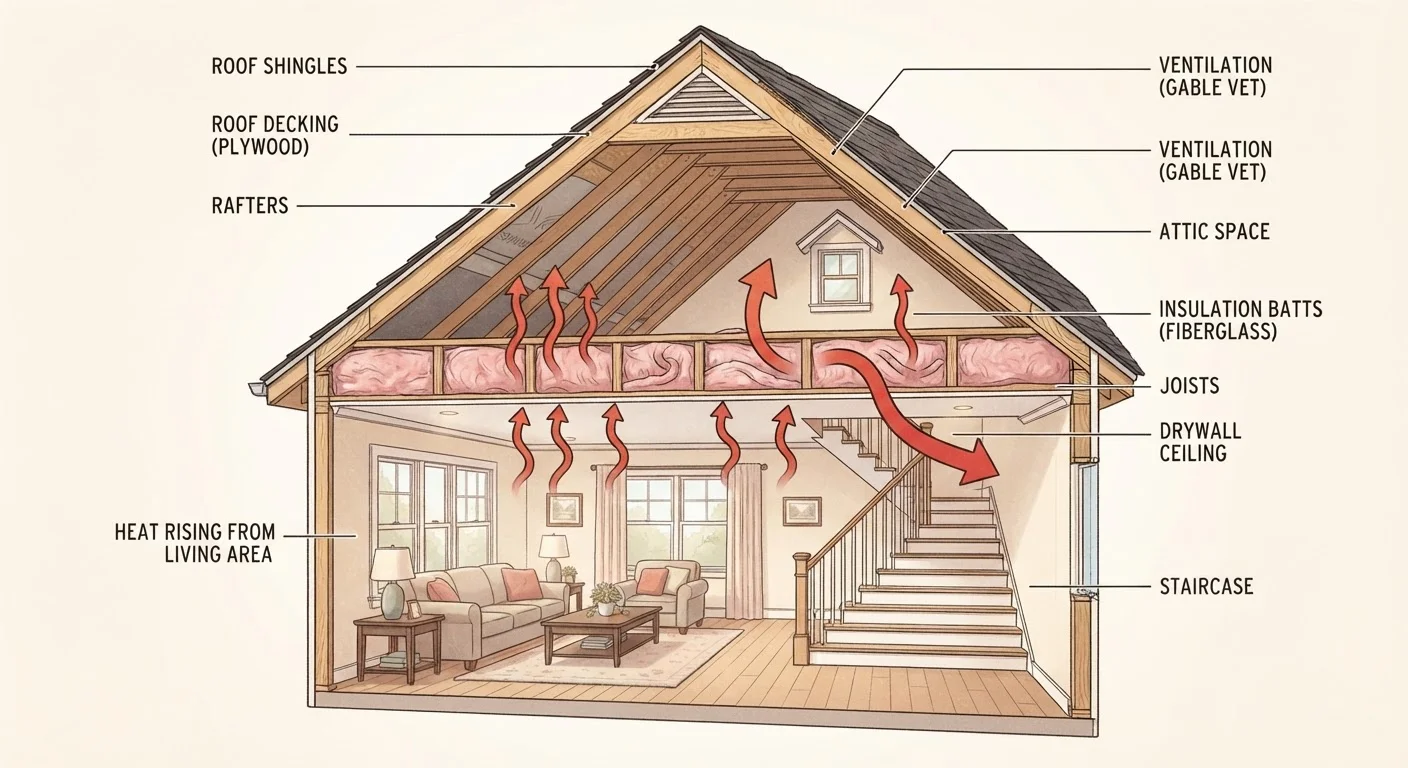
Your roof is the exterior assembly: shingles, underlayment, decking (the plywood or OSB layer), and the rafters that support it all. Its primary roles are shedding water, resisting wind, and - through ventilation - managing moisture and temperature in the space below it.
Your attic is the interior buffer zone between your living space and that roof assembly. It typically includes the attic floor (which sits above your ceilings), insulation, and any mechanical equipment or ductwork installed up there. This is where the thermal boundary of your home is supposed to live.
Understanding which system is doing what helps you diagnose problems accurately before spending money on the wrong fix. See our complete homeowner's maintenance reference for a broader view of how these systems fit into your home's overall structure.
| Criterion | The Roof | The Attic |
|---|---|---|
| Primary function | Weather protection and ventilation | Thermal boundary and insulation zone |
| Main heat loss mechanism | Ventilation (by design) | Air leaks and insufficient insulation |
| Key components | Shingles, decking, rafters, vents | Insulation, attic floor, penetrations |
| Common problems | Ice dams, blocked vents, damaged shingles | Air bypasses, inadequate R-value, moisture |
| DIY-friendly improvements | Clearing soffit vents (low risk only) | Adding insulation (with safety precautions) |
| When to call a professional | Structural damage, ventilation redesign | Air sealing around flues, spray foam application |
| Impact on energy bills | Indirect - via ventilation efficiency | Direct - insulation and sealing cut heat loss |
Where Heat Loss Actually Happens
Here's the counterintuitive truth: in most homes, heat isn't escaping primarily through the roof surface. It's escaping into the attic through gaps, cracks, and under-insulated ceilings - and then ventilating out through the roof.
The biggest offenders are air leaks at the attic floor level. These include:
- Recessed light fixtures that penetrate the ceiling drywall
- Plumbing vent stacks and electrical chases passing through the top plate
- Attic hatch covers with no insulation or weatherstripping
- Gaps around chimneys and furnace flue pipes
Even a well-insulated attic can underperform significantly if these air pathways aren't sealed first. Insulation slows conductive heat transfer - the movement of heat through solid materials. But it does very little to stop convective heat transfer, which is warm air physically moving through gaps into a cold space.
25-30%
Heat loss attributable to ceilings and attics
The U.S. Department of Energy estimates that ceilings, walls, and floors account for roughly 25-30% of home heating and cooling energy loss in typical homes.
~$200-$600
Estimated annual savings from attic air sealing
Energy Star and DOE guidance suggest that sealing and insulating an attic can reduce annual heating and cooling costs, though actual results vary by home size, climate, and existing conditions.
For a practical look at how sealing gaps complements insulation work, see our article on common caulking and weather stripping mistakes.
What the Roof Actually Controls
The roof's thermal role is more indirect than most homeowners assume. Rather than acting as an insulating layer, the roof system's job is to protect and ventilate the attic space.
Proper roof ventilation - typically a combination of soffit vents (low) and ridge vents (high) - allows outside air to circulate through the attic. This serves two purposes: in winter, it keeps the attic cold enough to prevent ice dam formation; in summer, it expels heat before it builds up and stresses your cooling system.
Ice Dams: A Roof Symptom, Not a Roof Failure
Ice dams - ridges of ice that form at the roof's edge - are actually caused by uneven attic heat escaping through the roof deck and melting snow, which then refreezes at the cold eaves. The visible problem is on the roof, but the source is usually inadequate insulation or air sealing in the attic below. Addressing both ventilation and attic air sealing together is typically needed to resolve them durably. Always consult a qualified roofing or insulation professional before attempting repairs involving the roof structure.
When roof ventilation fails - due to blocked soffit vents, inadequate vent area, or improper attic insulation that covers intake vents - moisture builds up. That moisture can degrade insulation, rot roof decking, and create conditions for mold growth. This is why the roof and attic must be treated as a coordinated system, not separate problems.
For a deeper look at moisture management in enclosed spaces, our guide on keeping a crawl space dry covers similar principles that apply to attic environments as well.
Where to Focus Your Efforts First
For most homeowners, the attic is the right starting point. Before adding insulation, a professional energy auditor or insulation contractor will typically recommend sealing all air bypasses first. Adding more insulation over existing air leaks is a common and costly mistake - one covered in detail in our piece on home maintenance myths that cost homeowners money.
Once air leaks are addressed, the next step is evaluating your insulation's R-value - a measure of how well it resists heat flow. The appropriate R-value for an attic depends on your climate zone; colder regions generally require higher values. Our companion article on attic insulation R-values, materials, and climate guidance walks through exactly how to evaluate what you have and what you may need.
The roof deserves attention when you see physical signs of trouble: missing shingles, blocked vents, or ice dams forming at the eaves. These are roof-system problems that insulation alone won't fix. But if your primary complaint is high heating bills and cold rooms, start in the attic - that's where the work will matter most.
The content on this site is for informational purposes only and is not a substitute for professional advice. Always consult a qualified professional for guidance specific to your situation.