

Our Verdict
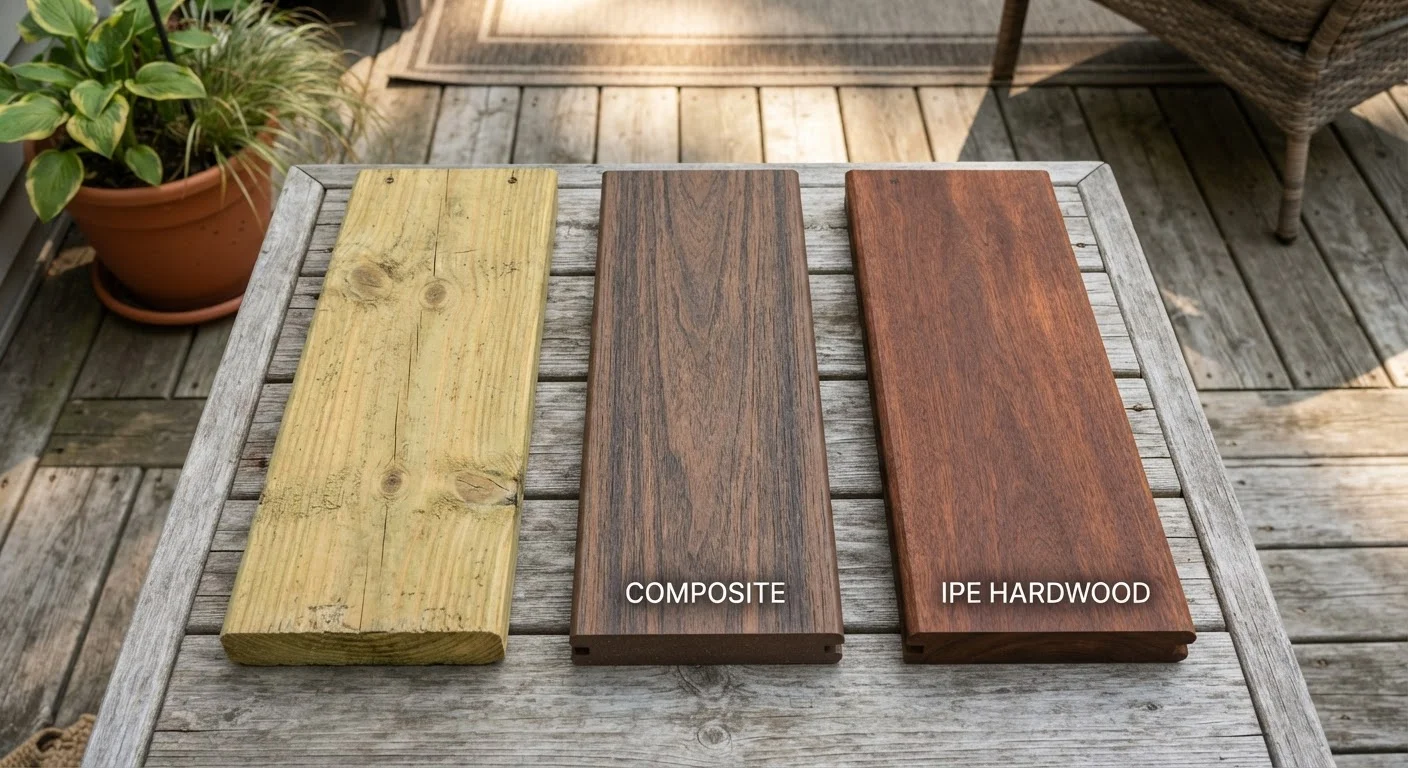
Each decking material serves a different type of homeowner. Pressure-treated lumber suits budget-conscious builders who don't mind periodic upkeep. Composite is the go-to for those who want durability with minimal maintenance. Hardwood rewards those who want a premium aesthetic and are prepared to invest in ongoing care.
| Best for | Recommended |
|---|---|
| Homeowners working with a tight renovation budget | Pressure-Treated Lumber |
| Those who want low ongoing maintenance | Composite |
| Homeowners prioritising natural beauty and prestige | Hardwood |
| High-moisture or high-humidity climates | Composite |
Why Material Choice Matters More Than You Think
A deck is one of the most used outdoor spaces on a property, and the material it's built from will determine how often you maintain it, how long it lasts, and how much you spend over its lifetime. While the upfront cost gets most of the attention, the total cost of ownership - including sealing, staining, repairs, and eventual replacement - is what really separates these three options.
Understanding what each material does well, and where it falls short, helps you match the choice to your real-life situation rather than just a price tag. Below, we walk through all three side by side.
| Pressure-Treated Lumber | Composite | Hardwood | |
|---|---|---|---|
| Upfront Cost | Low | Medium to High | High |
| Maintenance Required | High (annual sealing/staining) | Low (periodic cleaning) | Medium to High (annual oiling) |
| Typical Lifespan | 15-25 years | 25-30 years | 25-40+ years |
| Appearance | Natural wood; grays without treatment | Wood-look; consistent color | Rich, premium natural grain |
| Rot & Insect Resistance | Chemical treatment required | Excellent by design | Naturally high in dense species |
| Environmental Impact | Chemical preservatives a concern | Uses recycled materials | Varies with sourcing certification |
| DIY Friendliness | Easy to cut and fasten | Moderate; specific fasteners needed | Difficult; dense grain requires care |
Pressure-Treated Lumber: The Budget-Friendly Starting Point
Pressure-treated (PT) lumber is standard construction lumber that has been infused with preservative chemicals under pressure to resist rot, insects, and moisture. It's by far the most widely used decking material in the U.S. and the most affordable upfront.
What it does well: PT lumber is easy to find at any home improvement store, straightforward to cut and fasten, and accepts paint or stain. For a first deck build or a secondary outdoor structure like a pergola floor, it's a practical choice.
Where it falls short: Freshly milled PT lumber contains significant moisture and will shrink and possibly warp as it dries - boards should be allowed to dry before fastening tightly. Left unsealed, PT wood will gray and crack within a few seasons. A proper maintenance routine includes cleaning, re-staining or sealing every one to two years, and inspecting for splinters and soft spots.
Don't Skip the Drying Period for PT Lumber
Freshly cut pressure-treated lumber contains high moisture content and will shrink as it dries. Installing boards too tightly before they dry can cause buckling and cupping. Allow boards to acclimate on-site, and follow the lumber supplier's guidance on installation spacing. Working with wet PT lumber also means wearing gloves and eye protection, as the preservative chemicals can be irritating to skin and eyes.
Typical lifespan with good maintenance is 15-25 years, though this varies considerably with climate. In wet or humid regions, expect more frequent upkeep.
Composite Decking: Low Maintenance, Higher Investment
Composite decking is manufactured from a blend of wood fibers and recycled plastic. It's engineered to resist the common failure points of natural wood - rot, splinters, insect damage, and fading. Modern composite products closely mimic the appearance of real wood grain.
What it does well: Composite decking requires far less ongoing maintenance than either wood option. Routine cleaning with soap and water is generally sufficient. It won't splinter, doesn't need annual sealing, and holds its color well over time. For busy homeowners or those in high-moisture climates, this is a meaningful advantage.
Where it falls short: Composite costs significantly more per square foot than PT lumber - often two to four times the material cost, though this varies by product line. It can become hot underfoot in direct summer sun, and lower-quality products may still stain from mold or mildew if water sits on the surface. Some homeowners also find that composite doesn't fully replicate the warmth and texture of real wood.
Lifespan is typically 25-30 years, and many manufacturers offer long-term warranties on their products, though warranty terms vary widely - always read the fine print.
Read Composite Warranties Carefully
Composite decking manufacturers often offer warranties ranging from 10 to 25 years or more, but coverage details vary significantly. Some warranties cover only structural failure, not staining or fading. Before purchasing, read what's actually covered, what voids the warranty, and whether it's transferable if you sell your home.
Hardwood Decking: Premium Aesthetics, Demanding Care
Hardwood decking - think ipe (pronounced ee-pay), tigerwood, or cumaru - delivers a level of natural beauty and density that neither PT lumber nor composite can match. These are dense, naturally rot-resistant tropical or domestic woods prized for their rich color and extremely long potential lifespan.
What it does well: With proper care, hardwood decks can last 25-40 years or more. Hardwood is genuinely slip-resistant and extremely hard - ipe, for example, is denser than most domestic woods and highly resistant to rot and insect damage even without chemical treatment. Aesthetically, a well-maintained hardwood deck is difficult to surpass.
Where it falls short: Hardwood is expensive - often the priciest option per square foot - and requires more skilled installation because the dense grain can make fastening difficult. If left unfinished, hardwood will silver-gray gracefully, but it will also check (develop surface cracks) over time. To preserve the original color, annual or biannual applications of penetrating oil finish are needed. Sourcing certified, sustainably harvested hardwood is also an important consideration for environmentally minded homeowners.
If you're comparing natural wood options for interior use as well, our article on hardwood vs. engineered wood flooring covers how wood performs underfoot inside the home.
15-25 yrs
Typical PT lumber deck lifespan
Lifespan depends heavily on climate, maintenance frequency, and original installation quality.
2-4×
Composite vs. PT lumber material cost
Composite decking materials typically cost two to four times more per square foot than pressure-treated lumber, though pricing varies by product.
40+ yrs
Potential lifespan of dense hardwoods
Species like ipe can last several decades with proper maintenance, making them one of the most durable decking options available.
Making the Right Call for Your Home
Before settling on a material, consider these practical questions:
- What's your climate? In regions with heavy rain, humidity, or freeze-thaw cycles, composite or well-sealed hardwood will generally outperform PT lumber over time.
- How much maintenance are you willing to do? If annual sealing and staining doesn't appeal to you, composite is the most forgiving choice.
- What's your total budget? Factor in not just material and labor costs but realistic maintenance expenses over 10-20 years. PT lumber's lower upfront cost can narrow with ongoing treatment costs.
- Are permits required? Deck construction typically requires a building permit in most U.S. jurisdictions. Always check with your local building department before starting, and verify that your chosen material meets local code requirements.
There's no universally correct answer - the right material is the one that honestly fits your budget, lifestyle, and local conditions. Use the comparison table above as a starting reference, then get quotes from licensed contractors in your area to understand real costs for your specific project.
The content on this site is for informational purposes only and is not a substitute for professional advice. Always consult a qualified professional for guidance specific to your situation.