

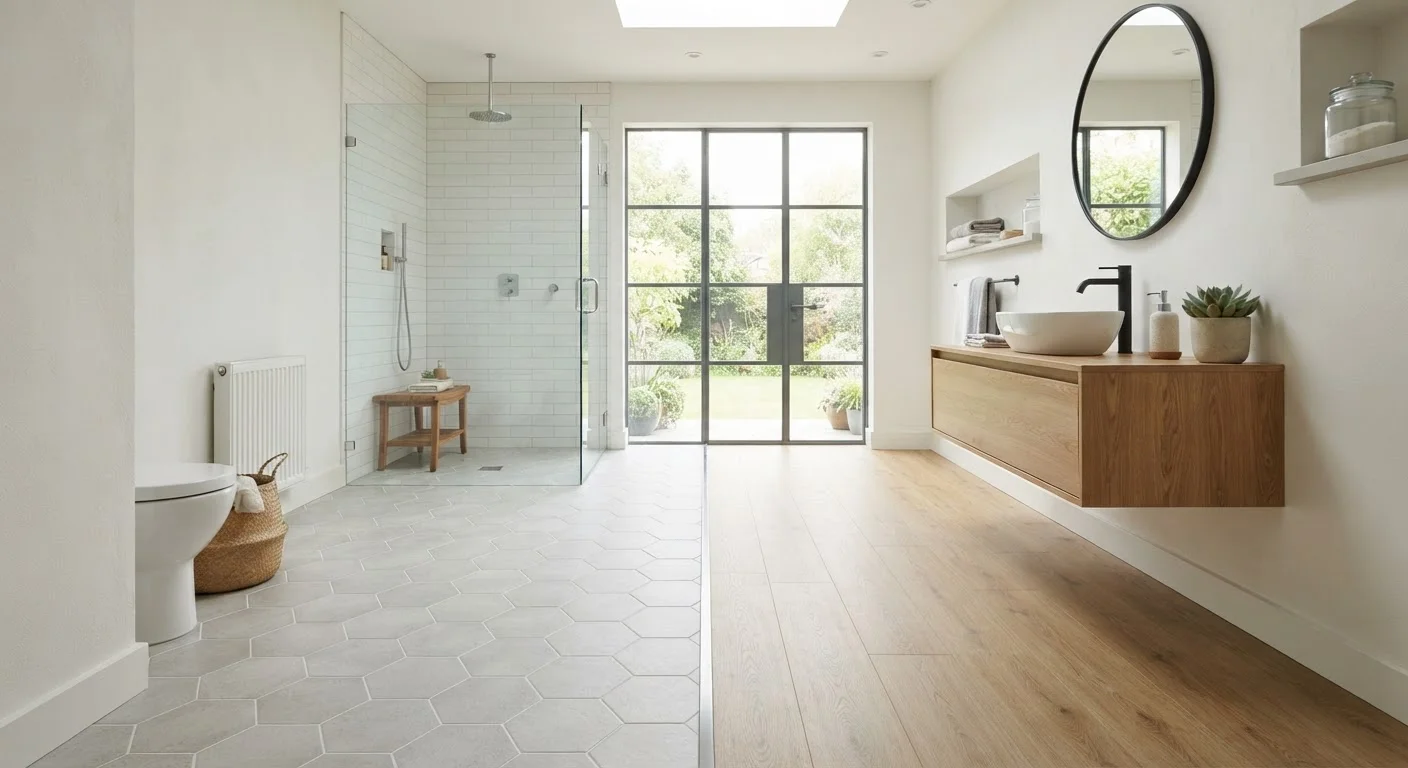
Option A
Ceramic or Porcelain Tile
The time-tested, fully waterproof classic.
Best for: Homeowners who want maximum water resistance, long-term durability, and design variety in high-moisture spaces.
Option B
Luxury Vinyl Plank (LVP)
The warmer, budget-friendlier modern alternative.
Best for: Homeowners seeking a comfortable underfoot feel, simpler DIY installation, and solid moisture resistance at a lower upfront cost.
How Each Material Handles Water
Water resistance is the central question for any bathroom or laundry room floor, and tile and LVP answer it differently.
Ceramic and porcelain tile are inherently non-porous materials - water does not penetrate the tile surface itself. The vulnerability is the grout between tiles. Unsanded or improperly sealed grout can absorb moisture, harbor mildew, and allow water to seep to the subfloor beneath. When grout is installed correctly and resealed periodically (typically every one to two years depending on traffic), the entire system becomes effectively waterproof. This is why tile remains the preferred choice in shower floors and walls where water exposure is continuous.
Luxury vinyl plank is water-resistant across its core - most modern LVP uses a rigid WPC (wood-plastic composite) or SPC (stone-plastic composite) core that won't swell from brief moisture exposure. However, the system is not fully waterproof. Water that sits on seams or penetrates around edges and transitions can eventually reach the subfloor, particularly if the floor wasn't installed with adequate perimeter caulking. LVP performs well in bathrooms with normal splash and humidity but requires more caution in laundry rooms where appliance leaks are a real possibility.
| Criterion | Ceramic / Porcelain Tile | Luxury Vinyl Plank (LVP) |
|---|---|---|
| Waterproofing | Fully waterproof when sealed | Water-resistant, not waterproof |
| Comfort underfoot | Hard and cold | Softer and warmer |
| DIY difficulty | Moderate to high | Low to moderate |
| Installation time | Multi-day (including cure time) | Same-day walkable |
| Ongoing maintenance | Grout cleaning and sealing | Damp mop; minimal upkeep |
| Durability | Decades with proper care | 10-25 years depending on quality |
| Repairability | Single tiles replaceable | Damaged planks replaceable |
| Typical project cost pattern | Higher labor cost | Lower total installed cost |
Installation Complexity and DIY Feasibility
Installation difficulty is one of the clearest practical differences between these two materials.
Tile installation involves several steps: preparing a flat, stable subfloor (often requiring cement backer board), mixing and spreading mortar (called thinset), setting each tile, allowing mortar to cure, and then grouting and sealing. Each step has a learning curve. Uneven thinset application leads to cracked tiles; inconsistent spacing creates visible grout lines. Cutting tile around toilets and vanities requires a wet saw. For most homeowners without prior experience, hiring a professional tile setter is money well spent.
LVP installation is considerably more approachable. Most products use a click-lock floating system - planks snap together and rest on top of the subfloor without adhesive. Basic tools like a utility knife or a miter saw, a tape measure, and a rubber mallet are typically sufficient. The subfloor still needs to be clean, flat, and dry, but the process moves faster and forgives minor imperfections more readily. Many confident DIYers complete a small bathroom floor in a single day. For a broader look at how flooring types compare on installation and moisture performance, see our guide to hardwood vs. engineered wood flooring.
10-25 yrs
Typical LVP lifespan in residential use
Lifespan varies by wear-layer thickness (measured in mils); thicker wear layers generally last longer in high-traffic or wet areas.
50+ yrs
Expected lifespan of quality porcelain tile
Porcelain tile's durability in wet areas is well-documented in the flooring industry, provided grout is maintained and the subfloor remains stable.
~12 mil
Minimum wear layer recommended for wet areas
Flooring industry guidance generally suggests at least 12-mil wear layers for bathrooms; 20-mil or higher for laundry rooms and heavy use.
Comfort, Maintenance, and Long-Term Costs
Beyond water resistance and installation, day-to-day livability matters just as much over the years you spend on that floor.
Comfort: Tile is hard and, in cooler climates or unheated slabs, noticeably cold in winter. Radiant in-floor heating solves this but adds cost and complexity. LVP has a slight give underfoot and retains ambient warmth better - a real comfort advantage in a morning bathroom routine.
Maintenance: Tile's grout lines are the ongoing maintenance item - they need scrubbing and periodic resealing. The tile surface itself is extremely easy to clean. LVP requires only damp mopping; there are no grout lines to trap grime. However, LVP can be scratched or gouged by sharp objects and cannot be refinished the way hardwood can - damaged planks must be replaced.
Cost: Material and installation costs vary by region and product quality, but as a general pattern, basic ceramic tile is relatively affordable, while professional installation labor adds significantly to the total. LVP materials span a wide price range, and the reduced installation labor can make the total project cost lower. Porcelain tile and premium LVP can reach similar price points. Always get local estimates before budgeting a project.
Check Your Subfloor Before Deciding
Both tile and LVP require a flat, structurally sound subfloor - but tile is less forgiving of flex. If your subfloor has noticeable bounce or movement, tile may crack over time as the floor shifts. LVP floating installations tolerate minor subfloor movement better. If you're unsure about your subfloor's condition, consult a flooring professional before committing to either material.
The content on this site is for informational purposes only and is not a substitute for professional advice. Always consult a qualified professional for guidance specific to your situation.