Option A
Pressure Washing
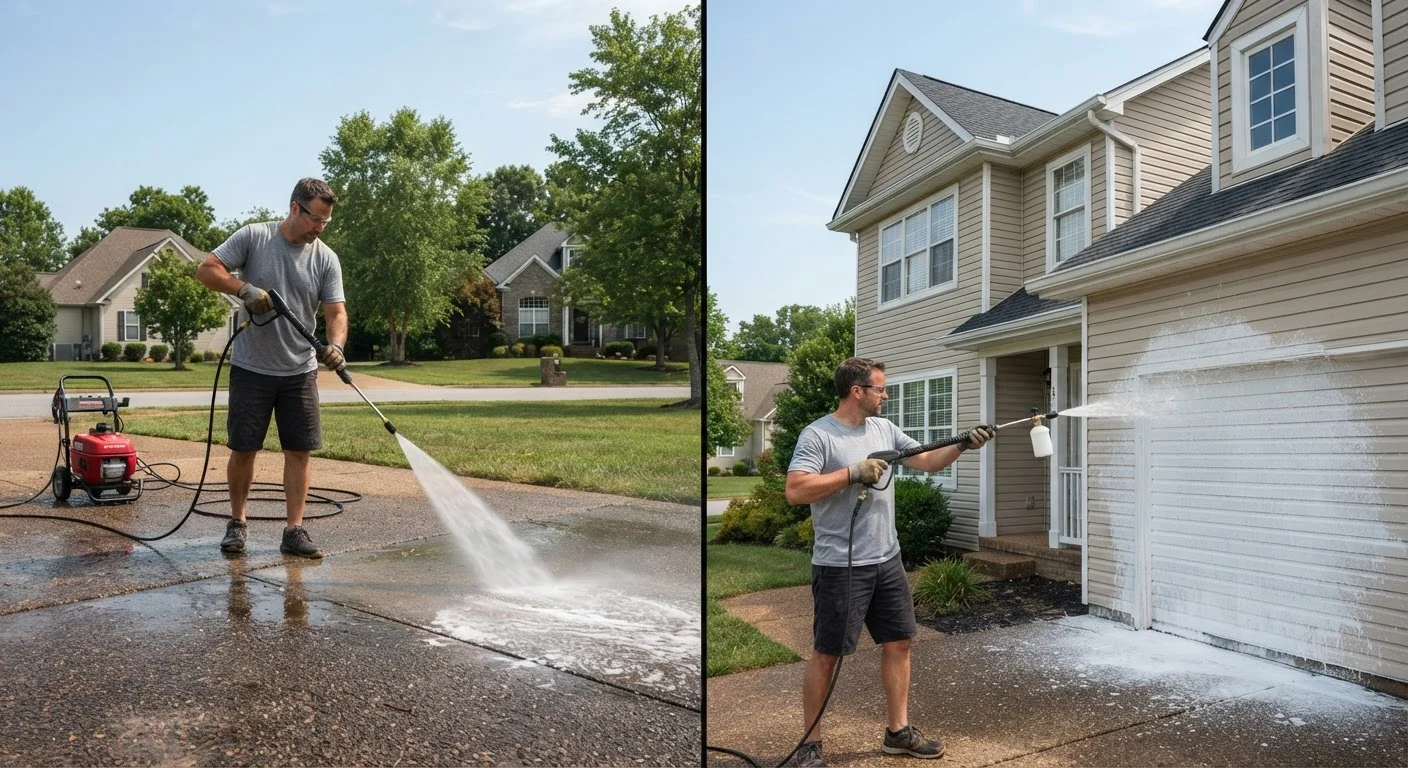
The high-force option for tough, hard surfaces.
Best for: Best for concrete driveways, brick pavers, and stone surfaces that can withstand intense water force without damage.
Option B
Soft Washing
The low-pressure, chemical-assisted approach for delicate surfaces.
Best for: Best for vinyl siding, roofing, painted wood, and other surfaces that would crack, splinter, or deteriorate under high pressure.
What Each Method Actually Does
Pressure washing uses a pump to deliver water at high pounds per square inch (PSI) - often between 1,500 and 4,000 PSI - to physically blast contaminants off a surface. The cleaning action is almost entirely mechanical: the force of water does the work.
Soft washing, by contrast, operates at low pressure (typically under 500 PSI, similar to a garden hose) and relies on biodegradable cleaning solutions - usually containing sodium hypochlorite and surfactants - to break down algae, mold, mildew, and organic staining at the source. The solution does the cleaning; the water rinses it away.
This distinction matters more than most homeowners realize. A surface that looks equally dirty may need completely different treatment depending on what it's made of and how it's attached to your home.
| Criterion | Pressure Washing | Soft Washing |
|---|---|---|
| Operating Pressure | 1,500-4,000+ PSI | Under 500 PSI |
| Cleaning Mechanism | Mechanical force (water impact) | Chemical solution + low-pressure rinse |
| Best Surfaces | Concrete, brick, stone | Siding, roofs, painted wood, stucco |
| Risk to Delicate Surfaces | High - can crack, strip, or gouge | Low - gentle on most materials |
| Mold/Algae Kill Rate | Removes surface growth only | Kills organism at the root |
| Results Longevity | Shorter - regrowth returns faster | Longer - biologicals eliminated |
| DIY Accessibility | Equipment widely available for rent | Requires careful chemical handling |
Matching the Method to the Surface
Choosing the wrong method is one of the most common - and costly - exterior maintenance mistakes homeowners make. Here's a practical breakdown:
Use Pressure Washing For:
- Concrete driveways and sidewalks - Dense and non-porous enough to withstand high PSI without surface pitting when used correctly.
- Brick pavers and natural stone patios - Effective for removing deep staining, though mortar joints require care. Avoid directing the stream directly into grout lines at full force.
- Garage floors and bare concrete surfaces - Oil, grease, and tire marks respond well to mechanical force.
Use Soft Washing For:
- Vinyl, aluminum, and fiber cement siding - These materials can warp, crack, or allow water infiltration under pressure.
- Asphalt shingle roofs - Pressure washing removes the granules that protect shingles from UV and weather damage.
- Painted wood surfaces - Trim, fencing, and wood decks with a painted or stained finish need a gentler touch.
- Stucco exteriors - High pressure can crack or pit stucco, leading to water intrusion problems.
Wood Decks: A Special Case
Wood decks sit in a gray zone. Bare, weathered wood can sometimes tolerate very low pressure washing (under 1,200 PSI with a wide fan tip) to remove surface grime, but painted or stained decks should always be soft-washed to avoid stripping the finish. Composite decking materials vary by manufacturer - check your product documentation or contact the manufacturer before applying any pressure or chemical cleaning solution, as some warranties are voided by improper cleaning methods.
Safety and Practical Considerations
Both methods carry risks worth understanding before you start - or before you hire someone.
Pressure washing hazards: Water at high PSI can cause serious lacerations. Never direct a pressure washer at people, pets, or glass. Keep the nozzle moving and maintain appropriate standoff distance (typically 6-12 inches for tough surfaces, farther for anything more delicate). When in doubt, use a wider-angle nozzle tip - narrow tips concentrate force and can cause damage quickly.
Soft washing hazards: The cleaning chemicals, particularly sodium hypochlorite, can damage plants and landscaping if not rinsed properly. Pre-wetting surrounding vegetation and rinsing afterward reduces this risk. Always wear eye protection and gloves when mixing or applying solutions.
When to call a professional: Roof cleaning should almost always be left to a licensed exterior cleaning contractor. Working on a sloped, wet roof combines fall risk with chemical handling risk - two factors that make DIY inadvisable for most homeowners. Similarly, two-story siding cleaning involving ladders and pressure equipment carries real injury potential.
If you're researching home maintenance as part of broader decisions about your property, our guide on renting vs. buying a home can help you weigh what ongoing maintenance responsibilities actually look like as an owner.
Staying Ahead of the Maintenance Curve
Exterior cleaning is most effective - and least damaging - when done on a regular schedule rather than as emergency intervention. Heavy buildup of algae or mold requires longer chemical dwell times or higher pressure, increasing the risk of surface damage.
A general guideline many homeowners follow: clean siding and other soft-wash surfaces once every one to two years, and hard surfaces like driveways annually or as needed. Roof cleaning frequency depends on your region - humid climates with heavy tree cover may need it every two to three years.
Exterior cleanliness isn't purely cosmetic, either. Algae and mold trap moisture against surfaces, accelerating deterioration. A roof left untreated long enough can have its warranty voided by accumulated biological growth. Soft washing removes the organism at the root level, meaning results typically last longer than pressure washing the same surface would.
Once your exterior is clean and in good shape, it's also a smart time to assess other surfaces that may need attention - including interior walls. Proper preparation, like what's covered in our interior paint prep guide, follows the same principle: the method you choose upfront determines how well the finish holds over time.
~25%
Roof life reduction from pressure washing asphalt shingles
Roofing industry guidance consistently notes that high-pressure cleaning removes protective granules, materially shortening asphalt shingle lifespan.
1-2 years
Typical interval between soft wash treatments for home siding
Exterior cleaning professionals generally recommend this cadence for most US climates to prevent biological buildup and maintain surface integrity.
The content on this site is for informational purposes only and is not a substitute for professional advice. Always consult a qualified professional for guidance specific to your situation.