What Your Electrical Panel Actually Does
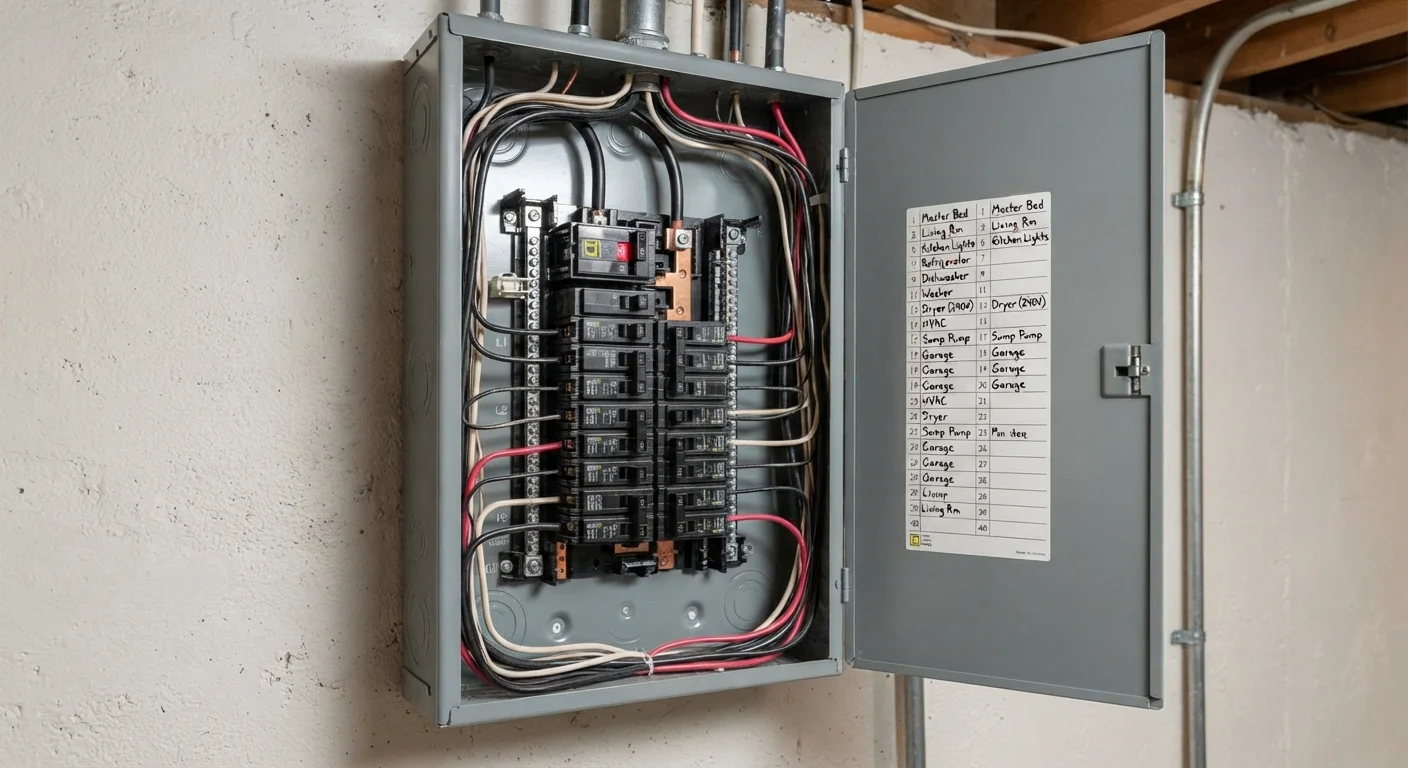
Electricity enters your home from the utility grid through a service entrance, passes through a meter, and arrives at your electrical panel. From there, the panel splits that incoming power into smaller, dedicated pathways called circuits - one might serve your kitchen outlets, another your bedroom lights, another your central air conditioner.
Each circuit is controlled by a circuit breaker, a switch-like device that monitors current flow. When a circuit draws more electricity than it's rated for - say, because too many appliances run at once - the breaker trips automatically, cutting power before wires can overheat. This is the panel's most important job: protecting your home from electrical fires caused by overloaded wiring.
Every breaker is labeled (or should be) to identify which area or appliance it controls. Taking 20 minutes to map and label your panel accurately is one of the most useful maintenance tasks a homeowner can do. See our introduction to routine home upkeep for how this fits into broader maintenance priorities.
51%
Home fires involving electrical failure or malfunction
According to the U.S. Fire Administration, electrical failures are a leading cause of residential fires, underscoring why panel maintenance awareness matters.
100-200A
Typical service panel amperage in modern US homes
Most homes built or rewired after the 1980s use 100-amp or 200-amp panels; older homes may have 60-amp service, which is often insufficient for today's electrical loads.
25-30 years
Typical service lifespan of a residential breaker panel
Industry guidance generally suggests having panels of this age inspected by a licensed electrician, even absent obvious problems.
What Homeowners Can - and Cannot - Safely Do
Understanding where your personal involvement should stop is just as important as knowing the basics. Here's a clear breakdown:
Safe for homeowners:
- Reading the panel directory - the label listing which breaker controls which area
- Resetting a tripped breaker - push it fully OFF, then back to ON
- Opening the outer panel door to access breaker switches
- Observing and reporting warning signs to a licensed electrician
Always leave to a licensed electrician:
- Removing the inner metal cover (the dead-front panel) - live voltage remains even with breakers off
- Adding, replacing, or sizing circuit breakers
- Running new wiring from the panel
- Upgrading panel amperage or replacing the panel entirely
Label Your Panel Before You Need It
A well-labeled panel directory is genuinely useful in an emergency - when you need to cut power to a specific room fast. Set aside time to map every breaker to its circuit, use a permanent marker or printed labels, and tape a copy of the directory inside the panel door. Update it whenever electrical work is done.
For context on how electrical work intersects with permits and code compliance, see what homeowners commonly misunderstand about building permits.
Warning Signs Worth Knowing
Routine familiarity with your panel means you'll notice when something changes - and changes often matter. Watch for:
- Breakers that trip frequently on the same circuit, which may indicate an overloaded circuit or a failing breaker
- A burning smell or scorch marks near the panel - treat this as an urgent concern and call an electrician promptly
- A panel that feels warm to the touch on the exterior surface
- Flickering or dimming lights throughout the home, which can signal a loose connection or utility supply issue
- Breakers that won't stay reset, pointing to an underlying fault on that circuit
None of these symptoms should be investigated by opening the inner panel cover yourself. Document what you observe and share it with a licensed electrician.
Older Panel Brands Worth Knowing About
Certain panel brands manufactured from the mid-20th century have documented safety concerns and have been the subject of recalls or insurance scrutiny. If your home is older and you don't know the panel's history, mention the brand name to your electrician during any inspection. They can advise whether the equipment warrants closer attention.
Power quality issues at the panel can also affect sensitive electronics downstream. Our guide on surge protectors and power safety explains how to protect devices from voltage irregularities.
When to Schedule a Professional Inspection
Your panel doesn't need annual professional service the way an HVAC system does, but certain triggers warrant a licensed electrician's evaluation:
- The panel is 25-30 years old or older
- You're adding major appliances - an EV charger, a hot tub, or a whole-home generator - that significantly increase electrical demand
- You're finishing a basement or adding a room, which requires new circuits
- You've purchased an older home and don't have documentation of its electrical history
- You notice any of the warning signs described above
A professional inspection gives you documented knowledge of your panel's condition and capacity - useful information whether you're planning a renovation or simply want peace of mind. For a full picture of how electrical fits alongside other major home systems, see our complete homeowner's maintenance reference.
This article is for general informational and educational purposes only. Electrical work carries serious safety risks. Always consult and hire a licensed electrician for any work beyond basic breaker resets. Verify permit and inspection requirements with your local municipality before scheduling electrical upgrades.
Frequently Asked Questions
Common signs include frequently tripping breakers, flickering lights, a burning smell near the panel, or a panel that feels warm to the touch. Panels older than 25-30 years should be professionally inspected. A licensed electrician can assess whether the panel is safe or needs upgrading.
Yes - resetting a tripped breaker is one of the few panel tasks homeowners can safely do. Switch the breaker fully to the OFF position, then back to ON. If it trips again immediately or repeatedly, stop using that circuit and call an electrician, as repeated tripping signals an underlying problem.
Older homes may have a fuse box instead of a breaker panel. Fuses perform the same protective function but must be replaced after they blow, rather than reset. Fuse boxes are generally considered outdated for modern electrical loads and many insurers and local codes prefer or require updated panels.
This varies by home size, age, and local code, but most modern homes have between 20 and 30 circuits. Kitchens and laundry areas typically have dedicated circuits for high-draw appliances. An electrician can evaluate whether your home's circuit count is adequate for your needs.
Opening the outer door to read labels or reset a breaker is generally safe for homeowners. However, never remove the inner metal cover that shields the wiring and bus bars - dangerous live voltage is always present there, even with all breakers switched off.
In most US jurisdictions, yes. Panel replacements and upgrades are regulated work that typically require a permit and inspection by a local building authority. Always verify requirements with your local municipality before scheduling the work.
The content on this site is for informational purposes only and is not a substitute for professional advice. Always consult a qualified professional for guidance specific to your situation.