

Our Verdict
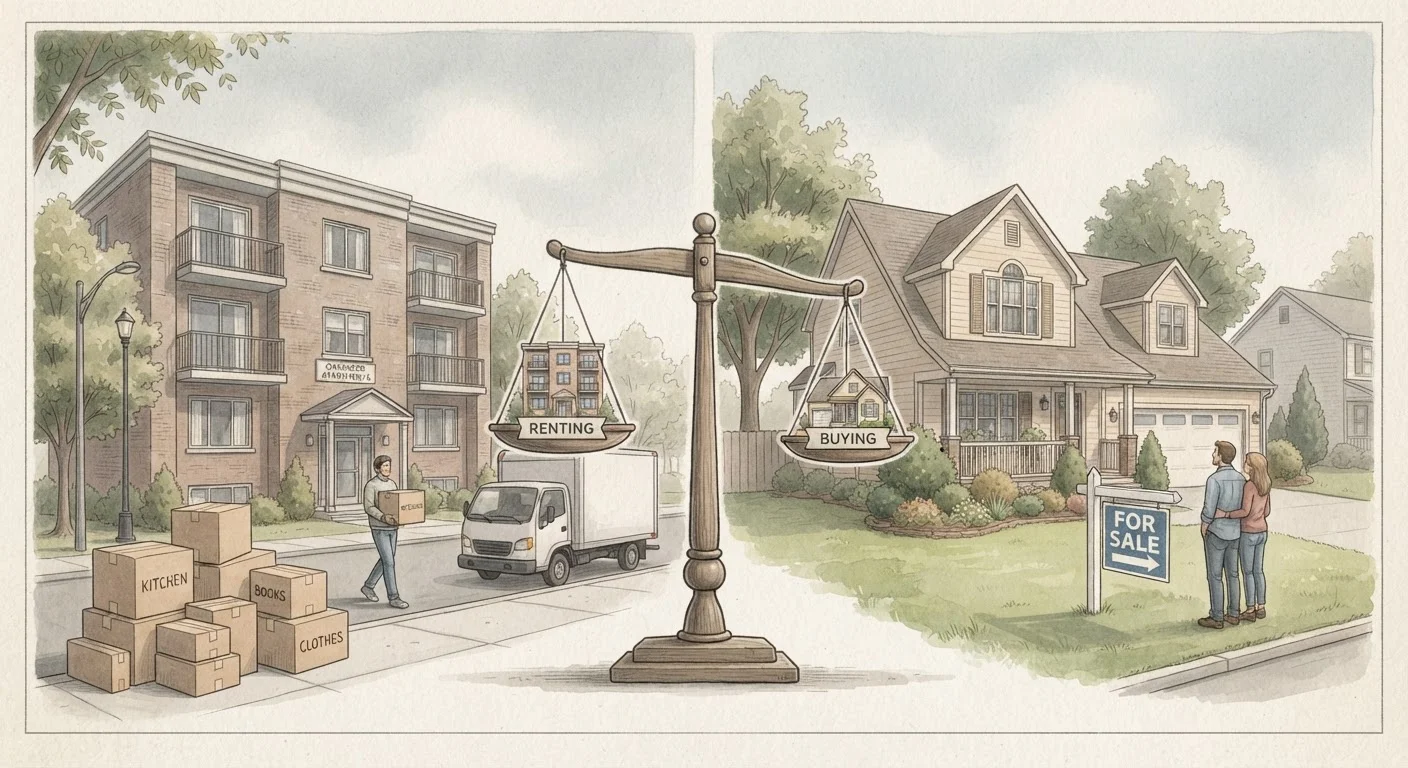
In a volatile market, neither renting nor buying is a guaranteed safe haven. Renting protects you from price swings and keeps your options open, while owning can build long-term wealth if you plan to stay put for several years. The smarter path depends on your personal financial stability, how long you intend to stay, and what's actually happening in your local market.
Renting is often the wiser short-term move for those with uncertain timelines or limited savings, while buying tends to reward those with stable income, strong credit, and a commitment to staying in one place for five or more years.
Why Market Volatility Complicates the Rent-or-Buy Question
When home prices are rising steadily and mortgage rates are low, buying feels like an obvious win. When prices swing unpredictably and borrowing costs climb, the math gets murkier. Volatility doesn't make one option wrong - it makes the stakes higher on both sides.
A volatile market can mean rapid price increases in some months and cooling corrections in others. Mortgage interest rates, which directly affect monthly payments and how much home you can afford, can shift your purchasing power significantly from one quarter to the next. Renters aren't fully insulated either - landlords often respond to rising costs by increasing rents at lease renewal.
Understanding both sides of this trade-off is essential before making one of the largest financial decisions of your life. For a deeper look at how market conditions affect your negotiating position, see how to read a buyer's or seller's market before you move.
5-7 years
Minimum ownership horizon to recoup buying costs
Housing economists broadly estimate that buyers need to stay in a home for at least five to seven years for the purchase to be financially advantageous over renting, once transaction costs are factored in.
~3-6%
Typical home purchase closing costs as share of price
According to general industry estimates, buyers should expect to pay 3-6% of the home purchase price in closing costs alone, separate from the down payment.
Advantages and Disadvantages of Renting
Renting is often treated as a temporary or inferior option, but in a volatile market it comes with real structural advantages - alongside some genuine downsides.
Lower upfront financial commitment
Renters typically pay a security deposit and first month's rent to move in, compared to a 3-20% down payment plus closing costs for buyers - which can amount to tens of thousands of dollars.
Flexibility to relocate without a major loss
If your job, family situation, or finances change, ending a lease is far simpler than selling a home, especially in a market where prices may have dropped since you bought.
No exposure to falling home values
When home prices decline, renters are not affected by negative equity. This protection is particularly meaningful in periods of price correction.
Maintenance costs fall on the landlord
Renters are generally not responsible for major repairs like roof replacement or HVAC failure, shielding them from large, unpredictable expenses.
That said, renting is not without its drawbacks. Rising rents in competitive markets can erode the affordability advantage quickly, and renters have little control over lease terms or the possibility of a landlord choosing not to renew. If flexibility is what you're after, understanding your lease type matters. Our guide on month-to-month vs. fixed-term leases breaks down what changes depending on the agreement you sign.
No equity accumulation over time
Monthly rent payments go entirely to the landlord - none of it builds ownership stake. Over years or decades, this represents a significant missed wealth-building opportunity compared to paying down a mortgage.
Rent can increase at lease renewal
In high-demand markets, landlords may raise rent significantly when a lease expires, especially if local regulations don't limit increases. Renters have limited leverage to resist these changes.
Limited control over the living space
Renters typically cannot make structural changes, own pets freely, or customize their home without landlord approval, which can affect quality of life for long-term renters.
Housing stability depends on the landlord
A landlord may decide to sell the property, move in a family member, or choose not to renew a lease - leaving tenants with limited notice to find a new home.
Advantages and Disadvantages of Buying
Homeownership carries significant financial and lifestyle advantages over time, but a volatile market amplifies the risks that every buyer should understand going in.
On the upside, buying in a market that eventually stabilizes or grows can reward patient owners with meaningful equity - the portion of the home's value you actually own, free of mortgage debt. Fixed-rate mortgages also lock in your monthly principal and interest payment, which protects you from the rent increases renters face. And homeownership grants a sense of permanence and control over your living space that renting typically doesn't.
The risks are real, though. If home prices drop after you buy, your home could temporarily be worth less than you owe - a situation called being "underwater" on your mortgage. High interest rates increase your total cost of borrowing substantially. And the upfront costs - down payment, closing costs, inspections, and moving expenses - are significant hurdles. For a thorough comparison of the financial and lifestyle factors on both sides, see a practical framework for the rent-or-buy decision.
What 'Being Underwater' Actually Means
If you buy a home and its market value falls below the remaining balance on your mortgage, you are considered 'underwater' or in negative equity. This doesn't automatically mean trouble if you can keep making payments and plan to stay long-term - but it does make selling or refinancing much harder until values recover. In a volatile market, this scenario is worth factoring into your planning before you buy.
How to Think Through Your Own Decision
No formula perfectly answers the rent-or-buy question for every person. But a few practical factors can guide you toward clarity.
- Your timeline: Most housing experts suggest that buying makes more financial sense if you plan to stay in a home for at least five to seven years. Shorter timelines may not allow enough time to recoup transaction costs through appreciation.
- Your financial cushion: Beyond a down payment, buyers need emergency reserves for repairs, vacancies (if investment property), and unexpected costs. Stretching too thin financially to buy can leave you vulnerable.
- Local market conditions: National trends matter less than what's happening in your specific city or neighborhood. Research local price trends, inventory levels, and rental vacancy rates.
- Your job and income stability: Mortgage lenders look for consistent income history. If your employment situation is in transition, it may affect both your ability to qualify and your comfort taking on a 30-year obligation.
For a fuller look at how these factors fit together, thinking through the rent-or-buy decision walks through both the financial and lifestyle dimensions without pushing you toward either option.
The content on this site is for informational purposes only and is not a substitute for professional advice. Always consult a qualified professional for guidance specific to your situation.