

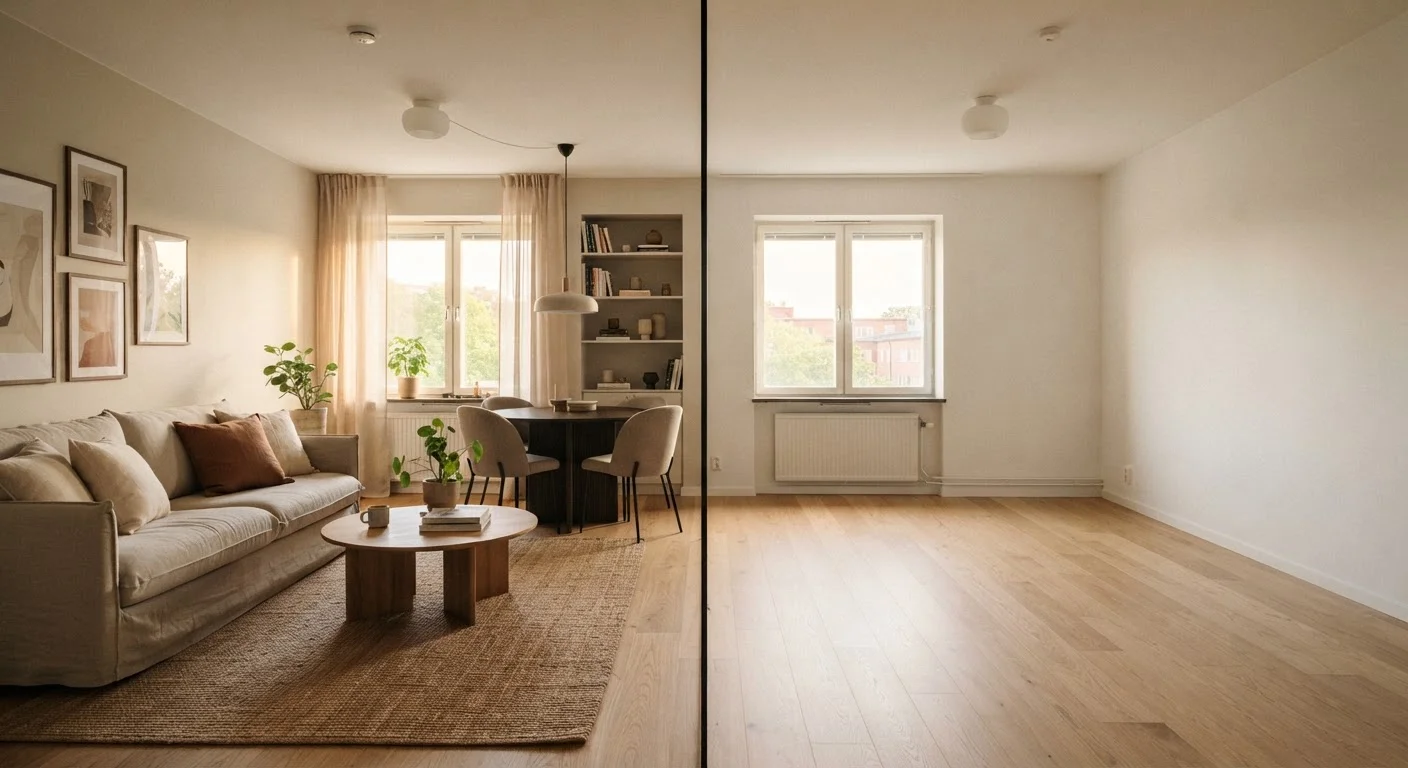
Our Verdict
Furnished rentals offer real convenience for short stays but come at a meaningful cost premium and greater liability for the items inside. Unfurnished units demand more upfront investment in belongings but typically reward longer-term renters with lower monthly costs and simpler lease terms. Neither option is universally better - the decision hinges on your timeline, budget, and how much flexibility you need.
Furnished rentals suit relocating professionals or short-term renters, while unfurnished units are better for renters planning to stay a year or longer who already own or can gradually acquire furniture.
What the Price Difference Actually Looks Like
The monthly rent gap between furnished and unfurnished units is real and consistent. Furnished apartments generally command a premium of roughly 10-30% above comparable unfurnished units in the same market, according to rental market analyses from sources such as Apartment List and Zillow Research. In high-demand cities, that gap can be wider.
That premium reflects the landlord's cost of purchasing, maintaining, and eventually replacing furniture. But renters often forget that this cost compounds over time. A $200/month premium adds up to $2,400 in a year - money that could instead go toward buying quality furniture you'd own outright.
Understanding the full cost of renting - beyond base rent - is essential before signing any lease. Furnished units also tend to require larger security deposits because the landlord is protecting more assets inside the unit.
10-30%
Typical monthly rent premium for furnished units
Rental market analyses from sources including Apartment List and Zillow Research consistently show furnished units command this premium over comparable unfurnished rentals.
$3,000-$8,000
Estimated cost to furnish a one-bedroom from scratch
Consumer spending estimates suggest this range for a modest one-bedroom, varying by region, quality level, and whether items are purchased new or secondhand.
Furnished Rentals: Where They Make Sense
Furnished units exist for a reason. If you're relocating for a new job and don't yet know whether the city will stick, signing a furnished lease spares you the cost and hassle of moving furniture across state lines - or buying pieces you might sell in six months.
Corporate housing, travel nurses, graduate students on temporary placements, and anyone in a transitional life stage often find furnished rentals worth the premium. The convenience is tangible: you arrive with a suitcase and the unit is livable from day one.
Move-in ready with no furniture purchasing needed
Furnished units let you settle in immediately, which is valuable when relocating on short notice or managing a temporary assignment.
Eliminates moving costs for large furniture items
Shipping or transporting bulky furniture across cities or states can cost several thousand dollars - a cost furnished renters avoid entirely.
Suits short-term and transitional living situations
For stays under six months, the monthly premium is often less than what you'd spend buying and then reselling furniture in that same window.
Often available on flexible lease terms
Furnished units are more frequently offered month-to-month or on short fixed terms, which can align with renters who need built-in exit flexibility.
That said, furnished leases are more commonly offered on shorter terms - sometimes month-to-month - which can align with a need for flexibility. See our guide on month-to-month vs. fixed-term lease options if you're weighing lease length alongside furnishing decisions.
Unfurnished Rentals: The Long-Game Advantage
For renters planning to stay 12 months or longer, unfurnished units almost always win on total cost. You control what comes in, you choose quality levels, and you're not paying a monthly markup on someone else's taste in sofas.
Unfurnished leases also tend to carry simpler liability terms. Your responsibility is limited to the physical unit - walls, floors, fixtures - rather than a detailed inventory of every piece of furniture the landlord owns. Damage disputes are more straightforward when there's less stuff to dispute over.
Monthly rent premium adds up quickly
A 10-30% markup over comparable unfurnished units can mean paying $2,400 or more extra per year - money that could fund purchasing furniture outright.
Liability for every item in the inventory
Wear, damage, or loss of any landlord-owned item - from lamps to mattresses - can be deducted from your deposit, often triggering disputes at move-out.
Limited control over aesthetics and layout
Furnished units come pre-styled, and many landlords restrict what renters can replace, rearrange, or supplement with their own belongings.
Higher security deposits are common
Landlords protecting more assets inside the unit frequently require larger upfront deposits, increasing the cash needed to move in.
The main hurdle is the upfront investment. Furnishing even a modest one-bedroom apartment from scratch can run $3,000-$8,000 or more depending on region and quality, according to consumer spending estimates. Spreading those purchases over time - starting with essentials - is one practical approach.
The Wear-and-Tear Liability Trap
One of the most overlooked risks in furnished rentals is the damage clause. When you rent a furnished unit, the landlord's inventory list becomes part of your legal responsibility. If a couch cushion fades, a table leg cracks, or an appliance stops working, you may face deductions from your security deposit - even for wear that predates your tenancy.
Document Everything Before You Move In
When taking a furnished unit, request the landlord's full inventory list and inspect every item before your tenancy begins. Use timestamped photos or video to document the condition of furniture, appliances, and fixtures. Submit this documentation to the landlord in writing and keep a copy. Courts and arbitrators regularly look at move-in condition records when security deposit disputes arise.
Before moving into any furnished unit, do a thorough walkthrough and document the condition of every item on the inventory list with timestamped photos or video. Request written acknowledgment from the landlord of any pre-existing damage. This step alone can protect hundreds or thousands of dollars at move-out.
If you're unfamiliar with rental terminology like inventory addendum, normal wear and tear, or holdover clause, our plain-language glossary for tenants breaks these terms down clearly.
Making the Call for Your Situation
Ask yourself three questions before deciding. First, how long do you plan to stay? Under six months, furnished is often more practical. Over a year, unfurnished typically saves money. Second, do you already own furniture? If you're moving from another furnished home, your belongings need somewhere to go - and a furnished unit doubles up unnecessarily. Third, how important is personalizing your space? Furnished units usually mean living with someone else's aesthetic choices, and landlords may restrict what you can replace or rearrange.
If you're still weighing whether renting itself is the right move, our guide to renting vs. buying walks through the broader financial and lifestyle considerations without pressure toward either option.
This article is for general informational purposes only and does not constitute financial, legal, or real estate advice. Lease terms and local regulations vary; consult a qualified professional for guidance specific to your situation.
The content on this site is for informational purposes only and is not a substitute for professional advice. Always consult a qualified professional for guidance specific to your situation.