

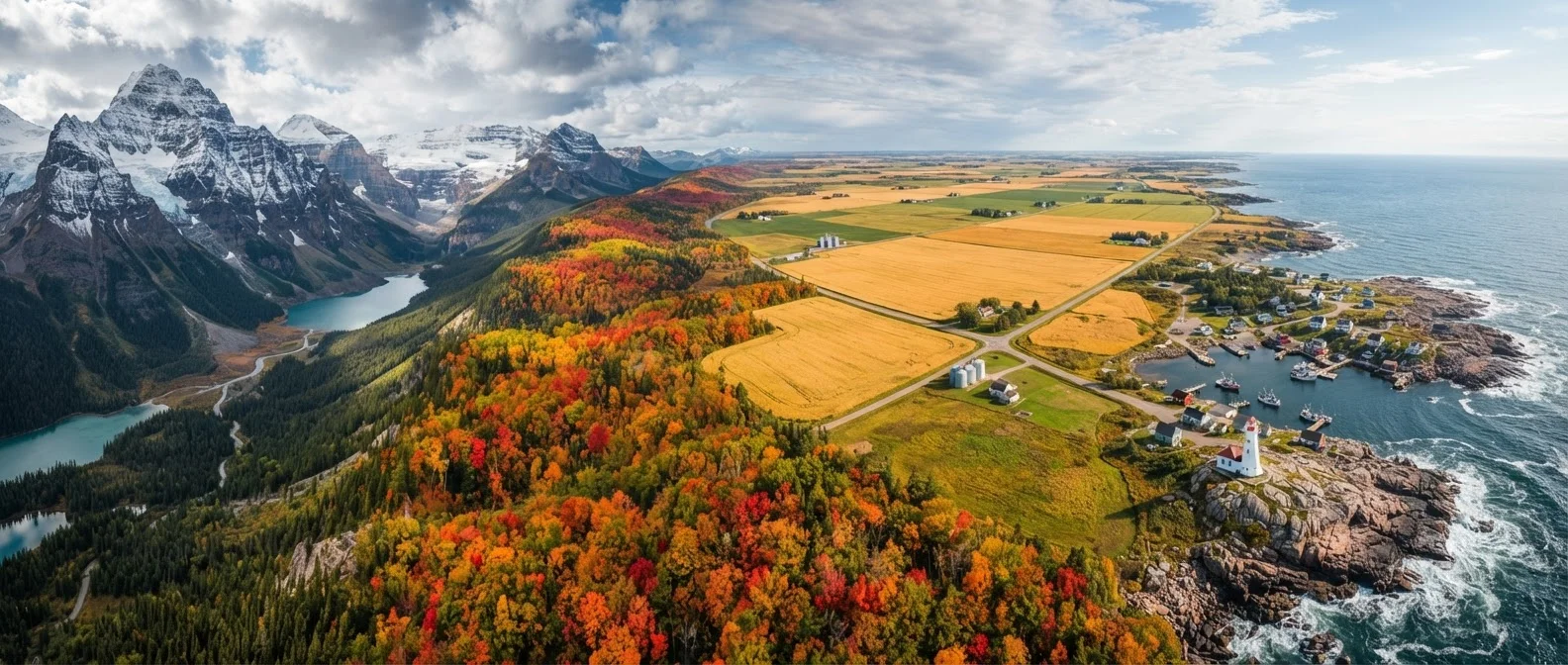
Why Region Matters When Planning a Canada Trip
Canada is the second-largest country in the world by area, yet it welcomes fewer American tourists than many assume partly because travelers aren't always sure where to go. The country breaks naturally into six travel regions - British Columbia, the Prairies, Ontario, Quebec, Atlantic Canada, and the North - and choosing the wrong one for your interests can mean disappointment. A beach lover and a ski enthusiast are both visiting "Canada," but they could easily be 3,000 miles apart.
This guide treats each region as a distinct destination so you can match your travel style to the right corner of the country. If you're comparing North American coastal experiences, our breakdown pairs nicely with Coastal New England vs. the Pacific Northwest for a fuller continental picture.
| Number of provinces and territories | 13 (10 provinces, 3 territories) (Government of Canada) |
| Country area (approx.) | 3.85 million sq miles |
| Time zones spanned | 6 |
| Official languages | English and French (Government of Canada) |
| Currency | Canadian dollar (CAD) |
| Most visited city by international tourists | Toronto, Ontario (Destination Canada) |
| Peak travel season | July-August (summer); Dec-Mar for ski regions |
| U.S. passport required | Yes, for air and land entry (U.S. Customs and Border Protection) |
The Six Regions at a Glance
British Columbia
BC is Canada's Pacific gateway and its most geographically dramatic province. Travelers come for the Coast Mountains, old-growth rainforest, whale watching, and the walkable neighborhoods of Vancouver. Whistler is one of North America's largest ski resorts by skiable terrain. The climate on the coast is mild and rainy; the interior is drier and hotter in summer - two very different experiences within one province.
The Prairies (Alberta, Saskatchewan, Manitoba)
Alberta draws the largest share of American visitors thanks to the Canadian Rockies. Banff and Jasper national parks offer turquoise lakes, glacier hikes, and wildlife encounters - moose, elk, and black bears are routinely spotted roadside. Saskatchewan and Manitoba are quieter destinations centered on wide-open skies, Indigenous cultural tourism, and migratory bird watching on the Great Plains.
Ontario
Ontario is home to about 40% of Canada's population and anchors the country's urban travel scene. Toronto offers world-class food, the CN Tower, and a multicultural energy unmatched in Canada. Niagara Falls sits on Ontario's southern border - a short drive from Buffalo, NY - making it one of the most accessible Canadian destinations for East Coast Americans. Cottage Country north of Toronto draws families every summer for lake life.
Quebec
Quebec is North America's most distinctly French-speaking destination. Montreal blends European café culture with a thriving arts scene and some of Canada's most celebrated restaurants. Quebec City's walled Old Town is a UNESCO World Heritage Site. French is the official language, and while English is widely spoken in tourist areas, brushing up on a few French phrases goes a long way.
Atlantic Canada (New Brunswick, Nova Scotia, PEI, Newfoundland)
The Atlantic provinces offer rugged coastal scenery, lobster culture, and a slower pace of life. Nova Scotia's Cape Breton Island and PEI's red-sand beaches draw road-trippers. Newfoundland - the easternmost point in North America - rewards adventurous travelers with icebergs, puffins, and some of the continent's oldest history. These provinces are less visited by Americans, which means fewer crowds and a more authentic local experience.
The North (Yukon, Northwest Territories, Nunavut)
The North is for serious wilderness travelers. The aurora borealis is reliably visible from Yukon and NWT in winter. Whitehorse, the Yukon capital, is a practical base for northern adventures. Travel here requires more planning, higher budgets, and realistic expectations about infrastructure - but the payoff in raw natural wonder is unlike anything else on the continent.
eTA (Electronic Travel Authorization)
A pre-entry authorization required for visa-exempt foreign nationals flying into Canada. Americans are exempt from the eTA requirement but do need a valid passport.
National Park Pass
Canada's Discovery Pass grants entry to over 80 national parks and historic sites. It's available annually and can offer significant savings for multi-park itineraries.
Icefields Parkway
A 144-mile scenic highway in Alberta connecting Banff and Jasper national parks, widely regarded as one of the most dramatic mountain drives in the world.
Acadian
Relating to the French-speaking descendants of early French colonists in Atlantic Canada, with a distinct culture, dialect, and history separate from Quebec's French heritage.
Aurora Borealis
Also called the Northern Lights, this natural light display is caused by solar particles interacting with Earth's atmosphere. Canada's northern regions offer some of the continent's best viewing conditions.
Matching Your Trip Style to the Right Region
Before booking, consider what kind of traveler you are:
- City explorers - Toronto and Montreal are the strongest bets, with Montreal offering a more European feel at generally lower price points than Toronto.
- National park hikers - The Alberta Rockies (Banff, Jasper, Yoho) are unmatched, though BC's Revelstoke and Pacific Rim parks are excellent alternatives with smaller crowds.
- Road trippers - Atlantic Canada's Cabot Trail in Nova Scotia is one of the most celebrated coastal drives in North America. The Icefields Parkway in Alberta is another iconic route.
- History and culture seekers - Quebec City for French colonial history, and the Atlantic provinces for Indigenous Mi'kmaq and Acadian heritage.
- Wildlife watchers - Churchill, Manitoba, is the world's most accessible polar bear viewing destination. BC's Inside Passage is prime for orca and humpback sightings.
Entry requirements, border crossing logistics, and any travel advisories should always be verified through official Canadian government and U.S. State Department sources before you finalize plans.
Always Verify Entry and Travel Requirements
Entry rules, eTA requirements, and travel advisories can change. Before your trip, check the official Government of Canada website (canada.ca) and the U.S. State Department's travel advisory page for Canada. This is especially important for land border crossings, which have their own documentation rules.
The content on this site is for informational purposes only and is not a substitute for professional advice. Always consult a qualified professional for guidance specific to your situation.