

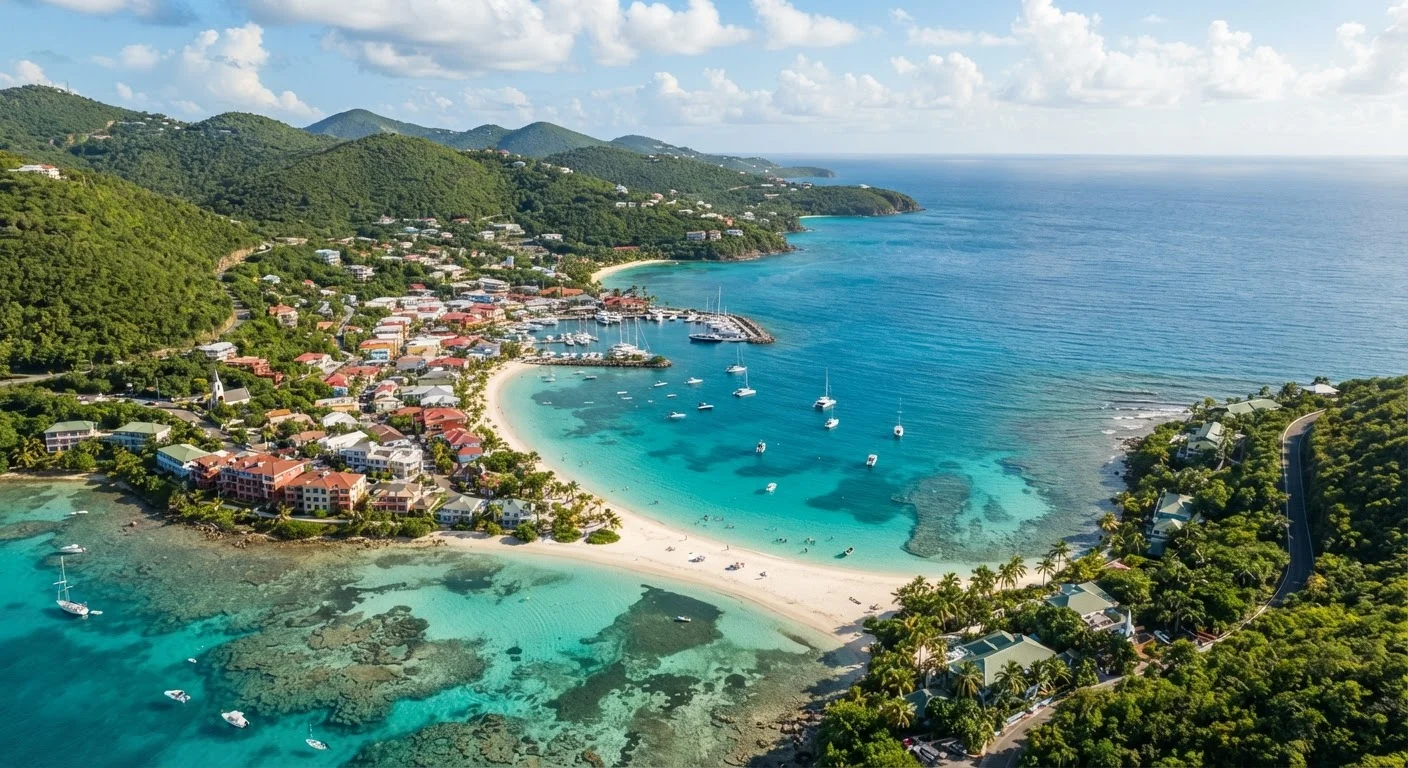
Island Vibes, No Passport Required
Most Americans assume that island travel means digging out a passport, clearing customs, and wrangling foreign currency. But a handful of stunning tropical destinations fly the American flag - meaning US citizens can arrive with nothing more than a government-issued ID. Before you pack your bags, brush up on which documents you'll need for your specific trip with our guide to passports, visas, and REAL IDs.
From the Caribbean to the Pacific, these US territories span dramatically different cultures, cuisines, and landscapes. Whether you're dreaming of rainforest hikes, world-class snorkeling, or deeply rich Indigenous traditions, there's an American island ready to deliver - often at a lower cost and with far less planning friction than an international trip. Here are five territories every American traveler should put on their radar.
Puerto Rico
The most visited US territory isn't just convenient - it's genuinely spectacular. Puerto Rico packs rainforest, bioluminescent bays, Spanish colonial architecture, and an electric food scene into an island roughly the size of Connecticut. Old San Juan's pastel-painted streets and 16th-century fortresses (a UNESCO World Heritage Site) rival anything in Europe, while El Yunque National Forest - the only tropical rainforest in the US National Forest System - offers serious hiking with waterfalls and canopy views.
Direct flights from most major US hubs keep travel times reasonable, and a robust tourism infrastructure means accommodations range from guesthouses to full-service resorts. Puerto Ricans are US citizens, so traveling here has a distinct ease. The island's culinary scene, blending Taíno, African, and Spanish influences, alone justifies the trip.
El Yunque is the only tropical rainforest within the US National Forest System.
US Virgin Islands (USVI)
St. Thomas, St. John, and St. Croix each offer a different flavor of Caribbean paradise. St. Thomas is the busiest, with duty-free shopping (purchases over a certain threshold may still have tax implications - verify before you buy), a vibrant harbor, and easy ferry connections. St. John is the quieter, greener counterpart: roughly two-thirds of the island is protected as Virgin Islands National Park, home to some of the most pristine beaches in the Atlantic basin.
St. Croix often gets overlooked, but it rewards curious travelers with a slower pace, Danish colonial architecture in Christiansted, and a growing craft food and rum scene. The USVI sit on the Atlantic side of the Caribbean, meaning waters can be calmer on certain coasts - great for novice snorkelers.
About two-thirds of St. John is protected national park land with pristine, uncrowded beaches.
Guam
Guam sits in the western Pacific, making it a genuinely far-flung destination - about a 12-hour flight from Hawaii - but its status as a US territory means Americans arrive without customs hassle. The island is home to the ancient Chamorro civilization, one of the Pacific's oldest continuous cultures. Latte stone monuments, CHamoru (the preferred spelling locally) cuisine, and traditional weaving demonstrate a rich heritage that sets Guam apart from any Caribbean destination.
Beyond culture, Guam offers exceptional diving and snorkeling in clear Pacific waters, plus a dramatic coastline with cliffs, jungle trails, and the fascinating Tumon Bay. Guam also serves as a natural jumping-off point for exploring Micronesia more broadly if you're open to adding passport destinations to a longer Pacific itinerary.
Guam's ancient CHamoru culture and Pacific setting make it unlike any other US territory.
Commonwealth of the Northern Mariana Islands (CNMI)
The CNMI - a chain of islands including Saipan, Tinian, and Rota - is one of the most underrated destinations under the American flag. Saipan offers powdery white sand, incredibly clear water, and some of the Pacific's most compelling World War II historical sites. The island chain saw intense fighting during the Pacific campaign, and museums, memorials, and preserved battlefield locations give the destination a weight and historical dimension that beach-focused travelers often don't expect.
Rota in particular has become something of a cult favorite among divers for its pristine reefs and the famous Coral Gardens dive site. The CNMI is also notably less crowded than Guam, giving it an off-the-beaten-path feel while remaining accessible to American travelers.
Rota's Coral Gardens dive site draws divers seeking some of the Pacific's most pristine reef ecosystems.
American Samoa
American Samoa is the most remote and arguably the most culturally distinct US territory. Located in the South Pacific about 2,600 miles southwest of Hawaii, it's a longer journey - but travelers who make it find a destination almost entirely untouched by mass tourism. The fa'asamoa (Samoan way of life) is lived openly here: communal village culture, traditional ceremonies, and handicrafts are not performances for tourists but genuine daily practices.
The National Park of American Samoa spans three islands and is one of the few US national parks where visitors can arrange to stay with local families through a village homestay program, offering a rare immersive cultural experience. The reefs and rainforest are largely pristine. Note that American Samoa has stricter entry protocols than other territories; verify current requirements with official sources well ahead of your trip.
American Samoa's national park is one of the few places to experience a genuine Pacific village homestay program.
Planning Your Territory Trip: What to Know First
A few practical notes before you book: while no passport is required, US territories are not US states. Local rules, sales taxes, and even some federal programs may differ. Driving is on the right in Puerto Rico, the USVI, and the Northern Mariana Islands - but on the left in the US Virgin Islands for some roads, and in American Samoa entirely. Wildlife, reef, and cultural-site protections can be strict, so research local ordinances before your visit.
Carry More Than One ID
Even though a passport isn't required for US territories, it never hurts to bring one if you have it - especially for cruise itineraries that may include non-US island stops. If you don't have a passport, a REAL ID-compliant driver's license is your best travel companion. Check that your ID hasn't expired well before your departure date.
Currency is the US dollar across all five territories, and English is widely spoken, though Spanish is dominant in Puerto Rico and Chamorro is commonly heard in Guam and the CNMI. Embrace those linguistic layers - they're part of what makes each destination feel genuinely foreign while remaining familiar.
Entry requirements and travel conditions can shift, so always confirm current advisories and any COVID-era or health-related protocols with official government sources and your airline before departure. With a little homework, an American island escape can be every bit as memorable as any international vacation - with far less bureaucratic overhead.
Territories Are Not States
US territories operate under federal jurisdiction in many ways, but local governments set their own rules on taxes, driving regulations, and certain public services. Some federal benefits that apply stateside may not extend to territories. Before your trip, spend a few minutes on the territory's official tourism and government websites to understand any local requirements specific to your destination.
The content on this site is for informational purposes only and is not a substitute for professional advice. Always consult a qualified professional for guidance specific to your situation.