

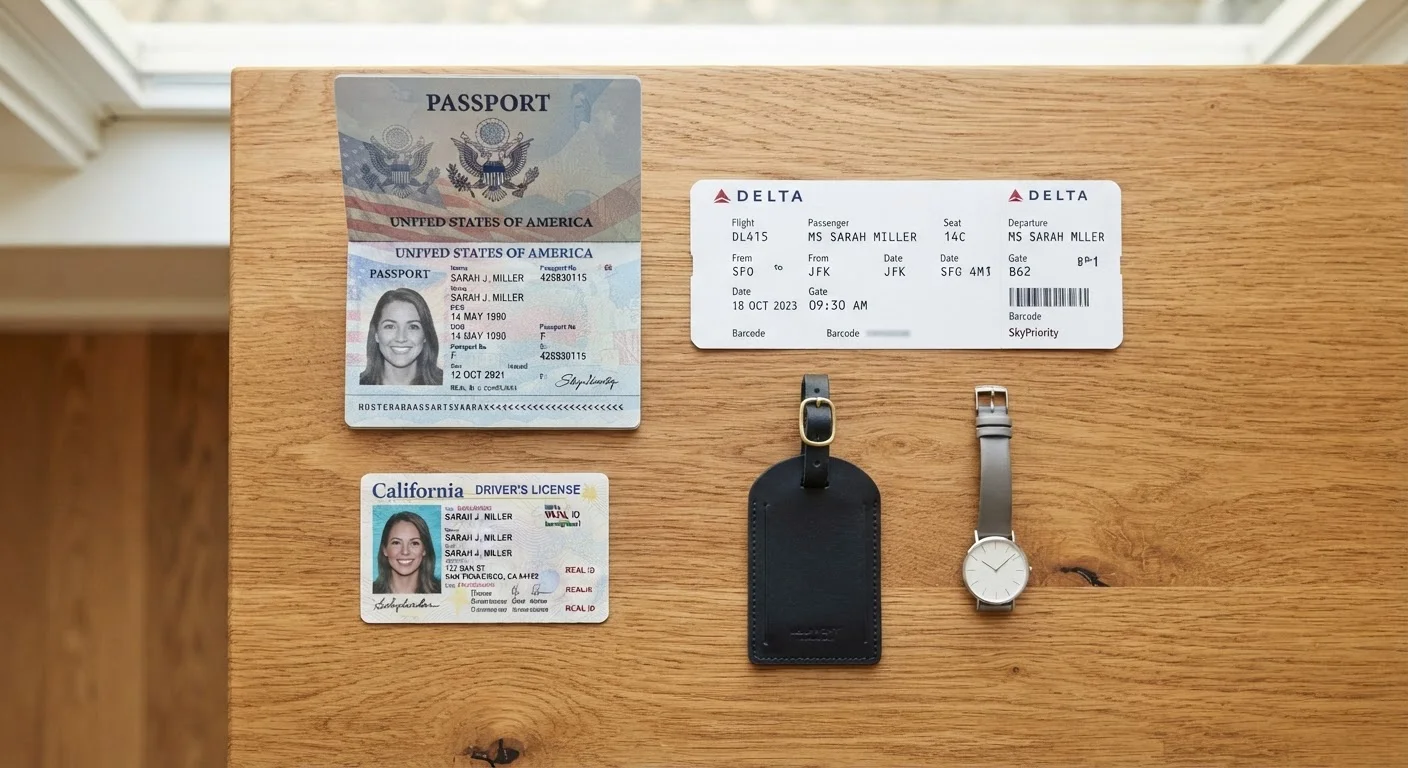
The Big Picture: Three Documents, Three Purposes
If you've ever stood in an airport line wondering whether your ID is the right one, you're not alone. The U.S. travel document landscape has three main players - and each one serves a distinct role.
- REAL ID-compliant driver's license or state ID: Your everyday workhorse for domestic air travel and federal facilities.
- U.S. Passport (book or card): Your ticket to international travel and the most universally accepted American travel document.
- Visa: A permission slip issued by a foreign government, separate from your passport, required by certain countries for entry.
Understanding which one applies to your specific trip - and getting it sorted before departure day - is one of the simplest ways to travel with confidence. See our domestic travel terms guide for a deeper breakdown of REAL ID compliance and other domestic rules.
~48%
Americans who hold a valid passport
According to U.S. State Department data, fewer than half of Americans hold a current passport, making REAL ID critical for domestic travelers.
6 months
Passport validity many countries require beyond travel dates
Many countries enforce a six-month validity rule, meaning a soon-to-expire passport may be rejected even if it hasn't technically expired.
50+
Countries Americans can visit visa-free
The U.S. passport provides visa-free or visa-on-arrival access to a large number of destinations, according to international passport index rankings.
REAL ID: What It Means for Domestic Flyers
The REAL ID Act set federal standards for state-issued identification. A compliant ID typically displays a star symbol in the upper corner - that star tells TSA agents the card meets federal security requirements. Without it, you won't pass a federal checkpoint for domestic flights.
If your current driver's license isn't REAL ID compliant, your state DMV is where to start. The upgrade process is usually straightforward, though you'll need to bring documents that verify your identity, Social Security number, and state residency.
The good news: if you already have a valid U.S. passport, you can use that for domestic flights too - no REAL ID needed. A passport is always an acceptable alternative.
Check the Star on Your License Before You Fly
Look for a gold or black star in the upper corner of your state ID or driver's license. That star indicates REAL ID compliance. If your license doesn't have it, contact your state DMV about upgrading - or plan to bring your passport as an alternative ID at TSA checkpoints.
Passports: When You Need the Book vs. the Card
The standard passport booklet is the one most people picture - the navy blue document with your photo and biographical data. It's required for all international flights and is accepted virtually everywhere a passport is needed.
The passport card is a lesser-known option: wallet-sized, less expensive, and valid for land and sea border crossings with Canada, Mexico, the Caribbean, and Bermuda. What it cannot do is get you on an international flight. If your plan involves flying abroad - to Europe, Asia, Central America, or anywhere else - you need the booklet.
One important detail many travelers overlook: some countries require your passport to be valid for at least six months beyond your planned return date. Always check before you book. Our international trip planning checklist covers this and other document checks in detail.
Visas: The Permission Slip Separate From Your Passport
A passport proves who you are; a visa proves a foreign government has given you permission to enter. Many popular destinations - including much of Western Europe, the U.K., and Mexico - allow American citizens to visit without a pre-arranged visa for short tourist stays. Others require you to apply in advance, sometimes weeks or months ahead of travel.
Visa requirements can change based on diplomacy, reciprocity agreements, and policy shifts, so it's critical to verify current requirements through the U.S. State Department's official travel website and the embassy or consulate of your destination country. Don't rely on third-party sites or outdated travel blogs for this.
If your trip involves multiple countries - say, a Southeast Asia itinerary - each country has its own entry rules. Planning ahead is especially important for those itineraries. For a complete pre-departure guide, see our pre-departure checklist.
Entry Requirements Can Change Without Much Notice
Visa policies, entry requirements, and even passport validity rules can shift due to diplomatic changes or new government regulations. What was true when a friend visited a country a year ago may not be accurate today. Always verify current requirements directly through the U.S. State Department's travel portal and the destination country's official embassy or consulate website before booking or departing.
U.S. Territories: International Vibes, Domestic Rules
Here's a pleasant surprise for many travelers: destinations like Puerto Rico, the U.S. Virgin Islands, Guam, and the Northern Mariana Islands are U.S. territories. American citizens travel there under domestic rules - no passport required, no customs declaration on return, no foreign currency needed.
A REAL ID-compliant ID or any TSA-accepted federal ID is all you need to board the flight. This makes U.S. territories a fantastic option for travelers whose passports have lapsed or who are traveling with children whose documents aren't in order yet. Our guide to island vacations without a passport walks through the best destinations in detail.
For those ready to cross into true international territory - say, a cruise that stops in the Bahamas or a flight to Europe - make sure your passport booklet is current and has adequate validity remaining. The Europe pre-departure checklist is a helpful resource for that kind of planning.
Frequently Asked Questions
Only if your state-issued license is REAL ID compliant (look for a star marking in the upper corner). Non-compliant IDs are no longer accepted at TSA checkpoints for domestic flights. A valid U.S. passport always works as an alternative.
No. Both are U.S. territories, so American citizens can travel there with a REAL ID-compliant ID or any accepted federal ID. No passport or visa is required.
A passport card is a wallet-sized alternative to the standard passport book. It's valid for land and sea border crossings between the U.S., Canada, Mexico, the Caribbean, and Bermuda - but it cannot be used for international flights.
No. Many countries allow U.S. citizens to visit visa-free or with a visa-on-arrival for short stays. However, requirements vary widely and can change, so always check the destination country's official requirements and the U.S. State Department's travel pages before you go.
Routine processing can take several weeks or longer depending on application volume. Many travel advisors suggest applying at least six months before an international trip, particularly since some countries require your passport to be valid for six months beyond your travel dates.
A passport proves your identity and citizenship; a visa is a separate authorization issued by the destination country. For many popular destinations, Americans don't need a visa for short tourist stays - but you should always confirm requirements through official sources well before departure.
The content on this site is for informational purposes only and is not a substitute for professional advice. Always consult a qualified professional for guidance specific to your situation.