

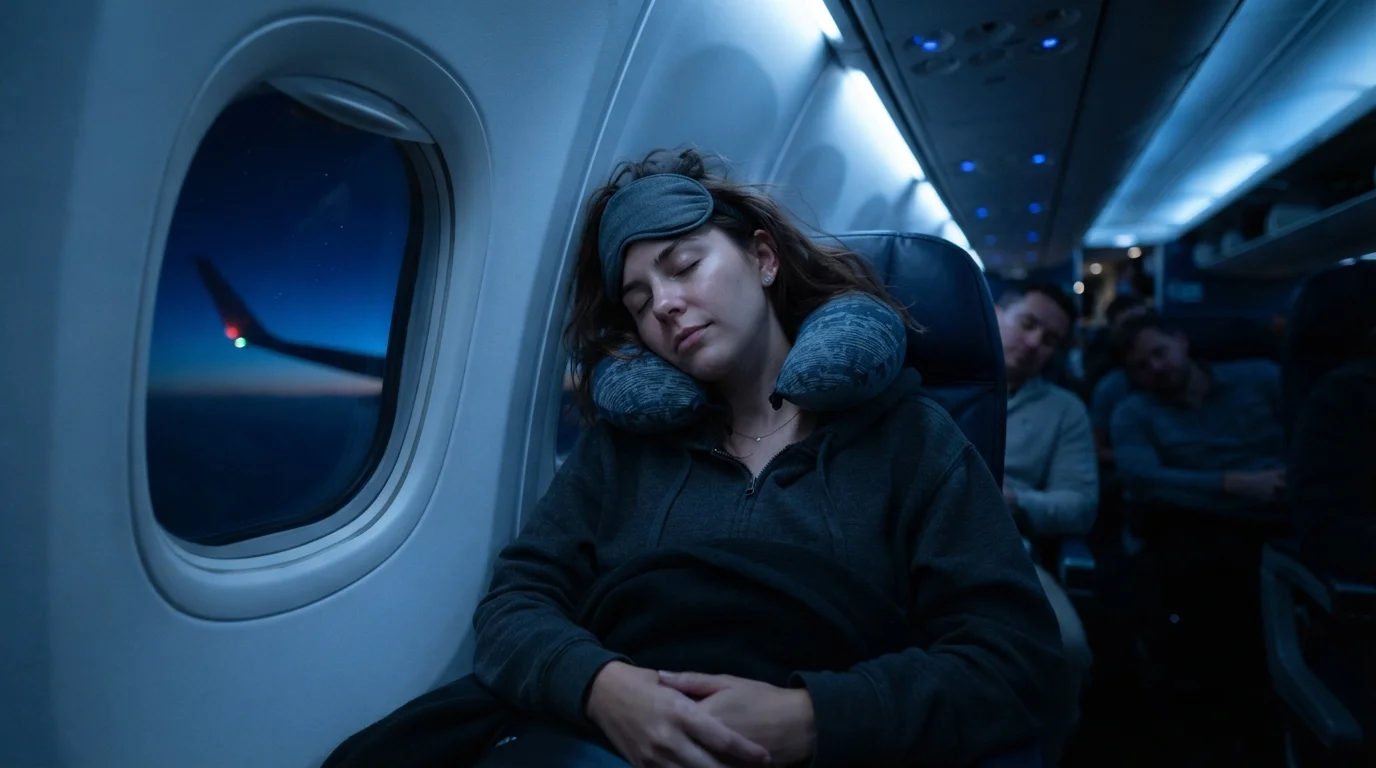
What Jet Lag Actually Is (And Isn't)
Jet lag isn't just tiredness from a long flight - it's a real, measurable disruption to your body's circadian rhythm, the roughly 24-hour internal clock that governs sleep, hunger, hormone release, and digestion. When you cross multiple time zones rapidly, your biological clock stays anchored to your departure time while the outside world operates on an entirely different schedule. That mismatch is jet lag.
Research consistently shows that most people need roughly one day of recovery for each time zone crossed, though individual responses vary significantly. Factors like age, sleep quality before travel, and direction of travel all influence how hard your body gets hit. If you want to understand how this disruption can ripple into your trip planning, this guide on jet lag and itinerary planning breaks it down further.
Myth
Jet lag only affects you if you didn't sleep on the plane.
Fact
Jet lag is caused by time-zone misalignment, not sleep deprivation alone. Sleep on the plane doesn't reset your circadian clock.
In-flight sleep can reduce fatigue, but it doesn't synchronize your internal clock to the destination's local time. Your body's rhythm is driven by environmental cues - primarily light - not rest alone. You can sleep eight hours on a transatlantic flight and still feel disoriented for days after landing because your hormones and core temperature cycles are still running on departure-city time.
Myth
It doesn't matter which direction you fly - jet lag is the same either way.
Fact
Eastward travel is generally harder for most people because it requires advancing the internal clock, which the body resists more than delaying it.
Human circadian rhythms naturally run slightly longer than 24 hours, which makes it easier to stay up later (delay the clock) than to force yourself to sleep earlier (advance the clock). Flying west - say, from New York to Los Angeles or across the Pacific - aligns with this natural drift. Flying east compresses your day and demands a clock advance most bodies find harder to achieve quickly.
Myth
A couple of drinks on the plane helps you sleep and reduces jet lag.
Fact
Alcohol disrupts sleep architecture and dehydration from cabin air compounds its effects, likely making jet lag symptoms worse.
While alcohol can induce drowsiness, research on sleep quality consistently shows it suppresses REM sleep and increases nighttime awakenings. At altitude, cabin humidity is extremely low and alcohol is more dehydrating than usual. This combination can leave you more fatigued and cognitively foggy upon landing - not less. Hydrating with water throughout a flight is a far more evidence-consistent approach.
Myth
Staying up until local bedtime automatically cures jet lag on day one.
Fact
Forcing wakefulness helps with alignment but doesn't override the body's hormonal and temperature rhythms, which adjust gradually over days.
Staying awake to local bedtime is a reasonable tactic - it avoids reinforcing the wrong sleep schedule - but it's just one piece of a multi-day process. Your core body temperature cycle, cortisol release, and melatonin production all need to shift in unison, and none of them respond instantaneously to willpower. Combining timed wakefulness with morning light exposure and consistent meal timing gives your body more cues to recalibrate faster.
Myth
Caffeine is a reliable fix for daytime sleepiness caused by jet lag.
Fact
Caffeine can mask fatigue short-term but may interfere with sleep later in the day, prolonging the adjustment period.
Strategic caffeine use - earlier in the day at your destination - may help you function during adjustment. But relying on coffee or energy drinks throughout the day can delay the sleep pressure your body needs to consolidate sleep at the appropriate local nighttime. Caffeine has a half-life of roughly five to six hours in most adults, meaning afternoon doses can still be active at midnight and undermine the very sleep you need to reset.
Strategies Backed by Evidence
Understanding what works - and what doesn't - can save you the first two days of a hard-earned trip.
~1 day
Recovery time per time zone crossed
Circadian rhythm researchers commonly cite this rough guideline, though individual variation is significant.
~20%
Cabin humidity on commercial flights
Aircraft cabin air humidity typically falls well below the 30-60% range considered comfortable, contributing to dehydration during long flights.
Light exposure is the most well-supported strategy in circadian science. Morning light at your destination signals to your brain that it's time to be awake, helping accelerate the clock shift. Conversely, avoiding bright light at the wrong time can reinforce the old schedule. Timed outdoor walks or light therapy lamps are practical, low-cost tools travelers can use without any prescription.
Melatonin supplements are widely studied for jet lag. Evidence suggests they can be helpful when taken close to local bedtime at the destination - but taking them at the wrong time may actually delay adjustment. If you're considering melatonin, consult a healthcare professional about timing and appropriate use for your situation.
Sleep habits matter too. The evidence on sleep hygiene shows that consistent bedtime routines, dark environments, and reduced screen exposure all support restorative sleep - principles that apply especially when you're trying to reset in a new time zone.
Don't Overlook Pre-Trip Sleep Debt
Arriving at the airport already sleep-deprived makes jet lag significantly harder to manage. Many travelers shortchange themselves the night before departure due to packing and stress. Try to protect your sleep in the two to three days before a long international trip - it gives your body a stronger foundation to reset from. Check out common trip planning mistakes for other pre-departure blind spots worth addressing.
This article provides general information about jet lag and is not a substitute for personalized medical advice. Consult a qualified healthcare professional if you have health conditions that may be affected by travel or sleep disruption.
The content on this site is for informational purposes only and is not a substitute for professional advice. Always consult a qualified professional for guidance specific to your situation.