

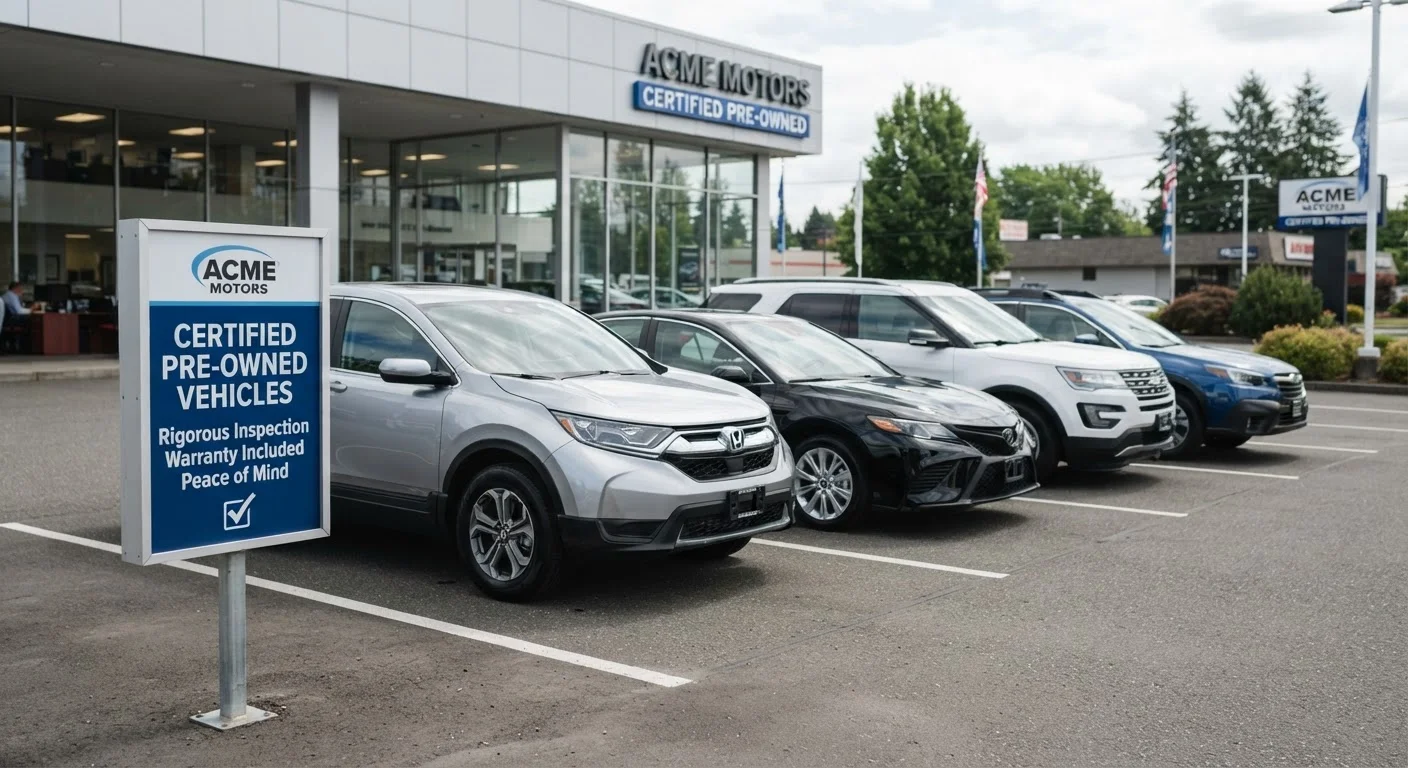
Two Types of CPO, Very Different Promises
When you see "certified pre-owned" on a vehicle listing, the first question worth asking is: who certified it? There are two fundamentally different types of CPO programs, and they are not equivalent.
Manufacturer CPO programs are run by automakers - think programs from major domestic and import brands sold through franchised dealerships. These programs typically require vehicles to be relatively recent model years, under a mileage ceiling (commonly around 80,000 miles, though this varies), and they back the warranty with the automaker's resources. Inspection checklists for these programs tend to be more standardized and rigorous.
Dealer CPO programs are created by individual dealerships or dealer groups. The inspection criteria, warranty terms, and coverage limits are set by the dealer, not by a manufacturer. There is no third-party oversight enforcing consistency. These programs can range from genuinely thorough to largely cosmetic.
This distinction matters because the word "certified" carries the same weight on the sticker regardless of which program issued it. Understanding who stands behind the certification is step one. For a broader look at how used vehicles compare to new ones overall, see our piece on new car vs. used car trade-offs.
What a CPO Inspection Actually Checks - and What It Doesn't Fix
A CPO inspection is conducted against a multi-point checklist - typically covering mechanical systems, safety components, exterior condition, and sometimes interior wear. The number of inspection points varies by program, and a higher point count does not automatically mean more comprehensive coverage.
Here is the critical nuance many buyers miss: passing an inspection is not the same as correcting every deficiency found. Some programs require dealers to repair or replace any item that fails inspection before certifying the vehicle. Others set minimum thresholds - items that fall within an acceptable range are noted but not necessarily fixed. The checklist documents condition; it does not guarantee perfection.
Items commonly covered in manufacturer CPO inspections include the engine, transmission, brakes, steering, tires, and safety systems. Items that are frequently excluded or limited include wear items like brake pads below a certain percentage, cosmetic damage below a set threshold, and pre-existing conditions disclosed at sale.
Ask for the Completed Inspection Report
Before purchasing any CPO vehicle, request the actual completed inspection document - not just verbal confirmation that an inspection occurred. This report shows what was checked, what condition each item was in, and what repairs (if any) were made. A reputable seller will provide this without hesitation.
Before purchasing, ask the dealer for the completed inspection report - not just confirmation that one was done. This document lists what was checked, what was found, and what (if anything) was repaired. If a dealer cannot produce this, treat the CPO designation with skepticism.
Reading the CPO Warranty Carefully
The warranty is the most tangible benefit of a CPO vehicle, and the details matter enormously. Key variables to compare include:
- Coverage type: Is it a powertrain-only warranty, or does it include bumper-to-bumper (comprehensive) coverage? Powertrain warranties cover the engine, transmission, and drivetrain - but not electronics, suspension, air conditioning, or other systems.
- Duration and mileage: Warranties are typically expressed in years and miles, whichever comes first. A "5-year/100,000-mile" warranty sounds generous, but if the vehicle already has 70,000 miles on it, you may have far less runway than it appears.
- Deductibles: Some CPO warranties require a per-visit deductible (often $50-$200) when you make a claim. Others are deductible-free. This affects the real cost of using the coverage.
- What is explicitly excluded: Warranty exclusions lists can be long. Maintenance items, wear and tear, and damage from modifications or accidents after purchase are almost universally excluded.
It is worth noting that CPO warranties are distinct from aftermarket extended warranties. If a dealership tries to sell you an additional extended warranty on top of a CPO vehicle, that is a separate product with its own terms - and one where the math often doesn't favor the buyer.
~80,000 mi
Typical mileage ceiling for manufacturer CPO eligibility
Most major automaker CPO programs require vehicles to be under a mileage threshold - commonly around 80,000 miles - though exact limits vary by brand.
100+ points
Typical inspection checklist length for manufacturer programs
Manufacturer CPO inspections commonly involve multi-point checklists ranging from roughly 100 to 200 inspection items, depending on the automaker's program requirements.
$50-$200
Common per-visit deductible range on CPO warranties
Many CPO warranties include a per-claim deductible; the amount varies by program and affects the real-world cost of using the coverage.
What CPO Doesn't Replace
A CPO label streamlines the buying process, but it does not eliminate the need for standard due diligence. Two steps remain just as important on a CPO vehicle as on any used car:
Vehicle history report: A CPO program generally requires a clean or lien-free title, but that does not mean the car has no accident history or odometer concerns. Running a vehicle history report - using the VIN - takes a few minutes and surfaces information the dealership may not volunteer. Our guide to questions worth asking covers what to probe beyond the report itself.
Independent inspection: An in-house inspection is conducted by people who have a financial interest in selling the car. An independent mechanic - one you hire separately - has no such conflict. The cost of a pre-purchase inspection is typically modest relative to the price of the vehicle, and it can surface issues the CPO process either missed or chose not to address.
CPO vehicles also still require standard auto insurance. The warranty covers mechanical defects under its terms; it does not cover collision damage, theft, or liability. If you need a refresher on what your policy actually protects, auto insurance coverage types, decoded breaks down the key categories.
This article is for general informational purposes only and does not constitute financial, legal, or purchasing advice. Terms for CPO programs vary by manufacturer and dealer; verify all warranty and inspection details directly with the selling dealer before making a purchase decision.
Frequently Asked Questions
No. A CPO warranty is typically more limited than a new-car warranty in both scope and duration. Coverage often applies only to specific powertrain or listed components, and exclusions can be extensive. Always read the actual warranty document, not just the marketing summary.
Yes, and it's a reasonable step to take. A dealership's CPO inspection is conducted in-house, which creates a potential conflict of interest. An independent pre-purchase inspection gives you a second opinion. See our <a href="/automotive/buying-a-car/before-you-sign-a-pre-purchase-checklist-for-used-cars">pre-purchase checklist</a> for what to cover.
Some do, some don't. Manufacturer CPO warranties are often transferable to a subsequent owner, which can support resale value. Dealer-issued CPO warranties typically do not transfer. Confirm transferability before buying if resale matters to you.
A CPO warranty comes bundled with the vehicle purchase and is issued by the manufacturer or dealer. An extended warranty (also called a vehicle service contract) is a separate product you buy, often from a third party. They serve a similar function but differ in backing, exclusions, and cost structure.
No. CPO programs generally require a clean title but do not guarantee accident-free history. A vehicle can have minor prior damage and still pass a CPO inspection. Always run a vehicle history report regardless of CPO status.
It depends on the program's actual coverage and the price premium being charged. Stronger manufacturer programs can offer genuine value, particularly for powertrain protection. Weaker dealer programs may add cost without meaningful benefit. Compare the warranty terms against the price difference before deciding.
The content on this site is for informational purposes only and is not a substitute for professional advice. Always consult a qualified professional for guidance specific to your situation.