

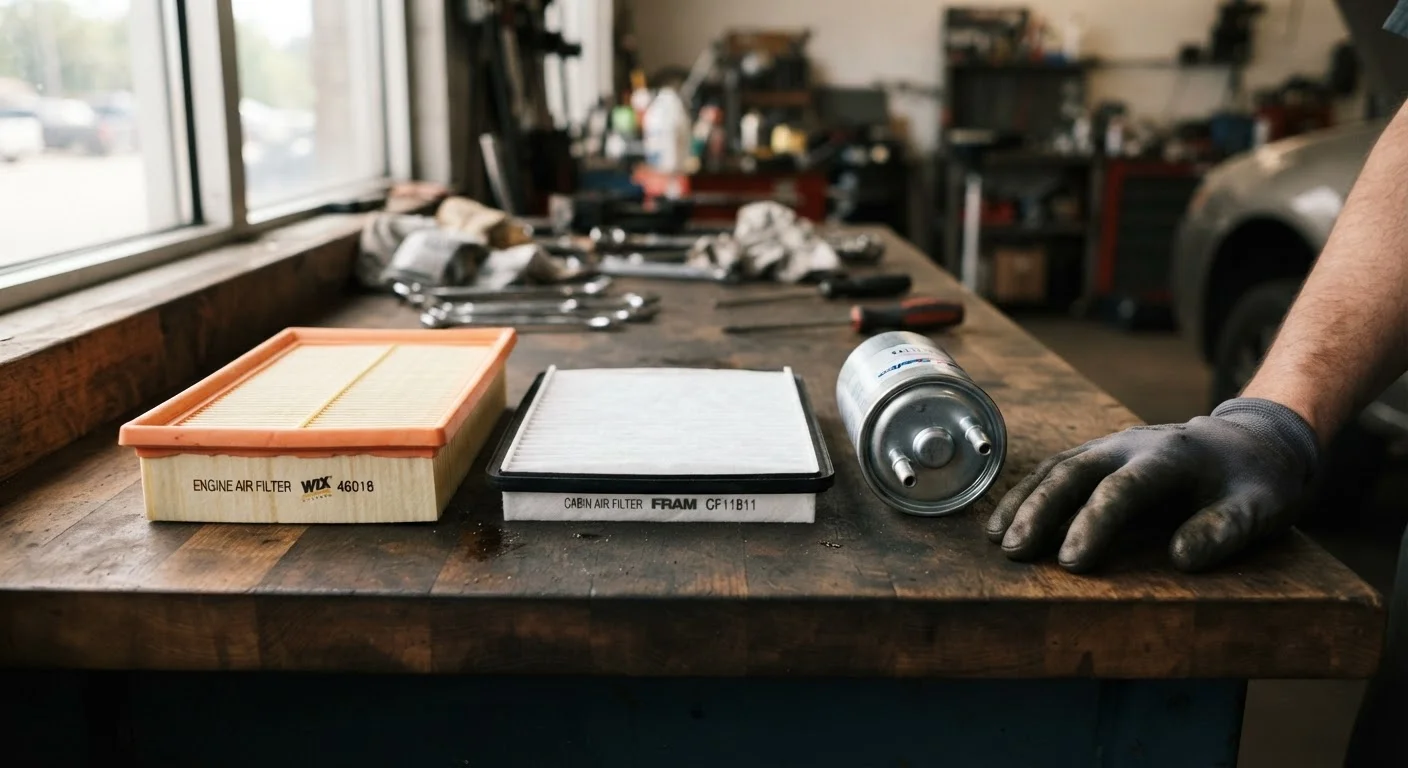
Why Your Car Has More Than One Filter
Most drivers know cars have filters, but assume they all do the same thing. They don't. Your vehicle typically runs three distinct filters - the engine air filter, the cabin air filter, and the fuel filter - and each one protects a completely different system. Confusing them, or neglecting one while servicing another, is an easy and surprisingly common mistake.
Think of filters as gatekeepers. Each one sits between something your car needs (air, fuel) and something that would damage it (dirt, debris, contaminants). When a filter gets clogged, it stops doing its job - and the system it was protecting starts to suffer.
Below is a plain-English breakdown of what each filter does, where it sits, and how to know when it needs attention. For a broader look at fluids and components that work alongside these filters, see our guide to car fluids every driver should know.
| Engine Air Filter Function | Screens dust and debris from air entering the engine |
| Cabin Air Filter Function | Filters air entering the passenger compartment through HVAC |
| Fuel Filter Function | Removes sediment and contaminants from fuel before combustion |
| Engine Air Filter Interval | 15,000-30,000 miles (varies by driving conditions) (Owner's manual for your specific vehicle) |
| Cabin Air Filter Interval | 15,000-25,000 miles, or roughly once per year |
| Fuel Filter Location | In-line on fuel line, or inside fuel tank (varies by vehicle) |
Engine Air Filter: Protecting Your Engine's Airflow
Your engine burns a mixture of fuel and air to generate power. The engine air filter screens out dust, pollen, insects, and debris before that air enters the engine. Without it, abrasive particles would wear down internal components over time.
A clogged engine air filter restricts airflow, which forces the engine to work harder. You might notice reduced acceleration, slightly lower fuel economy, or in severe cases, a rough idle. It won't usually cause a breakdown overnight, but the cumulative effect on engine performance - and eventually engine wear - is real.
Typical replacement interval: Every 15,000 to 30,000 miles, though dusty or unpaved driving conditions shorten that window considerably. Your owner's manual will give the interval specific to your vehicle. Checking the filter visually at each oil change is a good habit - a gray or black filter that's visibly packed with debris is ready to be replaced. Seasonal driving conditions like summer heat and dry roads can accelerate how fast an engine air filter loads up.
Cabin Air Filter: Protecting the Air You Breathe
The cabin air filter is often overlooked because it doesn't affect engine performance - it affects you. It filters the air that flows through your car's heating and air conditioning system into the passenger compartment, trapping pollen, dust, exhaust particles, and other airborne contaminants before they reach your lungs.
A neglected cabin air filter makes your HVAC system work harder, which can reduce airflow noticeably from your vents and put strain on the blower motor. You might also notice musty odors when you run the heat or A/C - a sign that moisture and debris have built up in the filter.
Typical replacement interval: Every 15,000 to 25,000 miles, or roughly once a year for average drivers. People with allergies or those who drive frequently in urban or high-pollen environments may want to replace it more often. The cabin filter is usually located behind the glove box or under the dashboard - many are accessible without tools.
Engine Air Filter
A replaceable filter that cleans incoming air before it enters the engine's combustion chamber. Prevents abrasive particles from causing internal engine wear.
Cabin Air Filter
A filter installed in the HVAC system that cleans the air flowing into the passenger cabin. Traps pollen, dust, and exhaust particles before they reach occupants.
Fuel Filter
A filter positioned in the fuel line that removes rust, sediment, and debris from gasoline or diesel before it reaches the fuel injectors and engine.
Fuel Injector
A precision valve that sprays a measured amount of fuel into the engine's cylinders. Sensitive to contamination, which is why a functioning fuel filter matters.
HVAC System
Stands for Heating, Ventilation, and Air Conditioning. In a car, this system controls temperature and airflow for the passenger compartment.
Fuel Filter: Keeping Your Fuel System Clean
The fuel filter sits in the fuel line between your gas tank and your engine, catching rust particles, sediment, and other contaminants that can enter the fuel supply. A clean fuel filter ensures your fuel injectors receive a steady, clean flow of fuel - which matters for smooth operation and injector longevity.
A clogged fuel filter can cause symptoms like hard starting, engine hesitation during acceleration, stalling, or a sputtering engine at highway speeds. In serious cases, it can prevent the car from starting at all.
Typical replacement interval: Varies significantly by vehicle. Some manufacturers recommend every 20,000 to 30,000 miles; others design fuel filters to last much longer or integrate them into the fuel pump assembly as a serviceable unit. Check your owner's manual - this is one interval where generalizing can lead you astray. Note that many modern vehicles have the fuel filter inside the fuel tank as part of the pump module, which is a job for a qualified mechanic.
For context on what happens when other basic maintenance gets skipped, see what neglecting oil changes actually does to an engine.
Up to 10%
Potential fuel economy loss from a clogged engine air filter
According to the U.S. Department of Energy, a dirty air filter can reduce fuel economy on older carbureted vehicles; impact on modern fuel-injected engines varies.
15,000-30,000 mi
Typical engine air filter service interval
Most vehicle manufacturers specify this range, though severe-duty driving in dusty conditions shortens it considerably.
1 per year
Recommended cabin filter replacement for average drivers
General guidance from automotive service organizations; your owner's manual and local air quality may adjust this figure.
The content on this site is for informational purposes only and is not a substitute for professional advice. Always consult a qualified professional for guidance specific to your situation.