

Why Car Fluids Matter
Your car depends on a handful of fluids to move, stop, stay cool, and protect its moving parts. When any one of them runs low or breaks down, it can trigger a warning light, reduce performance, or cause damage that's expensive to fix. The good news: checking most fluids takes under five minutes and requires no tools.
This guide covers the six fluids every driver should be able to identify - what each one does, where to find it, and what low or dirty fluid signals. For a broader introduction to keeping your car dependable, see our practical starting point for new drivers.
| How often to check engine oil | Monthly, or before long trips |
| Coolant check timing | Only when the engine is cold |
| Brake fluid reservoir location | Near the firewall, under the hood |
| Healthy transmission fluid color | Red or pink, nearly odorless |
| Windshield washer fluid tip | Use climate-rated fluid, not plain water |
The Six Fluids You Should Know
1. Engine Oil
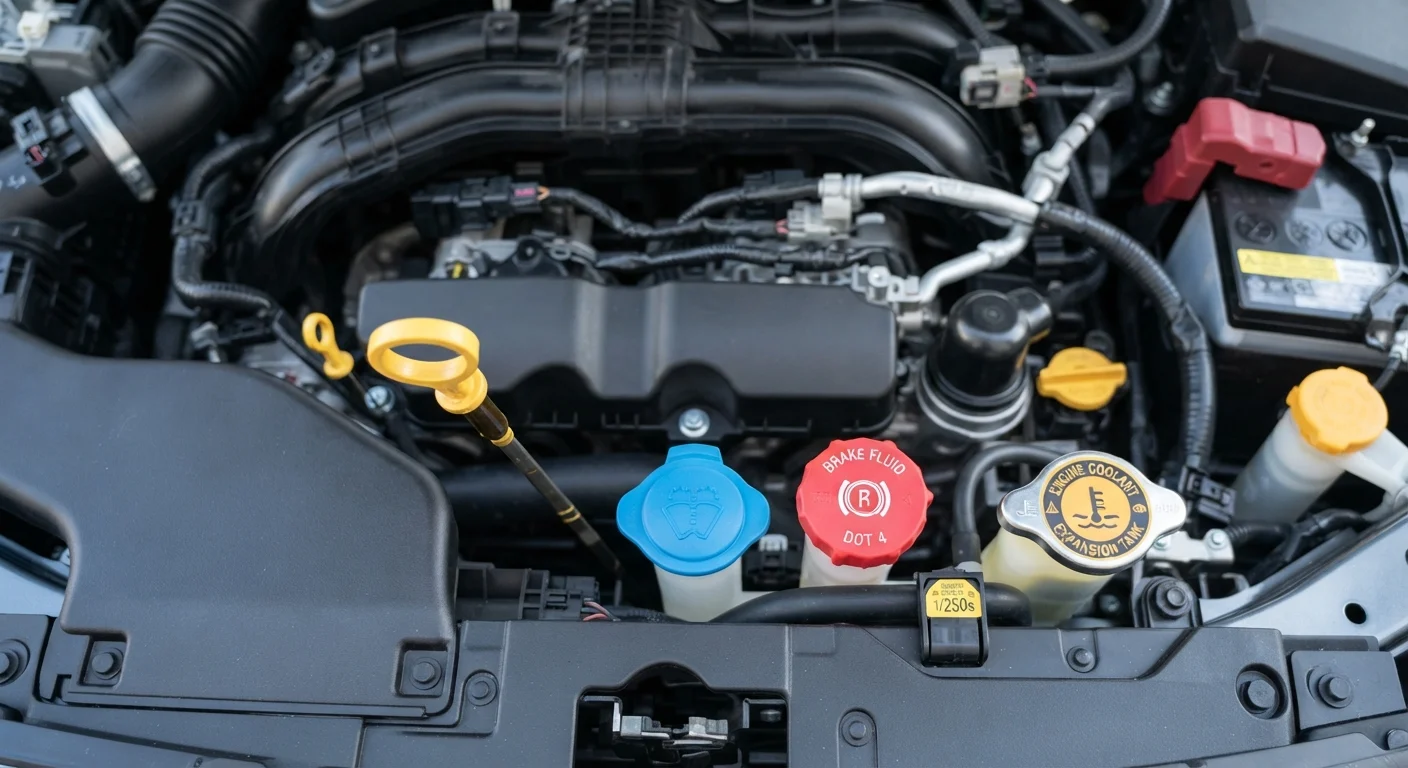
Engine oil lubricates hundreds of moving metal parts, reduces friction, and carries heat away from the engine. Check it monthly using the dipstick - the oil should sit between the MIN and MAX marks and look amber to brown. Black, gritty oil is overdue for a change. Running too low can cause serious engine damage quickly. See what happens when this gets neglected in our article on what actually happens if you skip an oil change.
2. Coolant (Antifreeze)
Coolant circulates through the engine and radiator to prevent overheating in summer and freezing in winter. The reservoir is usually a translucent plastic tank - the fluid level should fall between LOW and FULL when the engine is cold. Never open a hot radiator cap. Low coolant or a milky appearance (which can indicate a head gasket issue) warrants a mechanic visit.
3. Brake Fluid
Brake fluid transfers the force of your foot on the pedal through the brake lines to the calipers. It lives in a small reservoir near the firewall, typically labeled with a brake symbol. The level drops slightly as brake pads wear down - a normal sign. A sudden drop, spongy pedal feel, or dark/dirty fluid are reasons to have the system inspected promptly. Brakes are a safety-critical system; leave repairs to a qualified mechanic.
4. Power Steering Fluid
Many vehicles use hydraulic power steering, which relies on this fluid to make turning the wheel easier. Some newer cars use electric power steering and don't have this reservoir at all - check your owner's manual. Low fluid can cause stiff steering or a whining noise when turning.
5. Transmission Fluid
Transmission fluid lubricates the gears and keeps shifting smooth. On many vehicles it can be checked with a dipstick similar to the oil dipstick (the cap is often labeled and may be red). Healthy fluid is red or pink and nearly odorless. Dark, burnt-smelling fluid signals it's time for a service. Consult your owner's manual for the recommended service interval - they vary widely by vehicle.
6. Windshield Washer Fluid
The only fluid here that won't damage your engine if it runs out - but driving with a dirty windshield is a visibility hazard. The reservoir is marked with a windshield symbol. Use washer fluid rated for your climate; plain water can freeze in cold weather and may leave mineral deposits.
Dipstick
A long metal rod inserted into the engine or transmission to measure fluid level. Wipe it clean, reinsert fully, then pull it out again to get an accurate reading.
Coolant (Antifreeze)
A liquid mixture - usually water and ethylene glycol - that circulates through the engine and radiator to regulate temperature in both hot and cold conditions.
Hydraulic brake system
A system that uses pressurized fluid to transfer force from the brake pedal to the wheel brakes. Brake fluid must remain clean and at the correct level for reliable stopping.
Firewall
The metal panel separating the engine bay from the passenger cabin. Several fluid reservoirs - including brake fluid - are typically mounted near it.
When Warning Lights Come On
Most modern vehicles will alert you when a fluid level or condition crosses a threshold. An oil pressure warning, temperature gauge spike, or brake system light shouldn't be dismissed. If a warning appears while driving, it's generally safer to pull over and assess than to continue driving and risk further damage.
Our guide to dashboard warning lights explains what each symbol means and how urgently you should act. And if you've picked up some habits from common advice - like changing oil every 3,000 miles no matter what - it's worth reading our look at car maintenance myths that cost drivers money to separate fact from outdated guidance.
Always Start with Your Owner's Manual
Fluid types, check intervals, and reservoir locations vary by make, model, and year. Your owner's manual lists the exact specifications your vehicle requires - including the correct grade of oil and type of transmission fluid. Using the wrong fluid can cause as much harm as running low. If you don't have a physical copy, most manufacturers offer digital versions on their websites.
This article is for general informational purposes only and is not a substitute for advice from a qualified mechanic. Always consult your vehicle's owner's manual and a licensed technician for maintenance decisions specific to your vehicle.
The content on this site is for informational purposes only and is not a substitute for professional advice. Always consult a qualified professional for guidance specific to your situation.