

Why Maintenance Matters More Than Most New Drivers Realize
Owning a car is more than making payments and fueling up. The vehicle you drive every day is a complex machine with dozens of systems that depend on each other - and small problems left unaddressed tend to become expensive ones. A clogged cabin air filter is a minor fix; an overheated engine because the coolant was never topped off is a major repair bill.
The good news is that staying ahead of trouble doesn't require mechanical expertise. It mostly requires consistency: showing up for scheduled services, paying attention to warning lights, and knowing when something feels off. This guide is designed to give new drivers a clear, honest picture of what car ownership actually involves day to day.
$10,000+
Average annual cost of U.S. vehicle ownership
According to AAA's annual Your Driving Costs study, total ownership costs including depreciation, insurance, fuel, and maintenance regularly exceed this threshold for many vehicle types.
~5,000-10,000 mi
Typical modern oil change interval
Many current vehicles using full-synthetic oil can go significantly longer between oil changes than the outdated 3,000-mile guideline; check your owner's manual for the exact interval.
1 in 4
Vehicles with underinflated tires on U.S. roads
NHTSA data has consistently found a large share of passenger vehicles operating with at least one underinflated tire, which affects fuel economy and handling.
If you haven't yet purchased your vehicle, see our first-time car buyer guide for a full walkthrough of budgeting, financing, and the buying process.
The Maintenance Schedule: Your Owner's Manual Is the Source of Truth
Every vehicle comes with an owner's manual, and the maintenance schedule inside it is the single most reliable guide for that specific car. It tells you exactly when to change the oil, replace filters, inspect the brakes, flush the transmission fluid, and more - all based on your car's engineering, not general estimates.
You'll often see two schedules: one based on mileage and one based on time (months). Follow whichever comes first. A car driven in extreme conditions - stop-and-go city traffic, very cold climates, lots of short trips - may need service more frequently than the standard schedule suggests.
Keep a Simple Maintenance Log
A basic notes app on your phone or a small notebook in your glove compartment is enough. Record the date, mileage, and what was done each time you get service. This makes it easy to track when the next oil change is due, and it's useful documentation if you ever sell the vehicle.
One persistent myth worth dispelling: the old rule of changing your oil every 3,000 miles no longer applies to most modern vehicles. Many manufacturers specify intervals of 5,000 to 10,000 miles or more, depending on the oil type and engine design. Our article on car maintenance myths breaks this and similar misconceptions down clearly.
Checks You Can Do Yourself - No Tools Required
Several important checks require nothing more than your eyes, a clean rag, and a minute or two. Making these part of a regular routine - say, once a month or before a long trip - can catch problems early:
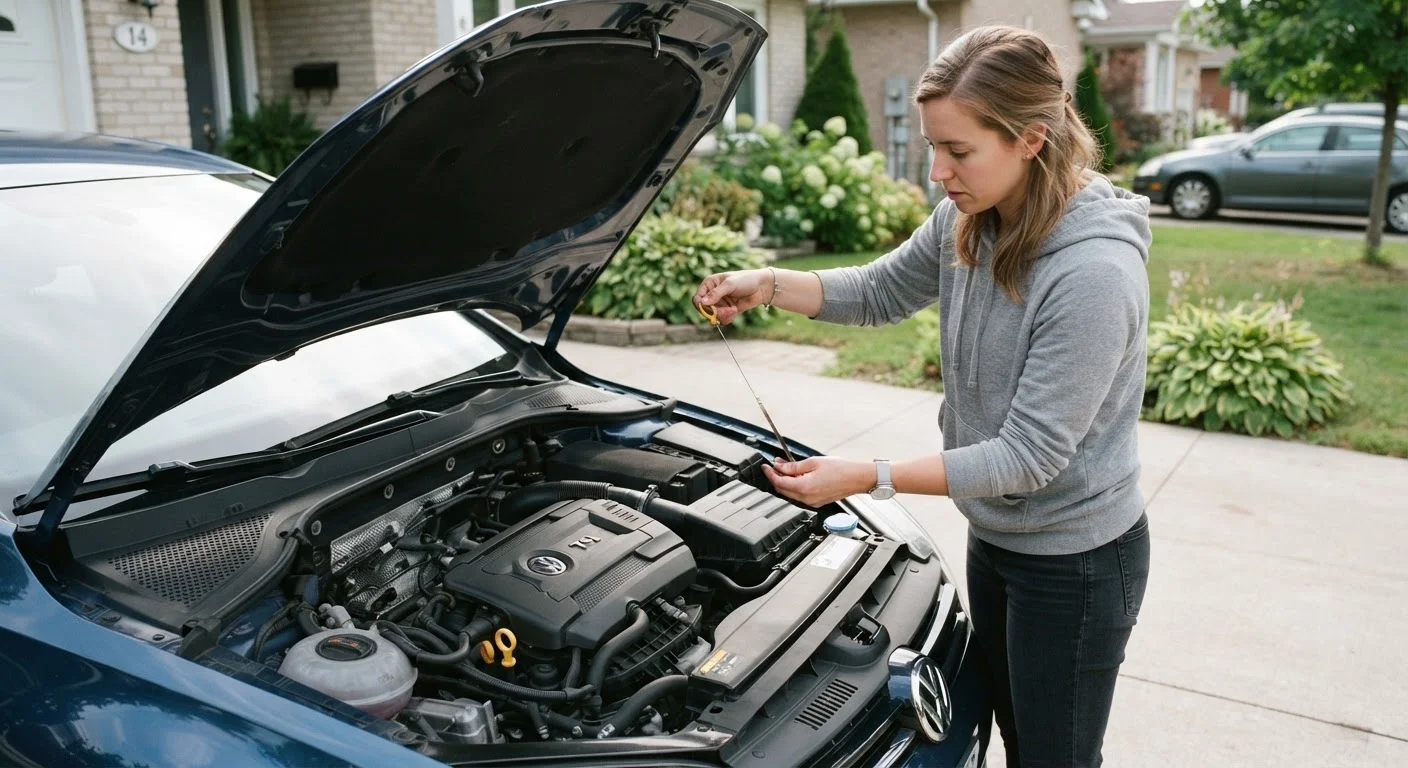
- Engine oil: With the engine off and cooled, pull the dipstick, wipe it clean, reinsert it fully, then pull it again. The oil should be between the two marks and appear amber or light brown. Dark, gritty oil is a sign it's time for a change.
- Tire pressure: Use an inexpensive gauge (available at any auto parts store) to check each tire, including the spare. The correct pressure is listed on a sticker inside the driver's door jamb - not on the tire itself.
- Coolant level: Check the translucent reservoir under the hood when the engine is cold. It should be between the min and max marks.
- Wiper fluid: Low wiper fluid is harmless until you need it on a dirty highway. Keep it topped off.
- Lights: Walk around the car periodically and confirm all headlights, taillights, and turn signals are functioning.
Check your tire pressure when the tires are cold - meaning the car has been parked for at least three hours. Pressure readings rise as tires warm up from driving, which can give you a falsely reassuring number.
Accurate pressure readings lead to correct inflation decisions; inflating warm tires to the door-jamb spec can result in overinflation once you check again when cold.
Take a photo of your odometer every time you get an oil change or major service. It's a simple habit that creates a maintenance record you can reference - and show to a buyer if you ever sell the car.
Service history documentation can affect resale value and helps you track whether you're staying on schedule with the manufacturer's recommended intervals.
For a deeper look at which tasks are realistic for a motivated beginner versus which should stay in a mechanic's hands, see our guide on DIY car maintenance vs. taking it to a mechanic.
When to See a Mechanic
Dashboard warning lights are not suggestions - they're your car communicating a problem. A check engine light could mean something minor (a loose gas cap) or something significant (a misfiring engine). Either way, it should be diagnosed promptly rather than ignored.
Don't Ignore Brake Warning Signs
Squealing, grinding, or a soft brake pedal are signals that your brakes need attention immediately. Brakes are a primary safety system, and degraded stopping ability puts you and others at risk. If you notice any of these symptoms, have a qualified mechanic inspect the brakes before driving the vehicle further under normal conditions.
Beyond warning lights, certain symptoms always warrant a professional inspection: unusual noises when braking, steering that pulls to one side, vibration in the wheel, or a burning smell after driving. These can indicate brake wear, alignment issues, or other conditions that affect safety directly.
Finding a trustworthy mechanic takes a bit of legwork upfront - asking neighbors or coworkers for referrals, checking reviews, and getting written estimates before approving work. A good shop will explain what's needed and why without pressuring you.
Budgeting for Ongoing Car Costs
The purchase price of a vehicle is only the beginning. Ongoing ownership costs include fuel, insurance, registration fees, routine maintenance, and eventual repairs - and they add up to a significant annual figure. According to data published by AAA, the average annual cost of vehicle ownership in the U.S. has exceeded $10,000 in recent years, though this varies considerably by vehicle type and how much you drive.
A practical approach is to set aside a monthly amount specifically for car expenses. Even $50-$100 per month in a dedicated savings buffer can prevent a surprise repair from derailing your finances. For a full breakdown of what ownership really costs beyond the sticker price, see our article on the real costs of owning a car.
“A vehicle that is properly maintained will generally last longer and cost less over time than one that is neglected. The savings from skipping a service are typically dwarfed by the repair costs that follow.”
— National Institute for Automotive Service Excellence (ASE), Industry certification body for automotive service professionals
Insurance: The Piece You Can't Skip
Auto insurance is required by law in nearly every U.S. state, and driving without it exposes you to serious financial and legal risk. But coverage isn't one-size-fits-all - liability, collision, comprehensive, and uninsured motorist coverage all serve different purposes, and understanding what you're actually buying matters.
Minimum Coverage Often Isn't Enough
Most states set minimum insurance requirements that cover damage or injury you cause to others - but these limits may not be sufficient to cover serious accidents. Minimum liability coverage typically does not pay for repairs to your own vehicle. Before choosing a policy, make sure you understand exactly what is and isn't covered.
As a new driver, you'll typically pay higher premiums than experienced drivers, though rates vary based on your location, the vehicle, your driving record, and the coverage levels you choose. Shopping around and comparing quotes from multiple insurers is the most reliable way to find appropriate coverage at a fair price - but the comparison should be made on equivalent coverage terms, not just the monthly cost.
For a full explanation of how auto insurance works, what each coverage type covers, and how to file a claim, our auto insurance primer covers it all from start to finish. You can also explore the broader auto insurance hub for additional guidance.
This article provides general information for educational purposes only. For guidance specific to your vehicle, consult your owner's manual or a qualified mechanic. For insurance decisions, consult a licensed insurance agent or adviser.
The content on this site is for informational purposes only and is not a substitute for professional advice. Always consult a qualified professional for guidance specific to your situation.