

Why Car Maintenance Myths Are So Persistent
Many car care rules that feel like common sense are actually decades out of date. They made sense for older vehicles but no longer apply to modern cars - yet they survive because they get repeated by well-meaning mechanics, family members, and quick-lube shops alike. The result is that drivers spend money on services they don't need while sometimes overlooking the ones that actually matter.
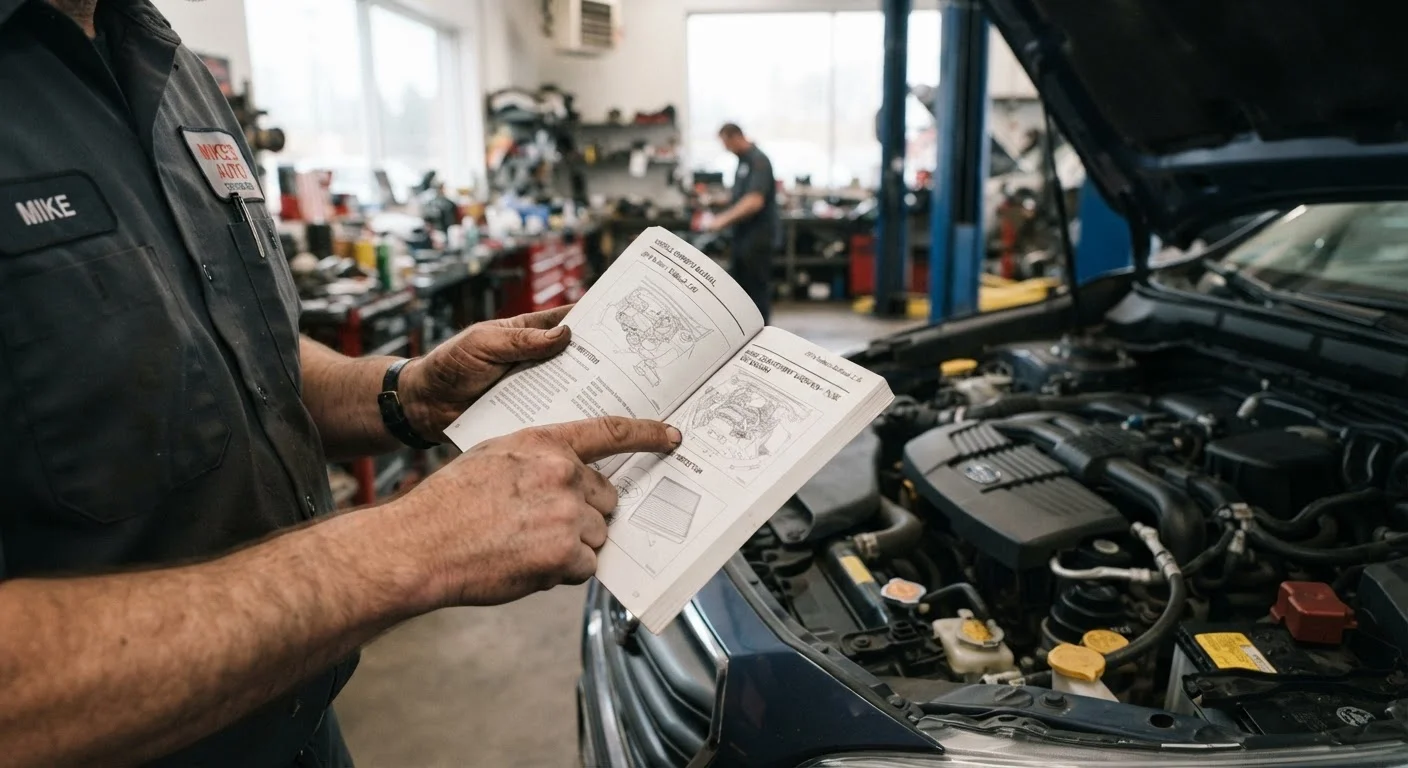
The most reliable reference for your specific vehicle isn't a general rule of thumb - it's the owner's manual in your glove box. Manufacturers design maintenance schedules based on engineering data for your exact engine and drivetrain. When shop recommendations diverge significantly from what the manual says, that's worth a closer look.
If you're new to owning a vehicle, see our practical starting point for new drivers for a plain-language overview of what routine maintenance actually involves.
Myth
You need to change your oil every 3,000 miles, no exceptions.
Fact
Most modern vehicles can go 5,000 to 10,000 miles or more between oil changes, depending on the oil type and engine design.
The 3,000-mile rule was reasonable guidance for older engines using conventional oil. Today's engines are built to tighter tolerances, and synthetic and synthetic-blend oils last significantly longer. Many manufacturers now set oil change intervals at 7,500 or even 10,000 miles for normal driving conditions. Your owner's manual specifies the correct interval for your engine - that figure, not a quick-lube shop's reminder sticker, should guide your schedule.
For a deeper look at what actually happens when oil goes too long, see what happens if you skip an oil change.
Myth
Premium fuel makes any car run better and last longer.
Fact
Premium fuel only benefits engines specifically engineered to require or recommend it. In most cars, it provides no added performance or protection.
Higher-octane fuel resists engine knock (premature combustion) in high-compression or turbocharged engines that are calibrated to use it. If your car's manual says "regular unleaded," putting in premium accomplishes nothing measurable - the engine management system isn't designed to take advantage of it. Check the fuel door or owner's manual: if it says "required," use premium; if it says "recommended," premium may offer marginal gains in some conditions; if it says "regular," save your money.
Myth
You should let your car warm up for several minutes before driving in cold weather.
Fact
Modern fuel-injected engines reach operating temperature faster by driving gently than by idling.
Extended idling made sense for carbureted engines, which needed time to stabilize fuel delivery in the cold. Modern vehicles use electronic fuel injection and computer-managed systems that adjust automatically. Idling for more than 30-60 seconds in cold weather mostly burns fuel without circulating oil through the engine as effectively as light driving does. The engine warms up more efficiently - and reaches the temperature where it runs cleanly - when you drive off gently rather than sitting in the driveway.
Myth
Tires only need air when they look visibly flat.
Fact
A tire can lose significant pressure and still look normal to the eye - proper inflation requires an actual gauge.
Tires can be 10-15 PSI (pounds per square inch) below the recommended pressure and show little visible deflection on a modern radial tire. Underinflated tires wear unevenly, reduce fuel efficiency, and can overheat at highway speeds - increasing blowout risk. The correct inflation for your vehicle is found on the sticker inside the driver's door jamb, not on the tire sidewall (that number is the tire's maximum pressure, not the vehicle's target). A monthly check with an inexpensive gauge takes about two minutes.
Myth
Flushing all your fluids every year keeps your car healthier.
Fact
Different fluids have very different service intervals; annual flushing of all of them is often unnecessary and adds cost without benefit.
Coolant, brake fluid, transmission fluid, and power steering fluid each have manufacturer-specified change intervals that vary widely - some are 30,000 miles, others 100,000 miles or more under normal conditions. Blanket annual flushes can actually disturb seals in systems that don't need service yet. Consult your owner's manual for each fluid's recommended interval and watch for signs of degradation (discoloration, unusual smell, or a dashboard warning) rather than defaulting to a one-size schedule. Our guide on car fluids every driver should know explains what each one does and when to check it.
Myth
A dirty engine air filter dramatically hurts fuel economy.
Fact
Modern engine management systems compensate for reduced airflow, so a dirty filter's impact on fuel economy is usually small - but it can affect performance and long-term engine health.
Older carbureted engines were more directly sensitive to airflow restrictions. Today's computer-controlled engines adjust the fuel-air mixture in real time, which limits the immediate fuel economy hit from a dirty air filter. That said, a severely clogged filter can reduce engine power, increase engine wear over time, and eventually trigger a check-engine light. The real reason to replace it on schedule - typically every 15,000-30,000 miles, per manufacturer guidance - is protecting the engine from contaminants, not chasing mpg gains. See what each filter in your car does for more detail.
What These Myths Actually Cost You
Unnecessary oil changes at the 3,000-mile mark can add up to one or two extra service visits per year for a typical driver. At $50-$100 per visit, that's real money left on the table annually - money that could go toward maintenance your car genuinely needs, like brake inspections or tire rotations.
5,000-10,000 mi
Typical modern oil change interval
Most current vehicle owner's manuals specify intervals well beyond the traditional 3,000-mile guideline, particularly for synthetic oil.
$150-$300
Estimated annual cost of unnecessary premium fuel
Based on filling a 15-gallon tank weekly at a premium-vs-regular price difference of roughly $0.20-$0.40 per gallon in a car that only requires regular.
Premium fuel adds roughly $0.20-$0.40 per gallon over regular at most stations. For a driver filling a 15-gallon tank weekly in a car that only requires regular, that's potentially $150-$300 spent unnecessarily each year with no benefit to engine performance or longevity.
On the flip side, skipping maintenance that does matter - like coolant flushes, brake fluid checks, or transmission service - can compound into serious repair bills. Our article on deferred maintenance costs breaks down how small delays turn into large expenses. The goal isn't to skip maintenance; it's to do the right maintenance at the right time.
Don't Confuse Cutting Costs With Skipping Essentials
Pushing back on unnecessary upsells is smart, but some maintenance items - brake inspections, tire pressure checks, and coolant condition - directly affect safety and should never be skipped. If you're unsure whether a recommended service is timely or premature, cross-reference your owner's manual or ask for a second opinion from a trusted independent shop.
Understanding what each fluid in your car does is one of the simplest ways to stay ahead of problems without overspending on services you don't need yet.
The content on this site is for informational purposes only and is not a substitute for professional advice. Always consult a qualified professional for guidance specific to your situation.