

Start here
Why Your Owner's Manual Is the Starting Point
Next
How to Read a Maintenance Schedule
Then
Common Maintenance Intervals and What They Cover
Worth knowing
Severe vs. Normal Driving Conditions
Put it into practice
Keeping Track of Your Service History
Why Your Owner's Manual Is the Starting Point
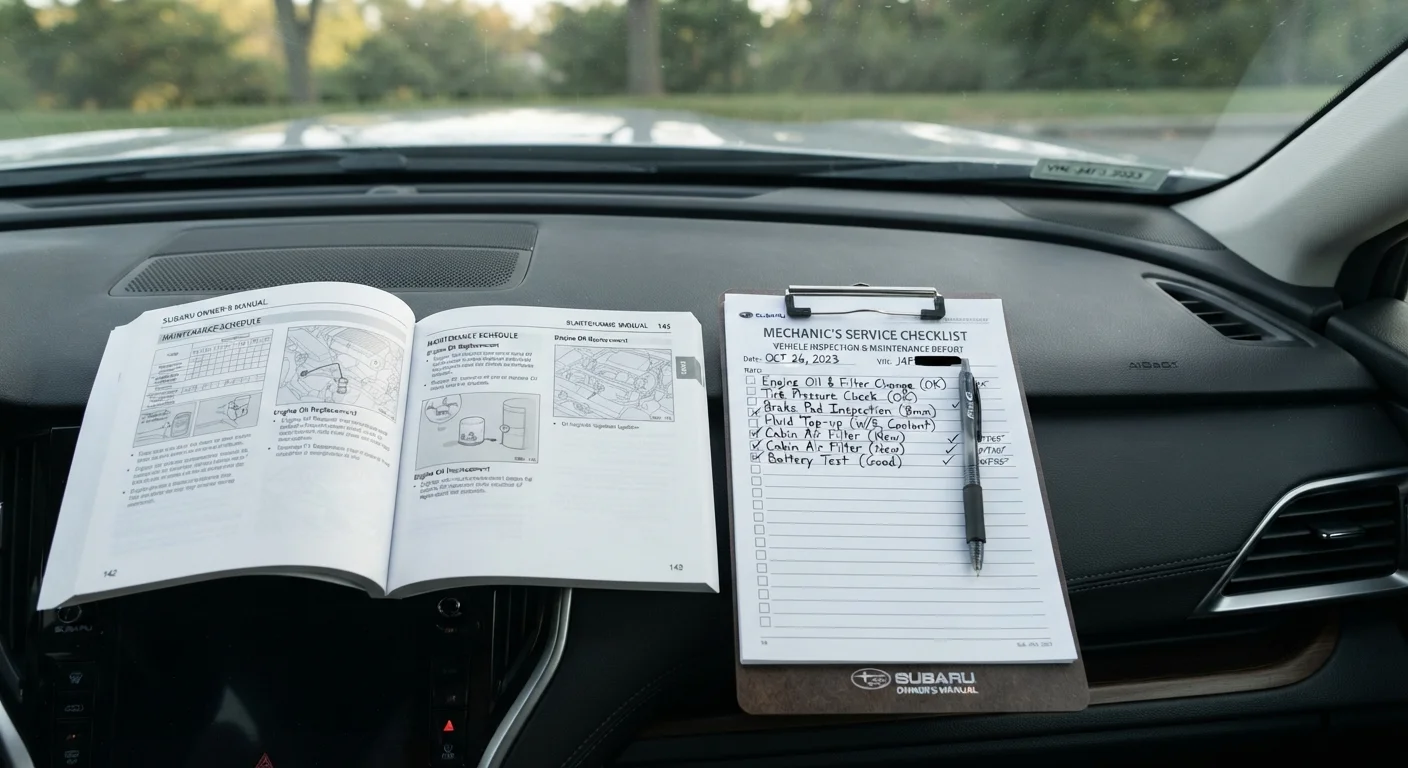
Generic maintenance advice is everywhere - but it's often built around averages, not your specific vehicle. The owner's manual that came with your car is the only document engineered to your exact make, model, engine, and transmission. It tells you what the manufacturer tested and determined your car actually needs, and when.
If you've misplaced the physical copy, most automakers publish digital versions on their official websites. Search by year, make, and model - you should find a downloadable PDF. This is worth the five minutes it takes.
If you're new to car ownership, our plain-language overview of car ownership basics is a useful companion to this guide.
Maintenance schedule
A table or checklist in your owner's manual that specifies which services your vehicle needs and how often, typically organized by mileage milestones.
Service interval
The mileage or time period between a specific type of maintenance, such as an oil change or tire rotation.
Severe driving conditions
Operating conditions - like frequent short trips, heavy traffic, or extreme temperatures - that put extra stress on your vehicle and may require more frequent service.
Synthetic oil
A type of engine oil made from chemically engineered compounds. It typically lasts longer between changes than conventional oil and is required by some modern engines.
Timing belt
A rubber belt inside your engine that keeps key components moving in sync. If it fails, it can cause serious engine damage, so replacement at the manufacturer's recommended interval is critical.
How to Read a Maintenance Schedule
Most maintenance schedules appear in a dedicated section of the owner's manual - often labeled "Maintenance Schedule" or "Scheduled Maintenance." They're typically organized as a table with mileage milestones across the top and service tasks listed down the side.
Each cell in the table will indicate whether a task should be inspected (I), replaced (R), or lubricated (L) at that interval. Some schedules also include a time-based trigger - for example, "every 12 months or 7,500 miles, whichever comes first." Both triggers matter. A car that sits mostly idle still ages; seals dry out, fluids degrade, and belts can crack.
Use Both Mileage and Time Triggers
If your schedule says "every 12 months or 7,500 miles, whichever comes first," don't wait for the mileage if the calendar hits first. Low-mileage vehicles still need attention - fluids break down over time even when a car sits mostly unused.
Common Maintenance Intervals and What They Cover
While exact intervals vary by vehicle, here are the service categories you'll commonly see:
- Every 3,000-10,000 miles: Oil and oil filter change (interval depends on oil type and vehicle)
- Every 15,000-30,000 miles: Air filter inspection or replacement, tire rotation, brake inspection
- Every 30,000-60,000 miles: Transmission fluid, coolant, spark plugs (on some engines), cabin air filter
- Every 60,000-100,000 miles: Timing belt or timing chain inspection, battery check, serpentine belt
These ranges illustrate why checking your own manual matters - a vehicle that calls for spark plug replacement at 30,000 miles has very different needs than one that goes 100,000 miles between changes.
For tasks that carry real risk if done incorrectly, our article on when to DIY versus when to see a mechanic can help you decide what to tackle yourself.
Severe vs. Normal Driving Conditions
Most owner's manuals include two maintenance tracks: one for normal driving and one for severe or special operating conditions. Severe doesn't mean highway driving at high speed - it actually describes the kind of routine driving many people do every day.
Severe conditions typically include:
- Frequent short trips of five miles or less
- Heavy stop-and-go traffic
- Towing a trailer or carrying heavy loads regularly
- Driving in extreme heat or cold
- Operating on dusty, unpaved, or gravel roads
If your driving fits one or more of these descriptions, the severe-service schedule likely applies to you - meaning shorter intervals between some services. Ignoring this distinction is one of the more common and quietly damaging maintenance mistakes drivers make.
Many Everyday Drivers Qualify as 'Severe'
If you regularly make short errands, sit in city traffic, or live somewhere with harsh winters or summers, your car may need maintenance more frequently than the standard schedule suggests. Check which track applies before assuming the normal intervals are correct for you.
For more on how seasonal extremes affect your vehicle, see our guide to preparing your car for winter and summer.
Keeping Track of Your Service History
A maintenance log is more than an organizational tool - it's a financial asset. A documented service history can meaningfully support resale value and demonstrates to a future buyer or dealer that the vehicle was properly cared for. It also helps you and your mechanic spot patterns, like a fluid that keeps running low, that might signal an underlying issue.
You have several practical options for tracking service:
- Paper log in the glove box: A simple notebook works. Record the date, mileage, service performed, and where the work was done.
- Receipt folder: Keep every service receipt, whether from a dealership, independent shop, or parts store.
- Smartphone apps: Several free apps let you log service history and set reminders by mileage or date.
Whichever method you choose, consistency matters more than the format. Start today with your most recent service, and build from there.
This article is for general informational purposes. Always consult your vehicle's owner's manual and a qualified mechanic for guidance specific to your car's needs.
Frequently Asked Questions
It depends on your vehicle and the type of oil it uses. Conventional oil typically needs changing every 3,000-5,000 miles, while synthetic oil can often go 7,500-10,000 miles or more. Always check your owner's manual for the interval specific to your car.
Skipping maintenance allows small problems - like worn brake pads or low coolant - to develop into expensive repairs. It can also void portions of your warranty and reduce your car's resale value.
No. As long as the work is performed correctly and documented, you can use any licensed mechanic or service center. Keep receipts and records regardless of where you go.
Severe conditions include frequent short trips under five miles, stop-and-go city traffic, towing or hauling heavy loads, driving in extreme temperatures, and dusty or unpaved roads. Many drivers qualify without realizing it.
Many automakers post digital versions of their owner's manuals on their official websites, searchable by year, make, and model. You can also contact a dealership's service department for help locating one.
Use both together. Dashboard maintenance reminder systems are useful prompts, but they may not reflect every service your manual calls for. The manual is the authoritative source.
The content on this site is for informational purposes only and is not a substitute for professional advice. Always consult a qualified professional for guidance specific to your situation.