

Option A
Zero-Based Budgeting
The detail-driven method that accounts for every dollar.
Best for: People who want tight control over their spending and are willing to track each expense category every month.
Option B
The 50/30/20 Rule
The simple percentage framework built for busy lives.
Best for: People who want a low-effort structure that balances needs, wants, and savings without micromanaging spending.
How Each Method Actually Works
Understanding the mechanics of each approach helps you decide which fits your life. Check out our glossary of key budgeting terms if any of the language below feels unfamiliar.
Zero-Based Budgeting
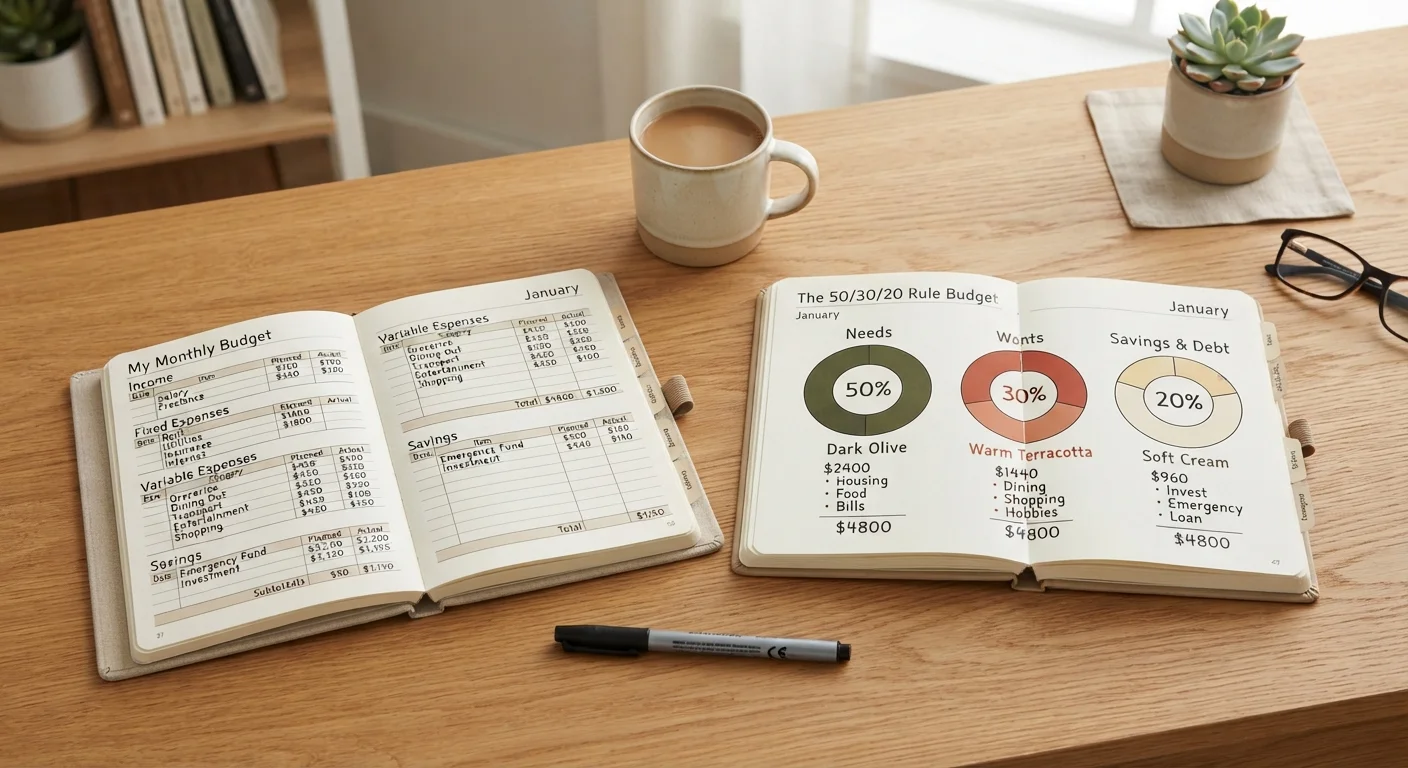
With zero-based budgeting, you start every month at zero and assign each dollar of your expected income to a specific category - rent, groceries, transportation, savings, entertainment, and so on - until nothing is left unallocated. The goal is income minus expenses equals zero. That doesn't mean you spend everything; it means every dollar has a destination, including savings and debt payments.
This approach demands a fresh plan each month. You review what you spent last month, adjust categories as needed, and build a new allocation before the new month starts.
The 50/30/20 Rule
The 50/30/20 rule, popularized by Senator Elizabeth Warren and her daughter Amelia Warren Tyagi in their book All Your Worth, divides your after-tax income into three categories: 50% toward needs (housing, utilities, groceries, insurance), 30% toward wants (dining out, subscriptions, hobbies), and 20% toward savings or debt repayment.
Unlike zero-based budgeting, you don't itemize every expense. You simply monitor whether your spending falls within these three broad bands. Learn more about how the 50/30/20 rule applies to your paycheck.
| Criterion | Zero-Based Budgeting | 50/30/20 Rule |
|---|---|---|
| Structure | Every dollar assigned a category | Three broad percentage buckets |
| Monthly setup time | 30-60 minutes | Under 15 minutes |
| Ongoing tracking effort | High - frequent check-ins needed | Low - periodic review sufficient |
| Flexibility mid-month | Requires manual reallocation | Adjusts naturally within buckets |
| Best for variable income | Yes - rebuilds each month | Less ideal - fixed percentages shift |
| Spending visibility | Very granular by category | Broad - bucket-level only |
| Learning curve | Steeper - more decisions upfront | Gentle - simple to start |
Time, Effort, and Day-to-Day Reality
The biggest practical difference between these two methods isn't their philosophy - it's how much time and attention they require from you each month.
Zero-based budgeting is genuinely time-intensive. Expect to spend 30-60 minutes at the start of each month building your plan, plus regular check-ins throughout the month to make sure spending stays on track. Many people use a spreadsheet or a budgeting app to manage the detail. If a large unexpected expense hits mid-month, you'll need to go back in and reallocate other categories to compensate.
The 50/30/20 rule, by contrast, can be set up in under 15 minutes once you know your take-home pay. Ongoing monitoring is lighter - you mainly want to confirm that your needs aren't quietly creeping above 50% and that the 20% savings piece is actually happening, ideally through an automatic transfer.
74%
Americans living paycheck to paycheck
A 2023 LendingClub report found that nearly three in four Americans have little buffer between income and expenses, underscoring why a structured budget matters.
~$500
Average monthly untracked discretionary spend
Research from the National Foundation for Credit Counseling has found that many consumers underestimate their discretionary spending by several hundred dollars per month.
The trade-off is precision. Zero-based budgeting gives you granular visibility; the 50/30/20 rule gives you a useful guardrail but won't tell you, for example, that you're overspending on takeout within your wants bucket. For tips on staying consistent with whichever method you choose, see our article on habits that help people stick to a budget.
Which One Is Right for You?
Neither method is objectively better. The right choice depends on your financial situation, personality, and how much time you're willing to invest.
What If Your Numbers Don't Fit the 50/30/20 Model?
In high-cost cities, housing alone can consume more than 50% of take-home pay, making the standard split unrealistic. The 50/30/20 rule is a guideline, not a rigid rule. If your needs genuinely exceed 50%, you may need to trim wants below 30% or find ways to increase income over time. The percentages are a starting point for reflection, not a pass-or-fail test.
Choose zero-based budgeting if: you have variable income, are working to eliminate debt, frequently wonder where your money went, or simply want to feel in control of every spending decision.
Choose the 50/30/20 rule if: you have a steady paycheck, are just getting started with budgeting, or prefer a system that doesn't require constant upkeep.
It's also worth noting that these methods aren't mutually exclusive. Some people use the 50/30/20 rule as a high-level check while applying zero-based thinking within one or two categories - like groceries or entertainment - where they know they tend to overspend. For a broader view of how budgeting fits into your overall financial picture, the complete guide to personal budgeting is a useful next step. You can also explore how savings fit specifically into the 50/30/20 framework in our breakdown of where savings land in a 50/30/20 budget.
This article is for general informational and educational purposes only and does not constitute personalized financial advice. Consult a qualified financial professional for guidance specific to your situation.
The content on this site is for informational purposes only and is not a substitute for professional advice. Always consult a qualified professional for guidance specific to your situation.