

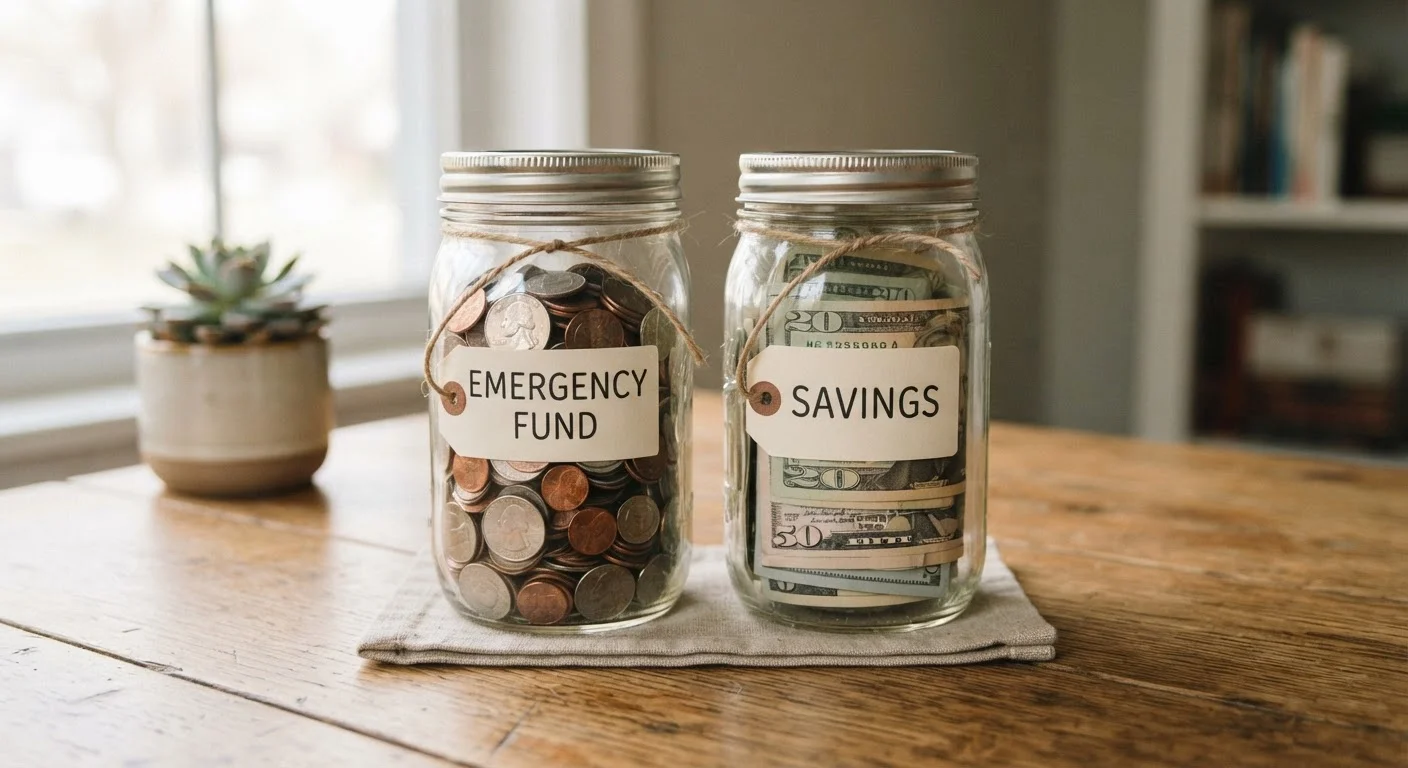
Option A
Emergency Fund
Your financial safety net for life's unexpected blows.
Best for: Covering unplanned, urgent expenses like job loss, medical bills, or a broken-down car without going into debt.
Option B
Savings Account
A flexible home for money you're setting aside with a goal in mind.
Best for: Accumulating money for planned purchases, milestones, or general wealth-building over time.
Two Different Concepts, Often Confused
People use the terms interchangeably, but an emergency fund and a savings account describe two completely different things. One is a purpose - what the money is for. The other is a product - where the money sits.
A savings account is a bank or credit union account that holds money you're not spending right now. An emergency fund is a dedicated pool of cash you keep on hand for genuine financial emergencies only - a sudden job loss, an unexpected medical expense, a major car repair. Your emergency fund can absolutely live inside a savings account, but not every savings account functions as an emergency fund.
If you're just starting out, Building a Savings Habit From Zero is a practical first read before deciding where to stash your money.
| Criterion | Emergency Fund | Savings Account |
|---|---|---|
| What it is | A financial goal or purpose | A type of bank account |
| Primary purpose | Cover unexpected urgent expenses | Hold money outside of checking |
| Access rules | Self-imposed: emergencies only | Withdraw anytime (limits may apply) |
| Target amount | 3-6 months of essential expenses | Depends on your goal |
| Where it lives | Often in a savings account | At a bank or credit union |
| Earns interest? | Yes, if kept in an interest-bearing account | Yes, rate varies by account type |
What Makes an Emergency Fund Different
The critical difference is intent and access rules you set for yourself. An emergency fund is money you commit not to touch unless a true emergency hits. It's not for a sale you don't want to miss, a holiday gift run, or a weekend trip - those are spending decisions, not crises.
Most financial educators suggest targeting three to six months' worth of essential living expenses - think rent or mortgage, utilities, groceries, and minimum debt payments. That range is general guidance, not a guarantee of financial security, and your right number depends on your income stability, household size, and other factors. A freelancer with variable income might aim for the higher end; a dual-income household with stable jobs might feel comfortable with less.
~27%
Adults with no emergency savings
According to the Federal Reserve's Report on the Economic Well-Being of U.S. Households, roughly one in four adults would struggle to cover an unexpected $400 expense without borrowing.
3-6 months
Commonly recommended emergency fund size
This range reflects general guidance from financial educators; your ideal amount depends on income stability, household size, and fixed obligations.
Understanding how your expenses break down matters here too. Fixed vs. variable expenses behave differently in a budget - knowing which of yours are non-negotiable helps you set a realistic emergency fund target.
Where to Keep Each One
Both your emergency fund and your other savings belong somewhere safe and accessible - but that doesn't mean the same account. Keeping them separate, even if both are savings accounts at the same bank, makes it far easier to see your safety net clearly and resist dipping into it for non-emergencies.
A high-yield savings account (HYSA) is a common choice for emergency funds because it earns more interest than a standard savings account while keeping money liquid - meaning you can withdraw it when you actually need it. HYSAs, CDs, and money market accounts each work differently, and understanding those differences helps you pick the right home for each savings goal.
Keep Your Accounts Clearly Labeled
Many banks let you nickname your accounts - labeling one "Emergency Fund" and another "Vacation 2025" costs nothing and makes a real difference. When you can see exactly what each bucket is for, you're far less likely to raid your safety net for non-urgent spending. Some people go further and keep their emergency fund at a separate bank entirely to add a little friction before withdrawals.
For goal-based savings - a vacation, a home down payment, a new appliance - you have more flexibility. A CD (certificate of deposit) might make sense if you won't need the money for a set period, since it typically offers a higher rate in exchange for locking funds away temporarily. Your emergency fund, however, should never be locked in an account with withdrawal penalties.
Once your emergency fund is in place, automating your savings transfers can help you build toward other goals without having to think about it every month.
The content on this site is for informational purposes only and is not a substitute for professional advice. Always consult a qualified professional for guidance specific to your situation.