

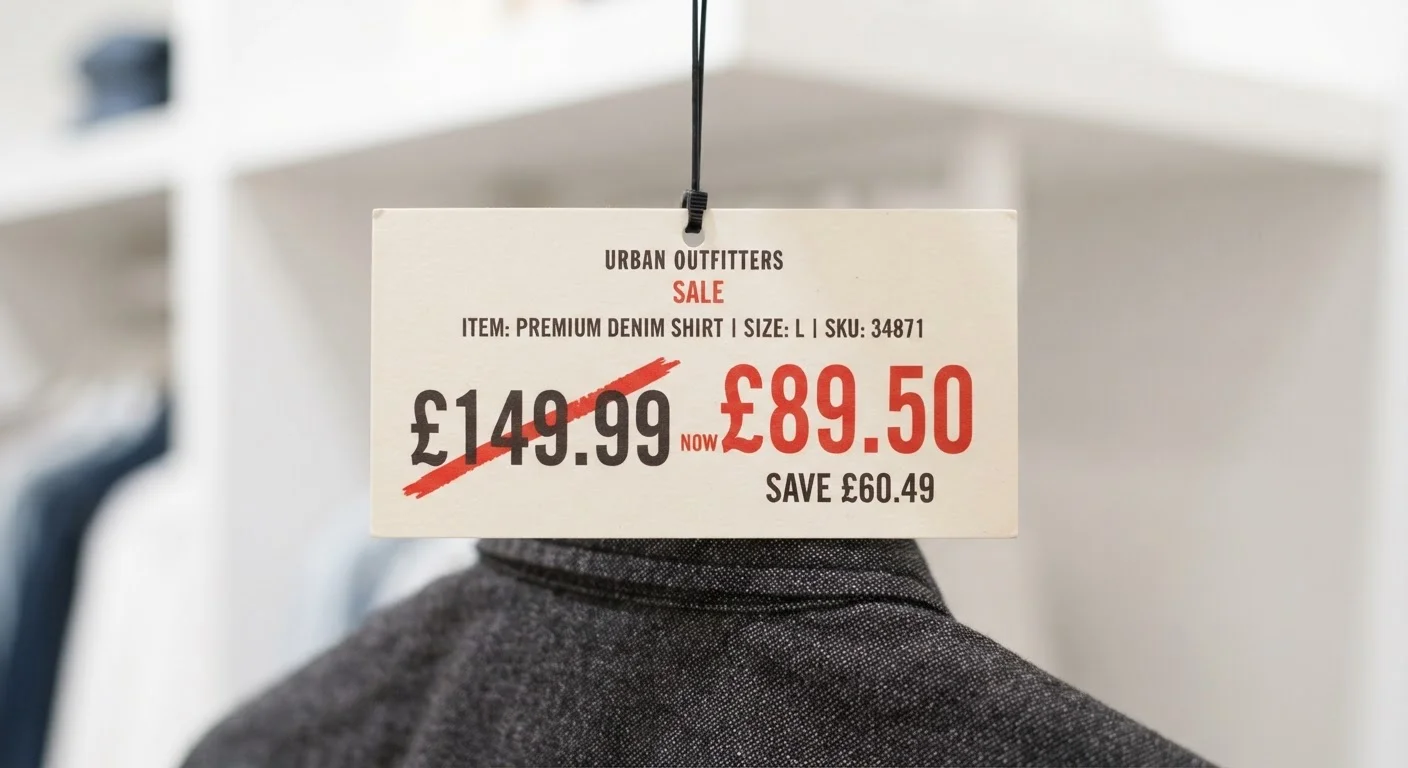
Why Your Brain Latches onto the First Number
The human brain is wired to find shortcuts. When faced with a complex question - is this a good price? - it substitutes a simpler one: is this price higher or lower than the number I just saw? That substitution is anchoring bias at work.
This isn't a flaw reserved for inattentive shoppers. Research in behavioral economics has consistently shown that anchoring affects trained professionals, experienced negotiators, and careful consumers alike. The anchor doesn't need to be accurate or even logical to exert its pull - it just needs to arrive first.
For everyday shoppers, this means that walking into a store without a price reference of your own puts you at an immediate disadvantage. You'll be navigating the retailer's carefully constructed number landscape rather than one you built from independent research.
“The mind tends to give undue weight to the first information received about a topic, making that initial number a powerful - and often misleading - reference point for all that follows.”
— Daniel Kahneman, Nobel Prize-winning behavioral economist and author of 'Thinking, Fast and Slow'
How Anchoring Shows Up in Everyday Shopping
Anchoring is embedded in the basic design of most retail environments, online and off. A few of the most common forms:
- Crossed-out prices: A tag reading Was $89.99 - Now $54.99 plants $89.99 as your reference. Whether that original price was ever genuinely charged for any meaningful period is often unknowable. For a deeper look at how these calculations work, see what 'sale price' math is really telling you.
- Tiered product displays: Showing a $500 version of a product before a $200 version makes the $200 feel like a bargain - not because it is one, but because the comparison favors it.
- Suggested retail prices: Even manufacturer suggested retail prices (MSRPs) function as anchors, shaping your sense of what's fair long before any discount is applied.
Anchoring also drives unplanned spending. The psychology of feeling like you're getting a deal can push purchases that weren't on your list. This connects to broader patterns covered in impulse buying and the psychology behind it.
~50%
Influence of anchor on final price estimates
Research by Tversky and Kahneman found that arbitrary starting numbers shifted participants' final estimates by roughly half the distance between the anchor and the correct answer, even when participants knew the anchor was random.
1 in 3
Shoppers who verify prices before purchase
Consumer behavior surveys have consistently found that a minority of shoppers research independent market prices before making a purchase, leaving most reliant on in-store pricing cues.
Anchoring in High-Stakes Decisions
The anchoring effect scales with the size of the decision. In car dealerships, the sticker price on the window is a classic anchor. Negotiations typically move down from that number, which means the dealer's starting point shapes the entire conversation. A buyer who researches fair market value beforehand can introduce a different anchor entirely.
Real estate works the same way. A listing price is an anchor, and even experienced buyers can find their perception of value shaped by it. If you're navigating the housing market for the first time, a first-timer's orientation to the housing market can help you build your own frame of reference before a listing price sets one for you.
Set Your Price Before You See the Tag
Before shopping for a significant purchase, write down the maximum you're willing to pay based on your own research. Seeing your self-set number first gives your brain a counteranchor that competes with whatever the retailer shows you. It won't eliminate anchoring bias, but it meaningfully reduces its grip.
Building Your Own Anchor Before You Shop
The most effective defense against anchoring bias is arriving with a reference point you created yourself. That means doing price research before you see any retailer's listed price.
Some practical approaches:
- Check multiple sources before visiting any single store or product page. An average across several independent listings gives you a more neutral benchmark.
- Use unit pricing when comparing groceries and household goods. A price per ounce or per unit strips away packaging and presentation, leaving the actual cost. More on this in unit pricing: the grocery aisle skill most shoppers skip.
- Decide your price ceiling first. Ask yourself what you'd be willing to pay before you look at any listed price. Write it down if it helps. That self-generated number becomes a counteranchor.
Anchoring bias doesn't disappear once you know about it - but awareness slows its automatic effect. When you notice a crossed-out price or a premium item placed at the top of a display, you can pause and ask: whose anchor am I using? For a broader framework on spending intentionally across categories, see smarter everyday spending across every major category.
This article is for general informational purposes only and does not constitute financial advice. Readers should use their own judgment and, where appropriate, consult a qualified financial professional for decisions specific to their situation.
Frequently Asked Questions
Anchoring bias means the first number you see sticks in your mind and influences how you judge every number after it. If a store shows you a $300 price before revealing a $150 sale price, the $300 becomes your reference point, making $150 feel like a steal - even if $150 is actually the going market rate.
Retailers display inflated 'original' or 'compare at' prices next to sale prices to make discounts look bigger. They may also place premium products first in a display so everything else appears reasonably priced by comparison. Understanding this tactic helps you evaluate whether a price is genuinely competitive.
Yes - anchoring is especially powerful in high-stakes negotiations. A car dealer who opens with a high sticker price or a home listed above market value both establish anchors that can pull final prices upward. Researching fair market value before any negotiation gives you a counteranchor to work from.
Research prices independently before you enter a store or open a product page. Look up average market prices, use unit pricing to compare value, and ask yourself what you'd be willing to pay before you see the listed price. This way, you bring your own reference point rather than accepting the retailer's.
Not always. Some 'original' prices reflect genuine historical pricing or manufacturer suggested retail prices. But whether the anchor is intentional or not, your brain responds to it the same way. The safeguard is the same in either case: verify prices independently before deciding.
The content on this site is for informational purposes only and is not a substitute for professional advice. Always consult a qualified professional for guidance specific to your situation.